

Boyfriend T-Shirt Fit Analyzer
Not every loose shirt is a true boyfriend tee. Use this analyzer to check if your garment matches the specific historical and design criteria that define this iconic style.
Have you ever looked in the mirror wearing that loose, slightly rumpled tee and wondered why it has such a specific name? You are not alone. The term boyfriend t-shirt is everywhere in fashion retail, from high-end boutiques to fast-fashion giants like Zara and H&M. But does this shirt actually have anything to do with your partner? And if so, how did a garment meant for men end up as a staple in women's wardrobes?
The short answer is yes, it started as borrowed clothing. However, the story behind the name is less about romance and more about rebellion, comfort, and the evolution of gender norms in fashion. Understanding where this trend comes from helps you style it better and appreciate why it remains popular decades after its inception.
The Origin Story: Borrowing from the Drawer
To understand the name, we have to go back to the late 19th and early 20th centuries. Back then, fashion was strictly segregated by gender. Women wore corsets, long skirts, and structured dresses. Men wore suits, trousers, and button-down shirts. The idea of a woman wearing a man’s shirt was considered scandalous or at least highly unconventional.
The shift began with the rise of the flapper era in the 1920s. Young women were rejecting Victorian constraints. They wanted freedom of movement. One of the easiest ways to achieve this was to raid their boyfriends' or fathers' drawers. A man’s cotton shirt was loose, breathable, and lacked restrictive undergarments. When worn by a woman, it created a silhouette that was radically different from the hourglass figure of the time.
This act of borrowing wasn't just practical; it was political. Wearing a "man's" shirt signaled independence. It said, "I am not bound by traditional feminine expectations." The term "boyfriend" in this context didn't necessarily mean a romantic partner in a serious relationship. It referred to the archetype of the young, modern male whose wardrobe represented casualness and ease.
From Bedroom to Runway: The 1960s Revolution
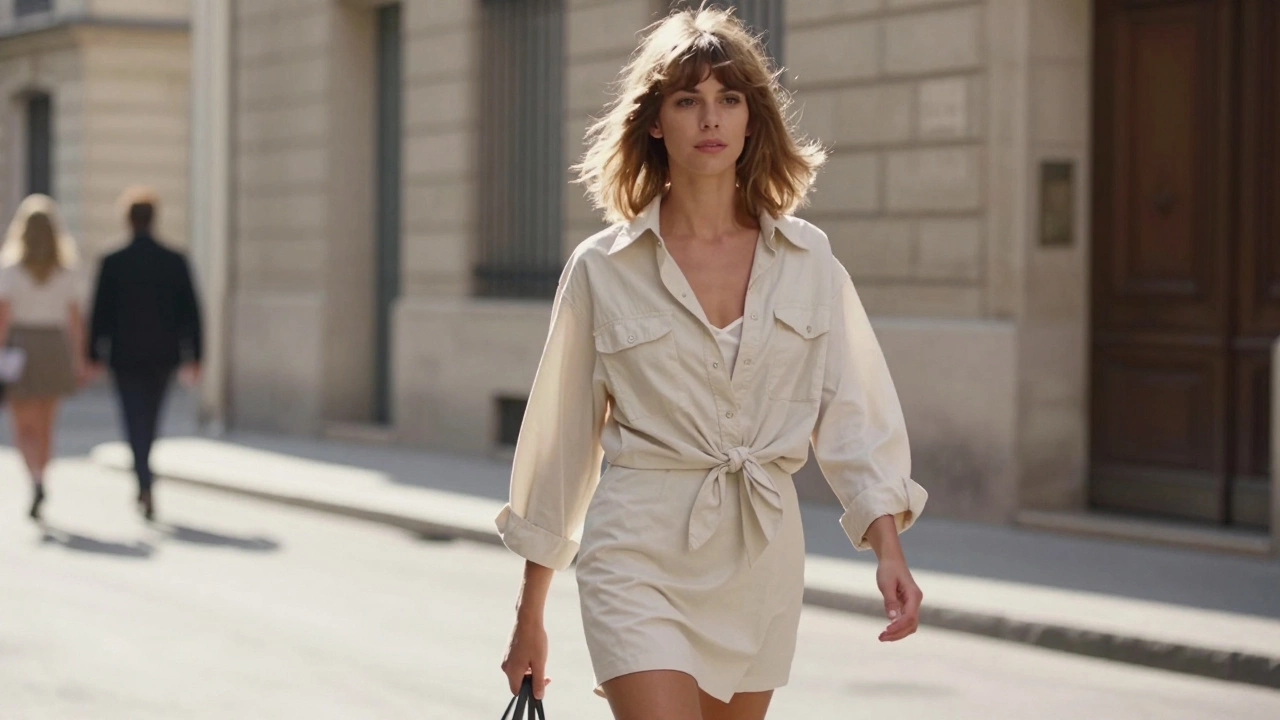
If the 1920s planted the seed, the 1960s watered it. This decade saw the explosion of youth culture, rock and roll, and feminism. Icons like Jane Birkin and Brigitte Bardot were photographed wearing oversized men’s shirts, often unbuttoned or tied at the waist. These images were splashed across magazines worldwide.
Designers took notice. Yves Saint Laurent, a pioneer in blurring gender lines, introduced menswear-inspired pieces for women. He didn't just copy men's clothes; he adapted them. The key difference was fit. While a man's shirt fits broad shoulders and a straight torso, a "boyfriend" version for women was cut to hang loosely but still acknowledge female curves through draping rather than tailoring.
This era cemented the term. It was no longer just "that shirt I stole from my boyfriend." It became a recognized style category. The name stuck because it described the aesthetic perfectly: effortless, slightly masculine, and intimate.
What Actually Defines a Boyfriend T-Shirt?
Not every loose shirt qualifies. There are specific design elements that distinguish a true boyfriend t-shirt from a standard oversized tee or a boxy crop top. If you are shopping for one, look for these features:
- Dropped Shoulders: The seam where the sleeve meets the body sits lower on the arm, creating a slouchy look.
- Relaxed Fit: It should skim the body without clinging. There is extra fabric in the chest, waist, and hips.
- Shorter Sleeves: Often, the sleeves are cropped or wider than traditional men's cuts, hitting mid-bicep.
- Soft Fabric: Usually made from lightweight cotton jersey or blends that drape well rather than stiff fabrics that hold shape.
- Slightly Cropped Length: Many modern versions are shorter in the torso to prevent looking swallowed by fabric, though full-length versions exist.
Unlike a boxy t-shirt, which has straight vertical seams, a boyfriend tee often has a slight taper or curved hem. Unlike an oversized graphic tee, which focuses on the print, the boyfriend tee focuses on the silhouette and texture.
Why the Name Persists Today
You might wonder why we still use a gendered term in 2026. After all, fashion has become much more inclusive. Why not just call it an "oversized tee"?
Marketing plays a huge role. The word "boyfriend" evokes a feeling. It suggests comfort, safety, and a bit of playful intimacy. It taps into the nostalgia of that original rebellious spirit. For many shoppers, buying a "boyfriend t-shirt" feels like adopting a persona-cool, relaxed, and effortlessly chic.
Additionally, the term has evolved beyond literal gender borrowing. In the 2010s, the "boyfriend jeans" trend exploded, reinforcing the vocabulary. Designers realized that consumers understood exactly what "boyfriend fit" meant: tailored for a woman but inspired by menswear proportions. It became a shorthand for a specific cut that retailers could use across multiple product lines, from shirts to pants to jackets.
How to Style Your Boyfriend T-Shirt
Knowing the history helps, but styling it is where the fun begins. Because the shirt is loose, balance is key. Here are three foolproof ways to wear it:
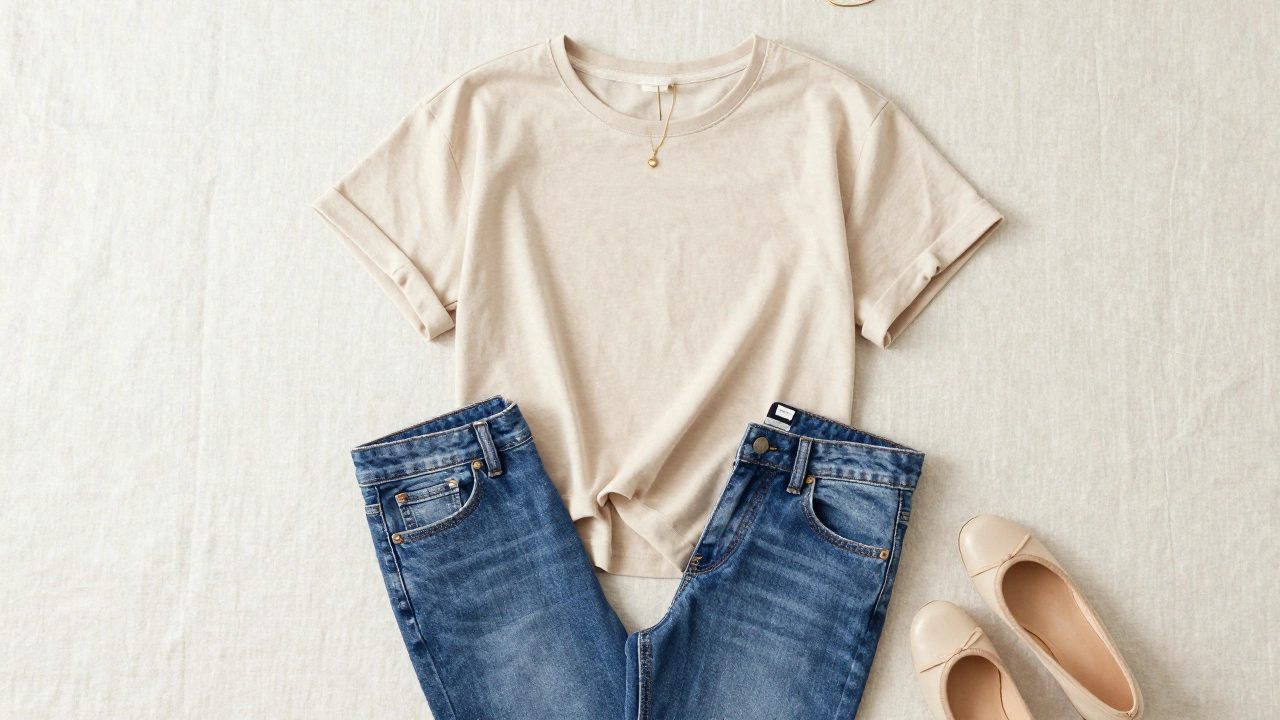
- The French Girl Look: Pair the tee with high-waisted skinny jeans or slim-fit trousers. Add loafers or ballet flats. This balances the volume on top with sleekness on the bottom. Roll the sleeves once or twice to show some wrist.
- Skirt Contrast: Wear it with a flowy midi skirt or a structured pencil skirt. The mix of textures (soft cotton vs. silk or denim) adds depth. Tuck in the front corner of the shirt to define your waistline.
- Layering Piece: Use it as a light jacket over a tank top or camisole. Leave it unbuttoned if it’s a button-down style, or knot it at the waist if it’s a pullover tee. This works great in transitional weather.
Avoid pairing it with baggy cargo pants unless you are going for a very specific streetwear vibe. Without contrast, the outfit can look sloppy rather than stylish. Accessories matter too-a belt can cinch the waist, while delicate jewelry adds a feminine touch against the masculine cut.
The Evolution: From Boyfriend to Girlfriend
In recent years, the terminology has shifted again. We now see terms like "girlfriend fit" appearing in stores. So, what is the difference?
A "girlfriend fit" is still relaxed but slightly more tailored than the boyfriend version. It hugs the shoulders more closely and may have a slightly higher neckline. It retains the comfort of the oversized look but feels more intentionally designed for a female frame from the start. It is less about borrowing and more about adapting menswear aesthetics without the literal reference to a male partner.
This shift reflects broader changes in how we talk about gender and clothing. As unisex and gender-neutral fashion grows, the need for gendered labels decreases. However, the "boyfriend t-shirt" remains a classic term because it describes a distinct historical moment and a specific aesthetic that continues to resonate.
Frequently Asked Questions
Is a boyfriend t-shirt supposed to be tight?
No, a boyfriend t-shirt is defined by its loose, relaxed fit. It should not cling to your body. If it feels tight across the shoulders or chest, it is likely the wrong size or not a true boyfriend cut. The goal is a slouchy, comfortable silhouette that skims the body.
What is the difference between a boyfriend tee and an oversized tee?
While similar, a boyfriend tee typically has dropped shoulders and a slightly tapered or curved hem, inspired by men's button-downs or tees. An oversized tee is generally boxier with straight seams and may have longer sleeves. The boyfriend cut is designed to drape softly, whereas an oversized tee often stands away from the body more rigidly.
Why do people still call it a boyfriend shirt if it's sold in women's sections?
The name persists due to marketing and tradition. It evokes a sense of effortless cool and nostalgia for the 1960s and 70s when women literally borrowed shirts from their partners. Retailers use the term as a recognizable shorthand for a specific relaxed, menswear-inspired fit that appeals to customers seeking comfort and style.
Can men wear boyfriend t-shirts?
Yes, absolutely. Fashion is increasingly gender-neutral. A man can wear a shirt labeled "boyfriend fit" if he likes the cut. However, since it is sized for women, he may need to size up significantly to get the intended loose effect. Alternatively, he might prefer a standard men's relaxed-fit tee, which offers similar comfort without the sizing adjustments.
How do I wash a boyfriend t-shirt to keep its shape?
To maintain the soft drape and prevent shrinking, wash the shirt inside out in cold water on a gentle cycle. Avoid using harsh detergents. Air drying is best to preserve the fabric's integrity and prevent the shoulders from stretching out further. If you must use a dryer, use the lowest heat setting and remove the shirt while it is still slightly damp.