
Suit Cost & Value Estimator
Enter your potential suit purchase details below to see where the money goes and how much each wear actually costs you.
Enter details and click "Analyze Investment" to see results.
You walk into a high-end menswear shop in York or London, see a jacket that looks identical to the one on the high street rack, and the price tag reads £800 instead of £150. Your first instinct is to suspect they’re just slapping a fancy label on it. But here’s the thing: that two-thousand-percent markup isn’t just branding fluff. It’s physics, labor hours, and textile engineering colliding.
When you ask why do men's suits cost so much, you’re really asking about the invisible infrastructure behind a single garment. It’s not just about looking sharp; it’s about how the cloth behaves against your body over ten years versus ten months. Let’s break down exactly where your money goes when you buy a serious suit, stripping away the marketing jargon to look at the raw materials and human effort involved.
The Fabric Is Where The Money Starts
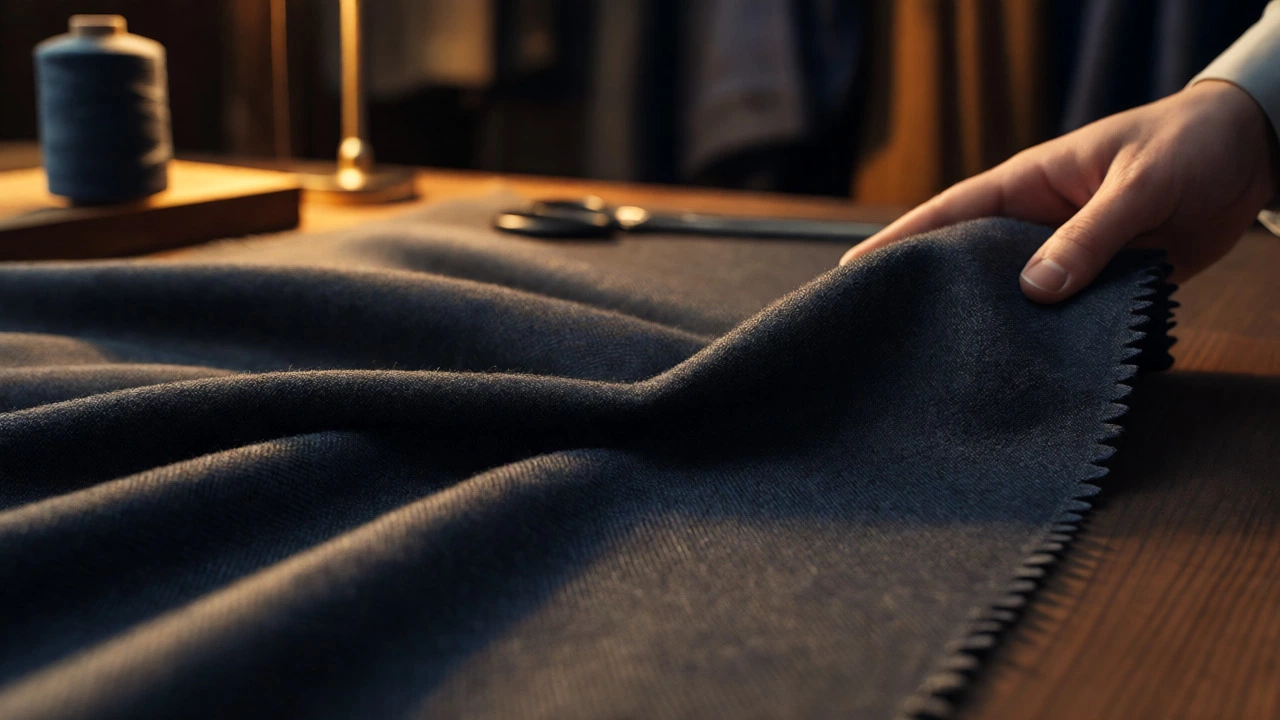
Think of fabric as the engine of the car. You can have the best chassis in the world, but if the engine is weak, the whole thing fails. In suit-making, the wool determines everything from drape to durability. Cheap suits use short-staple wool fibers. These are short, rough strands that bunch up and pill easily. They feel scratchy because the ends stick out like tiny needles.
Luxury suits use long-staple Merino wool. We’re talking fibers that can be spun incredibly fine without breaking. This allows for higher "Super" numbers (like Super 120s or Super 150s), which refer to the fineness of the yarn. A Super 150s fabric feels like silk against your skin because the individual hairs are thinner than a human hair. But don’t get tricked by the number alone. A Super 200s fabric is often too delicate for daily wear-it wrinkles if you even look at it wrong. Most smart buyers aim for Super 110s to 130s, which offers the perfect balance of softness and resilience.
Beyond wool, consider the lining and interlining. Cheap suits use synthetic polyester linings that trap heat and sweat. High-end jackets use Bemberg cupro, a semi-synthetic made from cotton linter. It breathes, slides easily over shirts, and doesn’t cling. Then there’s the interlining-the hidden layer between the outer fabric and the lining. In budget suits, this is fused with glue. In expensive ones, it’s horsehair canvas. That difference alone adds significant cost but changes how the jacket moves forever.
| Attribute | Budget Suit | Premium Suit |
|---|---|---|
| Fiber Type | Short-staple Wool | Long-staple Merino |
| Weave Density | Loose, prone to pilling | Tight, smooth surface |
| Lining Material | Polyester | Cupro (Bemberg) |
| Interlining | Fused Glue | Horsehair Canvas |
Construction Methods: Glue vs. Canvas
This is the biggest secret in the industry that salespeople rarely explain. How is the front of the jacket stiffened? In a £150 suit, the answer is usually "glued." Manufacturers fuse a thin layer of adhesive-backed material to the inside of the fabric using heat presses. It’s fast, cheap, and consistent. But it has a fatal flaw: it bubbles. After a few dry cleanings or years of humidity, the glue separates from the fabric. You’ll see ugly blisters on the chest lapels. Once that happens, the suit is dead. You can’t fix it.
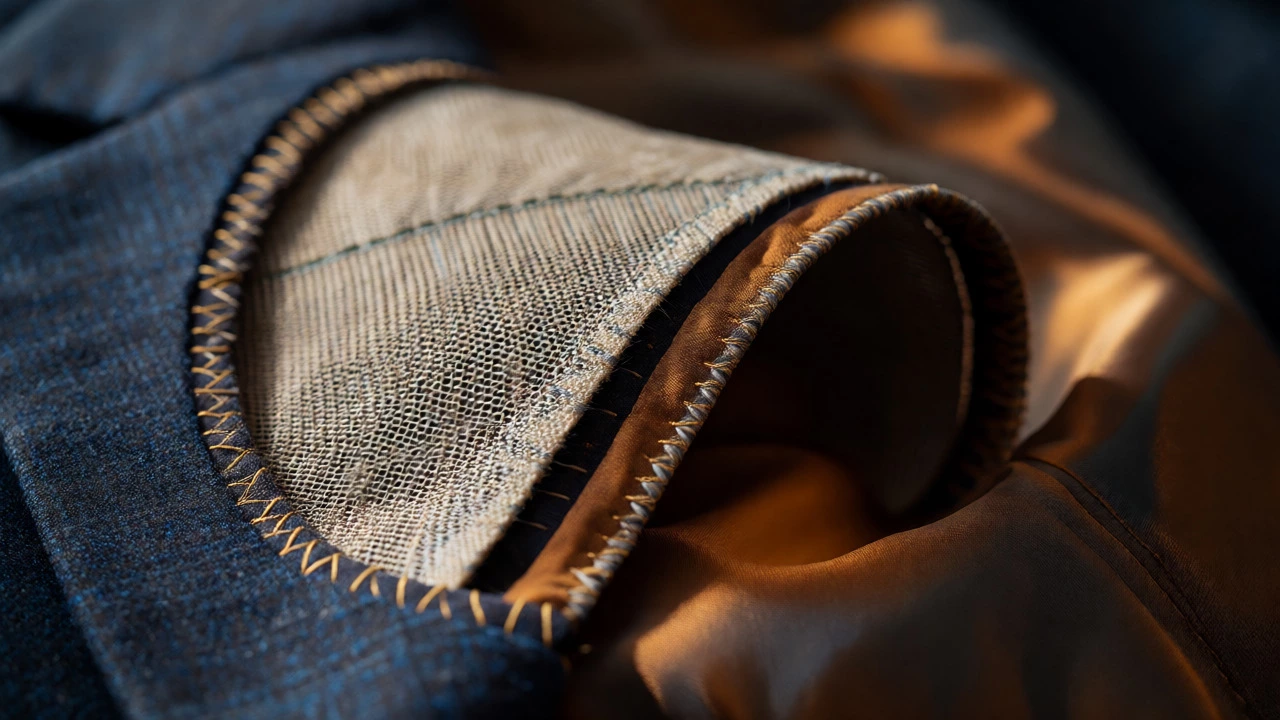
A proper bespoke tailoring method involves hand-stitching a floating canvas layer inside the jacket. This canvas is typically made from horsehair and wool blend. It’s not glued to the outer fabric; it’s sewn loosely. This creates a three-dimensional structure. The jacket molds to your body over time. If you gain five pounds, the canvas stretches slightly. If you lose weight, it relaxes. It breathes better because air can circulate between the layers. And critically, it never bubbles.
Hand-padding the lapels takes a skilled tailor several hours per jacket. They stitch the canvas to the wool in a specific pattern that rolls the lapel naturally. Machines can’t replicate this organic curve. When you touch the lapel of a high-end suit, it should feel soft and roll smoothly, not look like a flat, rigid board. That tactile difference is pure labor cost.
The Hidden Labor Costs of Craftsmanship
Let’s talk about time. Making a machine-sewn suit might take thirty minutes of assembly line work. Cutting the pieces, stitching them together, pressing them. Done. A half-canvas or full-canvas suit requires significantly more time. The cutting alone is an art form. Pattern makers must account for fabric grain direction, pattern matching (especially with stripes or checks), and waste minimization. A bad cut ruins expensive cloth.
Then comes the sewing. Even in factories producing premium suits, critical areas are done by hand. Buttonholes are often hand-stitched. Why? Because machine buttonholes are rigid. Hand-stitched ones have a slight give, allowing the button to pass through smoothly without stressing the thread. The buttons themselves aren’t plastic either. Premium suits use corozo nut (vegetable ivory) or mother-of-pearl. These materials are durable, biodegradable, and feel cool to the touch. Plastic buttons crack and look cheap under bright lights.
Sleeve heads require extra padding to prevent shoulder seams from digging in. Trouser waistbands are reinforced with tape to hold their shape. Every single detail adds minutes to the clock. Multiply those minutes by skilled wages-whether in Italy, England, or Japan-and you see why the labor cost alone can exceed the price of a entire budget suit.
Fit Adjustments and Alterations
Buying off-the-rack is convenient, but it’s rarely perfect. Human bodies are asymmetrical. One shoulder is usually higher than the other. Our spines curve differently. A mass-produced suit assumes an average body. If you’re tall, broad-shouldered, or have a narrow waist, you’ll pay for alterations.
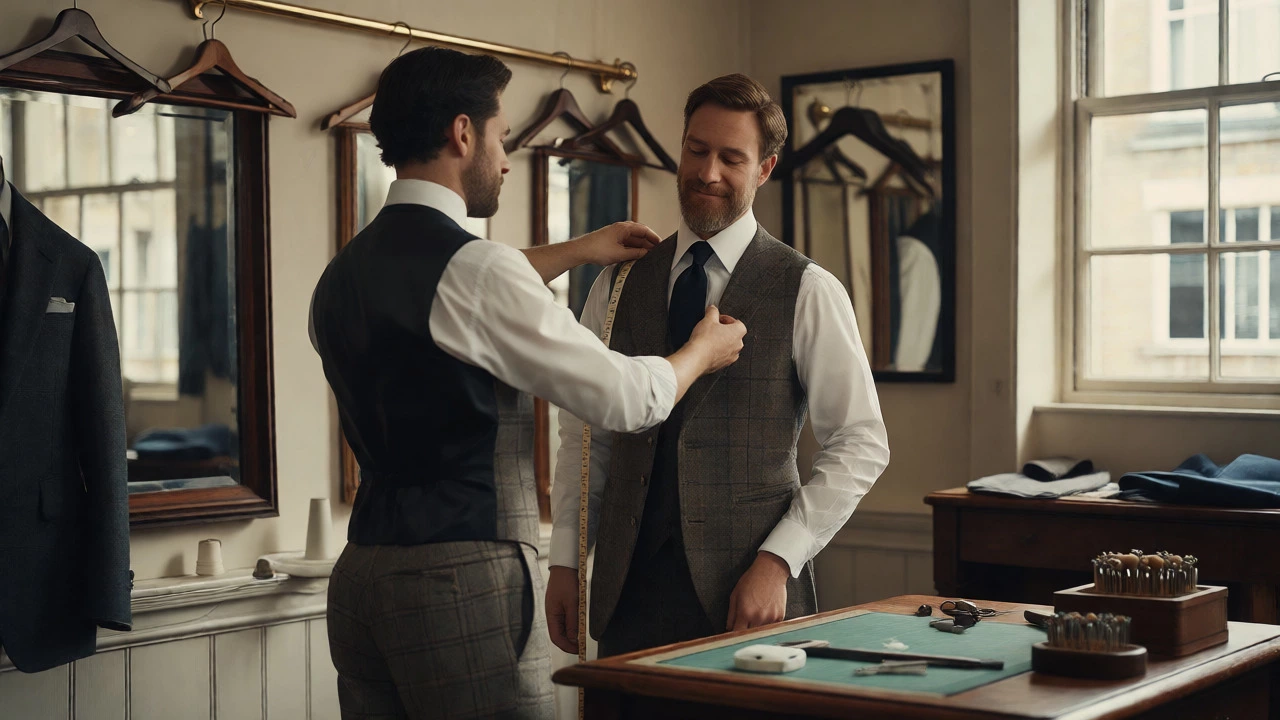
High-end retailers often include basic alterations in the price, or they charge separately for expert fitting. A good tailor won’t just hem your trousers; they’ll adjust the sleeve pitch, taper the waist, and shorten the sleeves properly (which is hard to do after the lining is attached). If you buy a cheap suit, spending £50 on alterations might double its cost, making it less economical than buying a mid-range suit that fits better initially. With luxury suits, the base fit is closer to ideal because the patterns are drafted with more anatomical precision.
Consider the longevity aspect. A well-fitted suit encourages you to wear it. An ill-fitting one sits in the closet. Cost-per-wear is the only metric that matters. A £1,000 suit worn twice a week for five years costs pennies per day. A £200 suit worn once a month for two years costs more per wear and looks worse doing it.
Brand Heritage and Retail Markup
Yes, brand power plays a role. Savile Row names command premiums partly due to heritage. You’re paying for the guarantee that the tailors have decades of experience. You’re paying for the exclusivity of limited production runs. Unlike fast fashion, which produces millions of units, luxury houses produce thousands. Economies of scale don’t apply the same way.
Retail markups also vary. Direct-to-consumer brands like Suitsupply or Indochino offer lower prices by skipping department store commissions. Traditional brick-and-mortar stores need to cover rent in prime locations, staff training, and inventory holding costs. If you buy online, you save on overhead but risk fit issues. If you buy in-store, you pay for the service and immediate gratification.
Don’t ignore the supply chain transparency. Ethical sourcing costs more. Ensuring workers in Bangladesh or Portugal earn fair wages, and that sheep farmers treat animals humanely, adds to the bottom line. Fast fashion often cuts corners here. When you buy a luxury suit, part of the price supports a more sustainable and ethical ecosystem, even if it’s not explicitly advertised.
Is It Worth The Investment?
So, do you actually need a £1,500 suit? Probably not for every occasion. For job interviews or casual weddings, a solid £400-£600 half-canvas suit from a reputable brand hits the sweet spot. It gives you 80% of the quality for 40% of the price.
But for career professionals who wear suits daily, the investment pays off. The comfort factor is real. You’ll notice less fatigue at the end of a long day when your clothes breathe and move with you. The aesthetic difference is subtle but noticeable to those who know. More importantly, confidence comes from knowing your appearance is impeccable.
If you’re starting out, focus on fit before fabric. A mediocre suit tailored perfectly beats a luxury suit that fits poorly. Save your money for alterations first. Once you have a reliable fitter, upgrade the fabric and construction. Start with navy or charcoal grey wool. Avoid black suits unless you’re in the funeral business or evening wear specialists. Black wool looks harsh in daylight and fades quickly.
What is the main difference between fused and canvassed suits?
Fused suits use glue to attach the inner layer to the outer fabric, which is cheaper but can bubble over time. Canvassed suits use hand-stitched horsehair canvas, providing better shape retention, breathability, and longevity. You can test this by pinching the lapel; if it feels like two separate layers sliding against each other, it’s likely canvassed.
How long should a high-quality suit last?
With proper care, including regular brushing, airing out, and minimal dry cleaning, a high-quality wool suit can last 10 to 15 years. Cheaper suits may only last 2 to 3 years before showing signs of wear like shiny elbows, pilling, or structural failure.
Are Super 150s fabrics better than Super 110s?
Not necessarily for daily wear. Super 150s is finer and softer but more delicate and prone to wrinkling. Super 110s offers a better balance of durability and elegance for office wear. Higher numbers are often reserved for special occasions or lighter seasonal fabrics.
Do I really need a tailor if I buy an expensive suit?
Yes. Even bespoke suits require minor adjustments. Off-the-rack luxury suits still assume an average body type. Spending 10-15% of the suit’s cost on professional alterations ensures the shoulders sit right, sleeves show the correct amount of shirt cuff, and trousers break correctly over your shoes.
Why are Italian suits generally more expensive than American ones?
Italian suits often feature more complex construction techniques, such as Neapolitan shoulders with intricate gathering, and use premium European fabrics. The labor costs in regions like Naples or Milan are higher, and the tradition of artisanal tailoring commands a premium compared to mass-market American styles.