
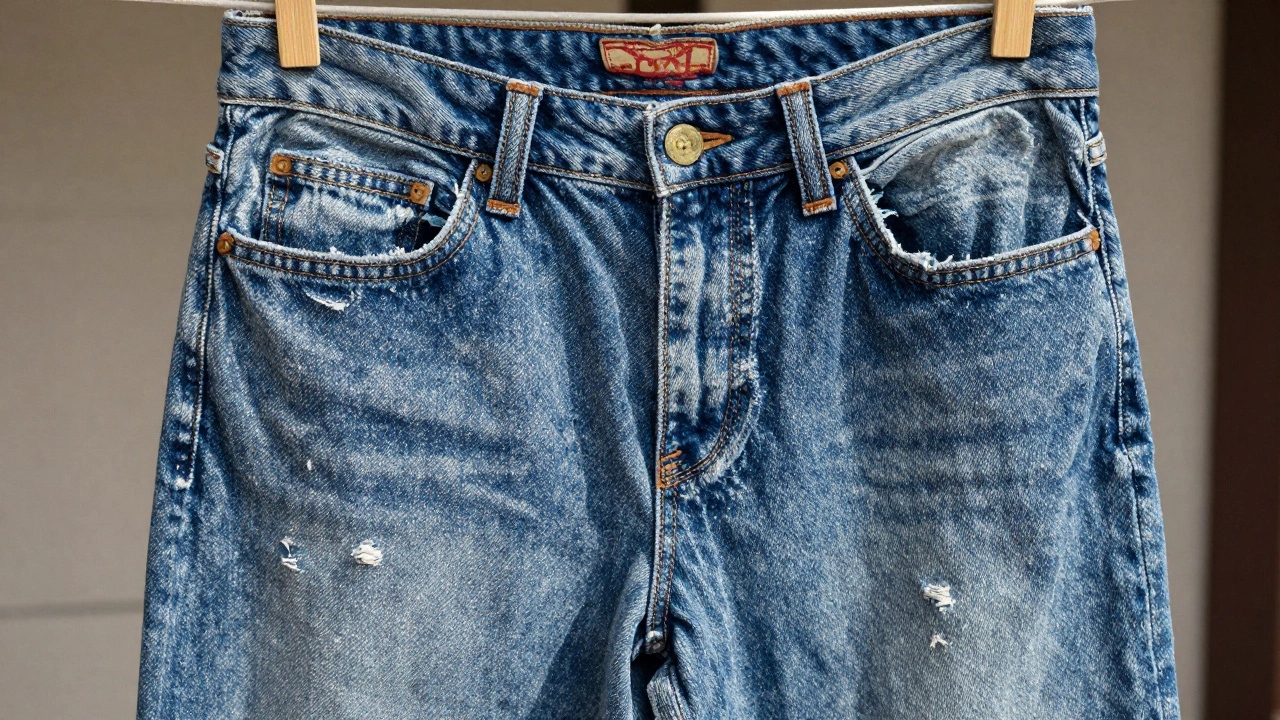
There’s a reason you see people paying more for jeans that already look worn out. It’s not just about style-it’s about how they feel, how they fit, and how they’ve been shaped by real life. New jeans are stiff, scratchy, and often don’t sit right on your body. Old jeans? They’ve softened, molded, and settled into you like a second skin. And that’s not luck-it’s science, sweat, and time.
They Fit Like They Were Made for You
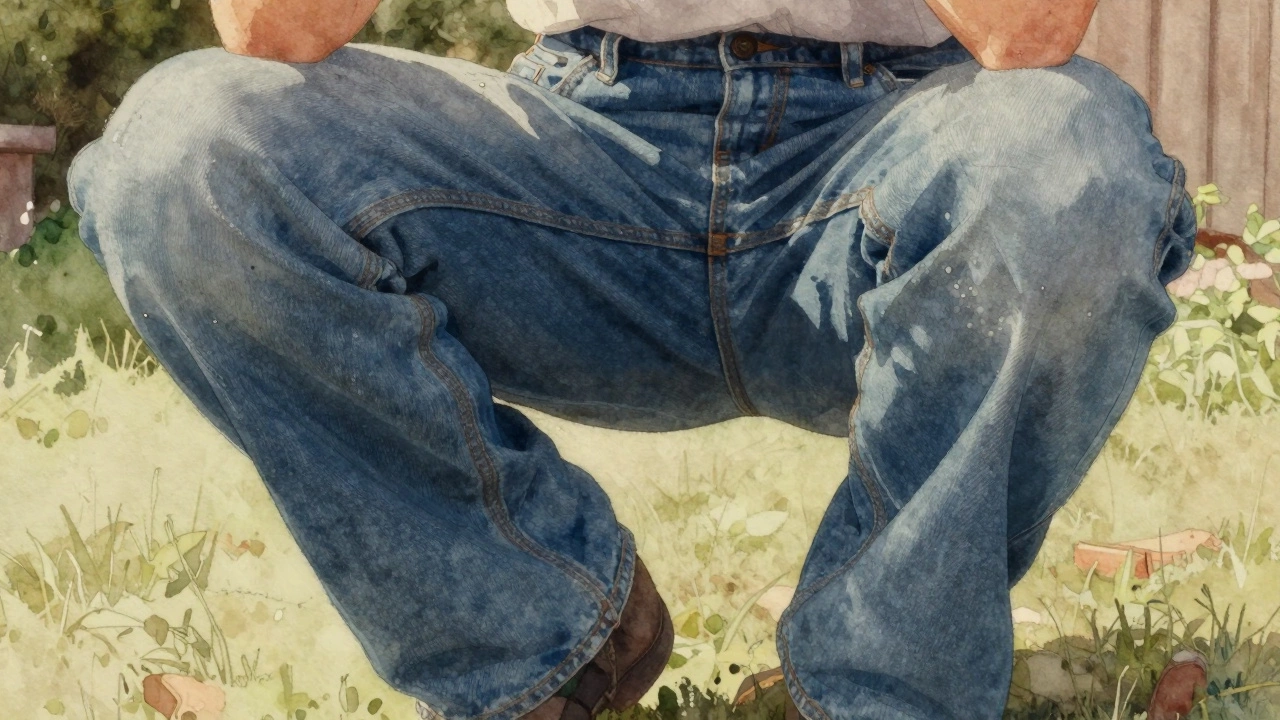
New jeans come in standard sizes, but bodies aren’t standard. Your hips, thighs, and waist move differently than anyone else’s. Over time, denim stretches where you need it to. The fabric compresses around your knees when you squat, hugs your hips when you sit, and gives just enough room when you walk. After six months of daily wear, your jeans don’t just fit-they remember you. That’s why people say, ‘These feel like they were custom-made.’ They were. By you.
The Fabric Breaks Down the Right Way
Denim isn’t just cotton. It’s woven with a tight twill pattern that holds up under friction. When you wear jeans regularly, the fibers rub against each other and the environment. This isn’t damage-it’s conditioning. The indigo dye fades naturally in high-wear areas: the thighs, knees, and back pockets. The whiskering around the hips? That’s from how you sit. The creases along the knees? From bending. These aren’t flaws. They’re fingerprints of your movement. Cheap jeans fall apart after a few washes. Good denim evolves. It gets better.
They Don’t Need Washing-And That’s a Good Thing
Washing jeans too often destroys their character. Every cycle weakens the fibers, fades the color unevenly, and strips away the natural oils that keep denim flexible. People who swear by old jeans rarely wash them. Instead, they air them out, freeze them to kill bacteria, or spot-clean stains. A pair of raw denim worn for a year without washing can develop a patina that no factory can replicate. That deep blue-black hue with subtle fading? That’s the result of daily friction, body heat, and time-not a dye job.
They’re Built to Last-Unlike Fast Fashion
Most jeans today are made with thinner cotton, synthetic blends, and weak stitching to cut costs. They’re designed to be replaced, not worn out. Old jeans, especially from the 80s, 90s, or early 2000s, were made with heavier denim (12-16 oz), double-stitched seams, and brass rivets. Brands like Levi’s 501, Wrangler 1955, and Lee 101 used to make jeans meant to last decades. You can still find them in thrift stores. They’re heavier, sturdier, and feel more substantial in your hands. When you hold an old pair next to a new one, you can tell the difference-like comparing a hand-forged knife to a plastic one.
The Comfort Isn’t Just Physical-It’s Psychological
There’s something calming about wearing something that’s seen you through hard days, long walks, and lazy Sundays. Old jeans carry memory. They’ve been to job interviews, concerts, road trips, and quiet nights on the couch. You don’t worry about spilling coffee on them. You don’t panic if they get a little muddy. That freedom? It’s rare in a world obsessed with keeping things perfect. Worn-in denim doesn’t demand perfection. It rewards consistency.
They’re Sustainable Without Trying
Fast fashion jeans get thrown away after six months. The average American buys 6.8 pairs of jeans a year and keeps them for just 2.8 years. Meanwhile, someone who wears the same pair for five, ten, even twenty years? They’re cutting waste, saving money, and reducing water use. One pair of jeans takes about 1,800 gallons of water to make. That’s enough to drink for seven years. Wearing old jeans isn’t just a style choice-it’s one of the quietest, most effective acts of sustainability you can make.
Why New Jeans Can’t Replicate This
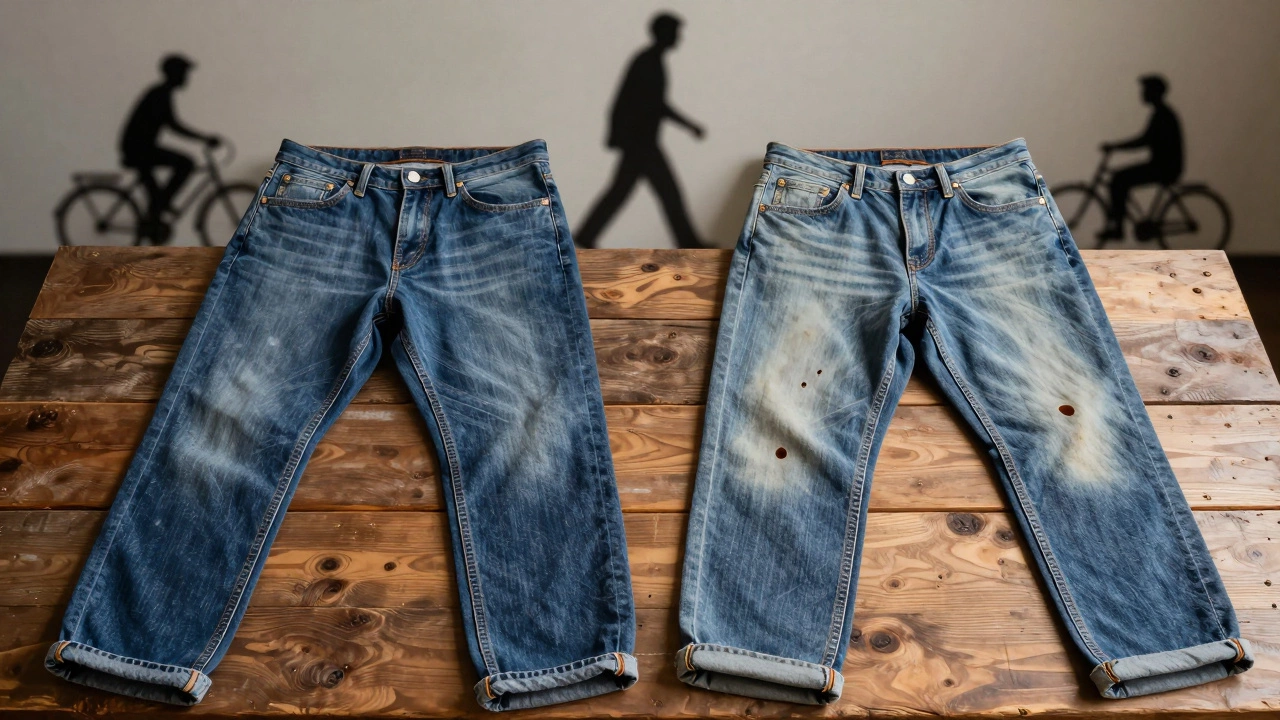
Some brands try to fake the look with sandpaper, laser fading, or chemical washes. But you can tell the difference. Factory-distressed jeans have uniform fading. Real worn jeans have asymmetry-left knee fades more than right if you favor one side. Back pockets get worn deeper on one side if you carry your wallet there. The creases follow your body’s natural lines, not a template. No machine can copy the randomness of real life. That’s why vintage denim collectors pay hundreds for a pair that’s been worn for years-not because they’re rare, but because they’re authentic.
How to Find Your Next Pair of Old Jeans
You don’t need to hunt in vintage shops (though they’re worth checking). Start with:
- Look for 100% cotton denim-no spandex, no elastane. Spandex breaks down faster and loses shape.
- Check the label for weight: 12 oz or higher is ideal.
- Look for brass rivets, chain-stitched hems, and selvedge edges (the self-finished edge on the inside leg).
- Buy them unwashed or raw. They’ll mold to you better.
- Try them on. If they’re tight at first, that’s okay. They’ll stretch.
Thrift stores, army surplus shops, and online vintage sellers like Etsy or Grailed are good places to start. Don’t be afraid of stains or small tears. Those can be repaired. What matters is the fabric and the fit.
What to Do With Your Old Jeans When They’re Done
Even the toughest denim wears out eventually. When it does, don’t throw them away. Donate them to textile recycling programs. Some brands like Levi’s and Madewell take back old jeans to turn them into insulation or new fabric. Or, turn them into cleaning rags, tote bags, or even patchwork quilts. The life of a good pair of jeans doesn’t end when they’re too worn to wear-it just changes form.
It’s Not About Age-It’s About Attachment
Old jeans aren’t better because they’re old. They’re better because they’ve been lived in. They’ve carried you. They’ve held your weight, absorbed your sweat, and survived your chaos. That’s not something you can buy. It’s something you earn. And once you’ve worn a pair that truly fits you-really fits you-you’ll never go back to something new again.
Are old jeans more comfortable than new ones?
Yes. New jeans are stiff and often feel restrictive. Old jeans have softened over time, stretched to match your body shape, and lost their scratchiness. The fabric molds to your movements, making them feel like a second skin. That comfort comes from wear, not from marketing claims.
Why do old jeans fade in certain spots?
Fading happens where the fabric rubs most-knees, thighs, hips, and back pockets. It’s caused by friction from sitting, walking, and bending. Each person’s body moves differently, so the fading pattern is unique. Factory-distressed jeans use machines to copy this, but they can’t replicate the natural asymmetry of real wear.
Should I wash my old jeans often?
No. Washing too often weakens the fibers and fades the color unevenly. Most people who love old jeans wash them only every few months-or not at all. Air them out, freeze them to kill odor, or spot-clean stains. The natural oils and patina that develop over time are what make them special.
Are vintage jeans better quality than modern ones?
Generally, yes. Jeans made before the 2000s used heavier denim (12-16 oz), double-stitched seams, brass rivets, and 100% cotton. Modern fast-fashion jeans often use thinner fabric, synthetic blends, and weaker stitching to cut costs. Vintage pairs are built to last decades. Modern ones are built to be replaced.
Can I make new jeans feel like old ones faster?
You can speed it up a little-wear them daily, avoid washing, and soak them in saltwater to help set the dye. But you can’t rush the real process. True character comes from time and movement. Even the most worn-in new pair won’t have the same depth as one that’s been lived in for years.