
Denim Brand Strategy Simulator
Select your top priorities as a denim shopper to discover which global giant best fits your needs.
Your Shopping Priorities
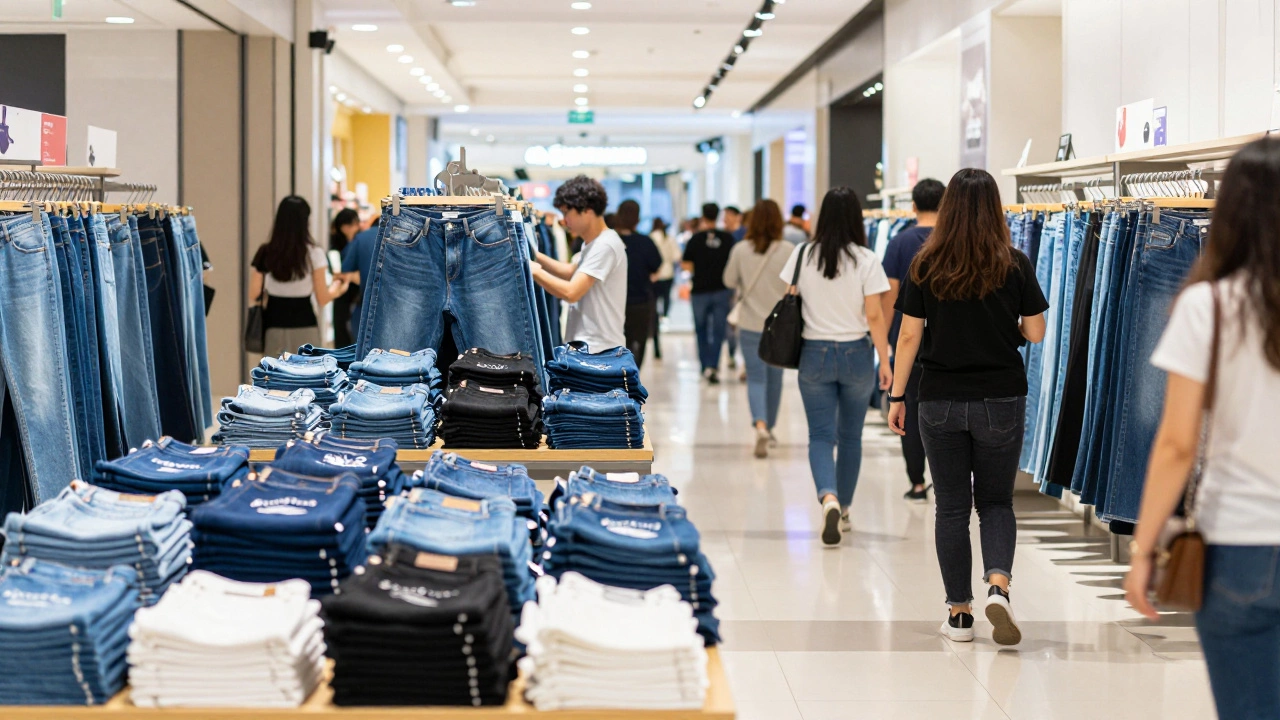
Walk into any shopping mall or browse your favorite online retailer, and you will see one thing everywhere: denim. It is the fabric that conquered the world, moving from workwear for miners to a staple in every closet on the planet. But when we talk about volume-who actually moves the most units of this blue gold-the answer isn't as simple as naming just one brand.
The title of 'best-selling jeans company' depends entirely on how you count. Are we talking about total revenue? Or are we counting the actual number of pairs sold? In the fast-paced world of fashion retail, these two metrics often tell very different stories. While luxury houses charge premium prices for fewer items, mass-market giants rely on sheer volume to dominate the shelves.
What company sells the most jeans globally?
If measuring by pure unit volume, Inditex, the parent company of Zara, likely sells the highest number of denim garments due to its massive global footprint and fast-fashion model. However, if looking at dedicated denim heritage brands, Levi Strauss & Co. remains the iconic leader with annual revenues exceeding $7 billion.
The Volume King: Inditex and the Fast Fashion Powerhouse
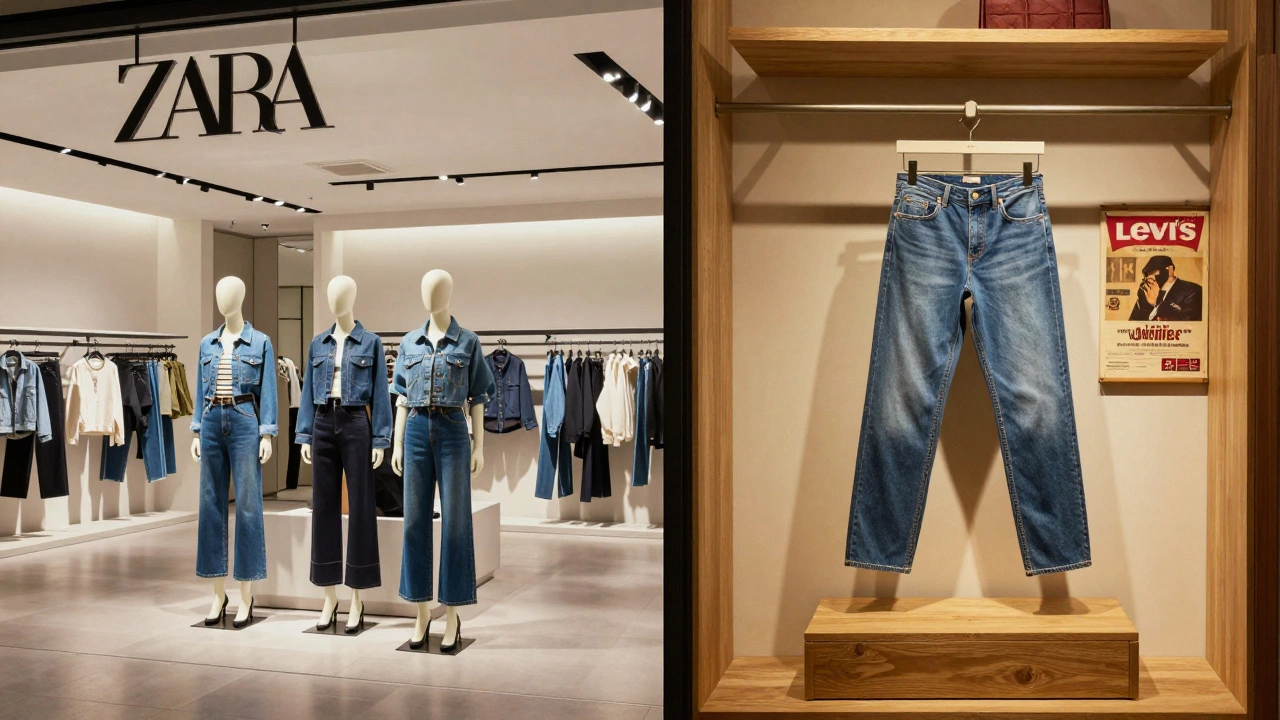
When it comes to raw numbers, the heavyweight champion is not a traditional denim brand, but a retail giant. Inditex, the Spanish multinational clothing corporation founded by Amancio Ortega, operates under several famous banners, most notably Zara. Because Inditex treats denim as a core component of its entire apparel ecosystem rather than a niche product, their aggregate sales of jeans dwarf those of specialized competitors.
Zara’s strategy is built on speed and scale. They produce millions of pairs of jeans annually, catering to every trend from skinny fits to wide-leg silhouettes. By controlling their supply chain vertically, they can move inventory faster than almost anyone else. This means that while you might buy one pair of Levi's that lasts ten years, you might buy three pairs of Zara jeans over the same period. That turnover rate drives up the unit count significantly.
Beyond Zara, Inditex owns other chains like Pull&Bear and Bershka, which also sell substantial amounts of denim. When you combine all these outlets, the total volume of jeans leaving their stores is staggering. They dominate the mid-to-low price point segment, making denim accessible to billions of consumers worldwide. For many shoppers, especially younger demographics, these brands represent the first step into owning multiple pairs of jeans.
The Heritage Leader: Levi Strauss & Co.
If Inditex wins on volume, Levi Strauss & Co. wins on identity. Founded in 1853, Levi's is arguably the most recognized name in denim history. They invented the riveted pants that started it all, and today, they remain the benchmark against which all other jeans are measured. With annual net revenues consistently hovering around $7 billion to $8 billion, Levi's is a financial titan in its own right.
Levi's success lies in its ability to balance heritage with modernity. Their flagship product, the 501 Original Fit, has remained largely unchanged for over a century, yet it continues to sell millions of units every year. This consistency creates a loyal customer base that views Levi's not just as clothing, but as a cultural symbol. From musicians to movie stars, the brand has maintained a strong presence in pop culture for decades.
Unlike fast-fashion retailers that churn out new styles weekly, Levi's focuses on timeless cuts. This approach leads to higher average selling prices per pair. A standard pair of Levi's 501s typically costs between $60 and $90, whereas comparable jeans from budget retailers might cost half that amount. This pricing power allows Levi's to maintain healthy profit margins even if their unit sales don't match the sheer volume of Inditex.
| Company | Primary Brand(s) | Key Advantage | Price Positioning |
|---|---|---|---|
| Inditex | Zara, Pull&Bear | Massive global reach and speed | Budget to Mid-range |
| Levi Strauss & Co. | Levi's, Dockers | Brand heritage and loyalty | Mid to Premium |
| H&M Group | H&M, COS | Affordability and accessibility | Budget |
| Uniqlo | Uniqlo | Quality basics and technology | Mid-range |
The Asian Giant: Uniqlo and the Rise of Basics
In recent years, Uniqlo, part of the Japanese conglomerate Fast Retailing, has emerged as a major player in the global denim market. Unlike the trend-chasing models of Zara or H&M, Uniqlo focuses on high-quality basics. Their Super Elastic Jeans line has become a bestseller, appealing to consumers who prioritize comfort and durability over fleeting fashion trends.
Uniqlo’s growth strategy is particularly strong in Asia, where the middle class is expanding rapidly. By offering jeans that fit well, last long, and are priced reasonably, they have captured a significant share of the market. Their vertical integration allows them to control quality at every stage, from cotton farming to final stitching. This focus on value-for-money resonates with pragmatic shoppers who want reliable staples rather than experimental styles.
The company’s expansion into Western markets has also boosted their overall sales figures. With hundreds of stores across North America and Europe, Uniqlo competes directly with both Levi's and Inditex. Their minimalist aesthetic appeals to a broad demographic, making them a go-to choice for everyday wear. As sustainability becomes a bigger concern for consumers, Uniqlo’s emphasis on durable goods positions them well for future growth.
The Budget Contender: H&M Group
No discussion about jeans sales would be complete without mentioning H&M Group. Like Inditex, H&M is a Swedish fast-fashion giant that relies on high volume and low prices. Their denim range is extensive, covering everything from ultra-cheap options to collaborations with high-end designers. This diversity ensures that there is an H&M jean for nearly every budget and style preference.
H&M’s strength lies in its aggressive pricing strategy. They often offer jeans for under $20, making them incredibly accessible to students and young adults. This affordability drives repeat purchases, as customers feel less hesitant to experiment with new cuts or washes. While the longevity of these jeans may not match that of Levi's or Uniqlo, the low barrier to entry results in high turnover rates.
However, H&M faces challenges related to sustainability and ethical sourcing. As consumer awareness grows, the brand is under pressure to improve its environmental practices. Initiatives like recycling programs and organic cotton usage are steps in the right direction, but the perception of fast fashion as wasteful remains a hurdle. Despite this, H&M continues to sell millions of pairs of jeans annually, maintaining its position as a key player in the global market.
Private Label: The Hidden Champions
While branded names like Levi's and Zara grab the headlines, private label jeans account for a huge portion of global sales. Major retailers such as Walmart, Target, and Amazon sell their own house brands, which often outsell named brands in terms of pure unit volume. These unbranded or lightly branded jeans are produced in massive quantities to meet the demand for affordable basics.
For example, Walmart’s George brand and Target’s Universal Thread offer jeans at price points that undercut most competitors. Shoppers buying from these big-box stores prioritize convenience and cost over brand prestige. Since these retailers operate thousands of locations and have robust e-commerce platforms, their combined denim sales are enormous. Yet, because these products lack the marketing budgets of big brands, they rarely appear in industry rankings focused on named entities.
This hidden segment highlights a crucial insight: the 'most sold' jeans are often those you don't think about. They are the workhorse denim in the back of the closet, bought for practicality rather than status. Ignoring private labels gives an incomplete picture of the true scale of the denim industry.
Regional Variations in Denim Preferences
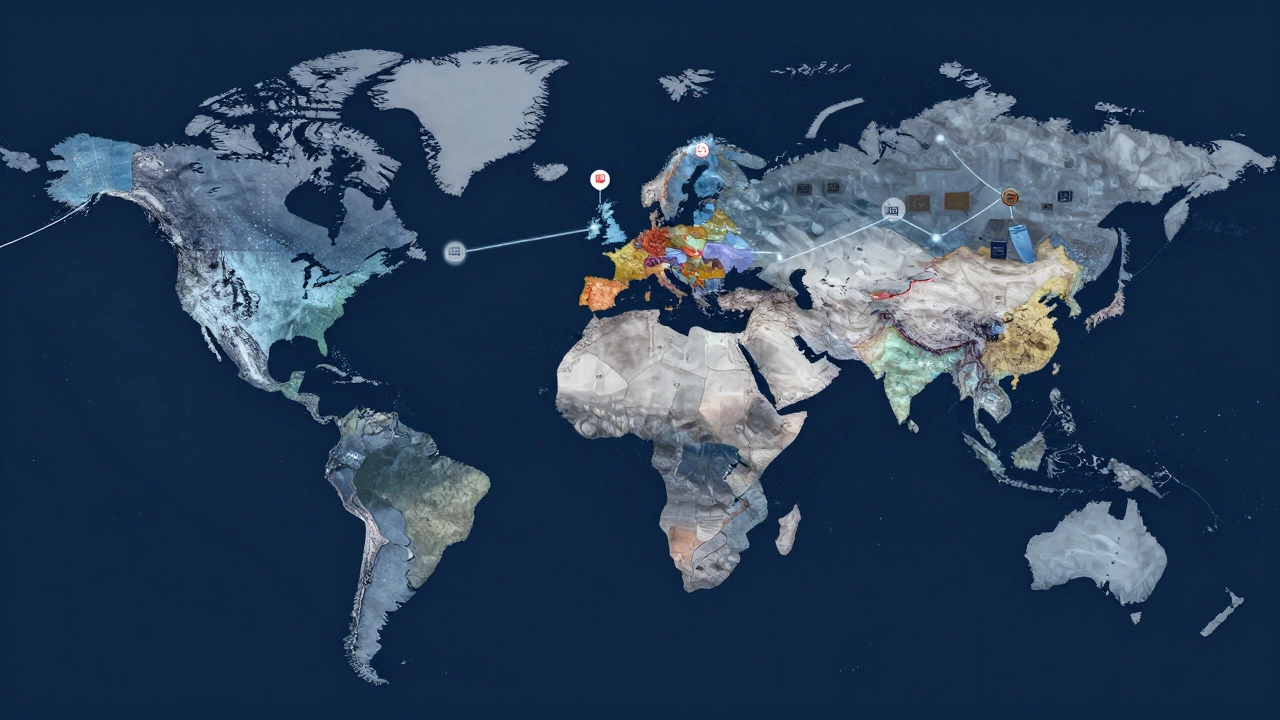
Global sales data masks significant regional differences in what people buy. In the United States, Levi's holds a dominant cultural position, with many consumers viewing it as the default choice for jeans. In contrast, European markets show a stronger preference for diverse styles, with brands like Diesel and G-Star Raw gaining traction alongside Inditex offerings.
In Asia, particularly China and India, the market is fragmented. Local brands compete fiercely with international giants, offering fits tailored to local body types and preferences. Uniqlo thrives here due to its focus on comfort and modesty, aligning with cultural norms. Meanwhile, in Latin America, vibrant colors and distressed finishes are more popular, driving sales for brands that emphasize expressive design.
Understanding these nuances is essential for companies aiming to maximize sales. A one-size-fits-all approach rarely works in the global denim market. Successful brands adapt their product lines to reflect local tastes, ensuring relevance in each region they operate.
Sustainability and the Future of Denim Sales
As environmental concerns take center stage, the way we buy and wear jeans is changing. Traditional denim production is water-intensive and polluting, leading to scrutiny from regulators and consumers alike. Brands are responding by adopting sustainable practices, such as using recycled cotton, reducing water usage, and implementing circular economy models.
This shift impacts sales dynamics. Consumers are increasingly willing to pay more for eco-friendly options, benefiting brands like Levi's and Uniqlo that invest in green technologies. Conversely, ultra-fast-fashion retailers face pressure to justify their environmental footprint. Those who fail to adapt risk losing market share to more responsible competitors.
Additionally, the rise of second-hand markets and rental services introduces new variables. Platforms allowing users to buy, sell, or rent pre-owned jeans extend the life of existing inventory, potentially reducing the need for new purchases. While this doesn't directly boost sales of new jeans, it influences consumer behavior and brand loyalty in subtle ways.
Is Levi's still the most popular jeans brand?
Levi's remains the most iconic and recognizable jeans brand globally, especially in the US market. However, in terms of total units sold, large retailers like Inditex (Zara) and H&M likely surpass them due to their broader product ranges and lower price points.
Which country buys the most jeans?
The United States is traditionally the largest single market for jeans consumption. However, countries like China and India are growing rapidly, driven by rising incomes and urbanization. Together, these regions account for a significant portion of global denim demand.
Are private label jeans better than branded ones?
It depends on your priorities. Private label jeans from major retailers often offer good value for money with decent quality. Branded jeans like Levi's provide consistent sizing, heritage appeal, and often better durability. For casual wear, private labels are sufficient; for investment pieces, branded options may be preferable.
How has sustainability affected jeans sales?
Sustainability is influencing consumer choices, with many buyers preferring brands that use eco-friendly materials and processes. This trend benefits established brands investing in green tech, while pressuring fast-fashion retailers to improve their practices. It also boosts secondary markets for used denim.
What is the difference between Inditex and Levi's business models?
Inditex operates as a fast-fashion retailer, producing vast quantities of trendy, affordable jeans quickly. Levi's functions as a heritage brand, focusing on timeless designs, higher price points, and strong brand equity. Inditex wins on volume; Levi's wins on brand loyalty and margin.