
Evening Dress Checker
Check Your Dress Against Evening Wear Standards
Test if your dress meets the key attributes that define authentic evening wear as described in the article.
Ever stood in front of a closet full of dresses and wondered why one feels like an evening dress and another doesn’t? It’s not just about being fancy or sparkly. An evening dress isn’t defined by a single feature-it’s the quiet harmony of fabric, fit, silhouette, and detail that turns fabric into presence. You don’t need a red carpet to wear one. A dinner at a high-end restaurant, a wedding reception, or even a gallery opening calls for something that carries weight without shouting.
It’s Not Just Length
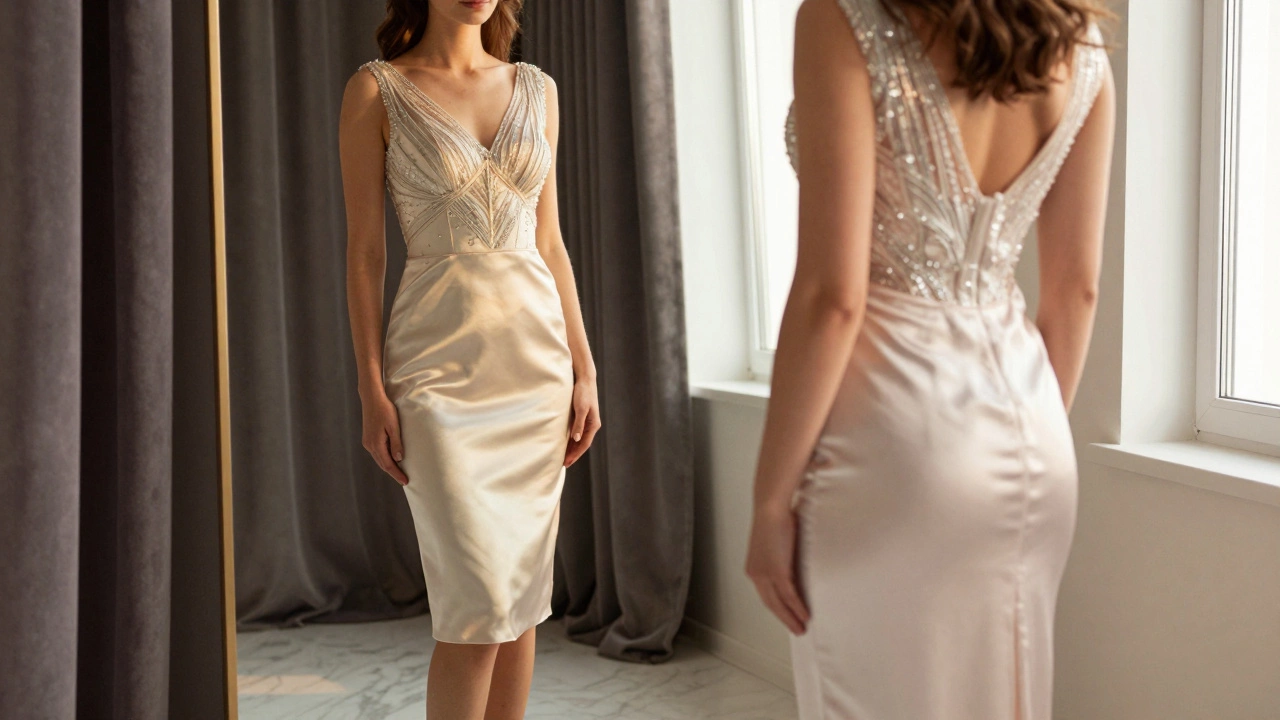
Many think an evening dress must be floor-length. That’s a myth. While long gowns are classic, knee-length and midi dresses can absolutely qualify-if they’re made with the right materials and structure. Think silk charmeuse, velvet, or satin with a structured bodice. A short dress in heavy crepe with delicate beading and a high neckline can feel more formal than a flimsy floor-length polyester number. The length should suit the occasion, but the substance determines if it’s evening wear.
Fabric Tells the Story
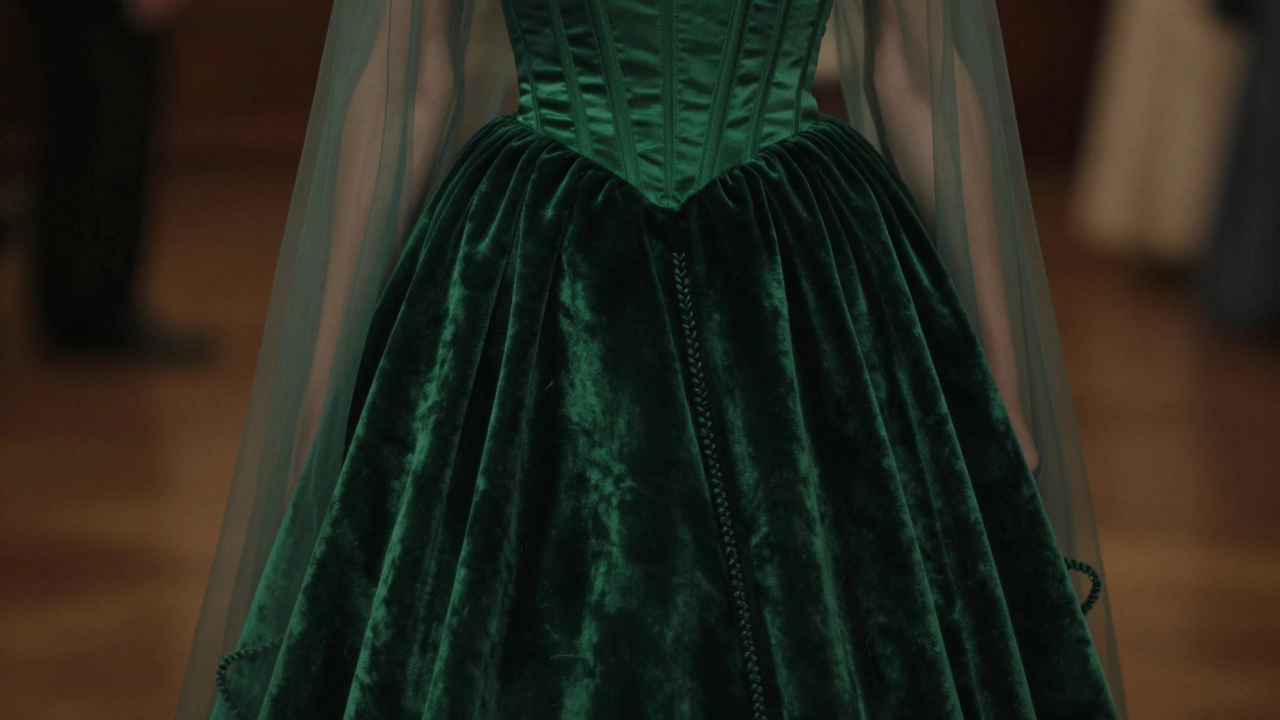
Evening dresses breathe through their fabric. You can spot a real evening dress from across a room because of how light catches it. Silk, satin, taffeta, lace, and organza are the traditional choices-not because they’re expensive, but because they behave differently than cotton or jersey. They drape, they shimmer, they hold shape. Velvet from the 1920s still looks luxurious today because it absorbs light instead of reflecting it blindly. Modern synthetics like polyester fail because they flatten under lighting. A good evening dress moves with you. It doesn’t cling like a second skin-it flows like liquid.
Structure Is Silent Power
Underneath all that beauty is a skeleton. Most evening dresses have internal structure: boning in the bodice, built-in bras, horsehair braid in skirts, or even light corsetry. These aren’t visible, but they’re essential. They keep the dress from collapsing, wrinkling, or sliding off your shoulders. You don’t notice them until you try to wear a dress without them. Then you realize: it slumps. It shifts. It loses its dignity. A well-made evening dress doesn’t ask you to hold it up. It holds itself.
Details Are the Whisper, Not the Shout
Sequins, embroidery, lace appliqués, hand-stitched beads-these aren’t just decoration. They’re craftsmanship. A single evening dress can have over 10,000 hand-sewn beads. That’s not for show. It’s about texture, depth, and how light moves across the surface. The best details don’t scream. They catch your eye slowly. A subtle metallic thread woven into the hem. A slit that reveals just a sliver of leg. A back that zips up with invisible closure and leaves bare skin to glow. These aren’t random choices. They’re intentional. They’re quiet confidence.
Fit Is Non-Negotiable
A dress that’s too tight or too loose ruins the illusion. Evening dresses are tailored to the body, not just sized. A size 8 in one brand might fit like a size 6 in another. That’s why alterations are part of the process, not an afterthought. The waist should sit where your natural waist is-not where the label says it should. The neckline should frame your collarbone, not cut into your throat. The shoulders should rest where your bones end, not dig into them. A dress that fits well doesn’t need to be expensive. It just needs to be adjusted to you.
Color and Embellishment Follow Context
Black is the default, but it’s not the rule. Deep emerald, ruby red, navy, and even metallic gold can be just as appropriate. The key is saturation. Muted pastels rarely work unless they’re in luxe fabrics like silk duchesse. Bright neons? No. Faded washes? No. Evening wear thrives on richness. Embellishments should match the tone: subtle for corporate events, bold for galas. A beaded neckline on a navy dress says elegance. A full sequin bodice says party. Know your audience. The dress should elevate you, not distract from you.
Footwear and Accessories Complete the Silence
You don’t need a matching clutch or statement earrings to make an evening dress work. In fact, over-accessorizing breaks the spell. A simple pair of satin heels, a delicate bracelet, or nothing at all can be more powerful. The dress should carry the weight. Shoes should be comfortable enough to stand in for hours, but elegant enough to match the fabric. Nude tones blend. Metallics reflect. Strappy sandals are classic. Block heels are practical. The goal is harmony, not competition.
Why It Matters Beyond the Occasion
An evening dress isn’t just for events. It’s a statement of self-respect. Wearing one means you’ve chosen to honor the moment-not just show up. It’s the difference between wearing clothes and wearing intention. You don’t need to be invited to a gala to feel the power of a well-made dress. Wear it to your anniversary dinner. Wear it to a job interview for a leadership role. Wear it because you deserve to feel like the version of yourself that walks into a room and owns it without saying a word.
What Makes a Dress Not an Evening Dress?
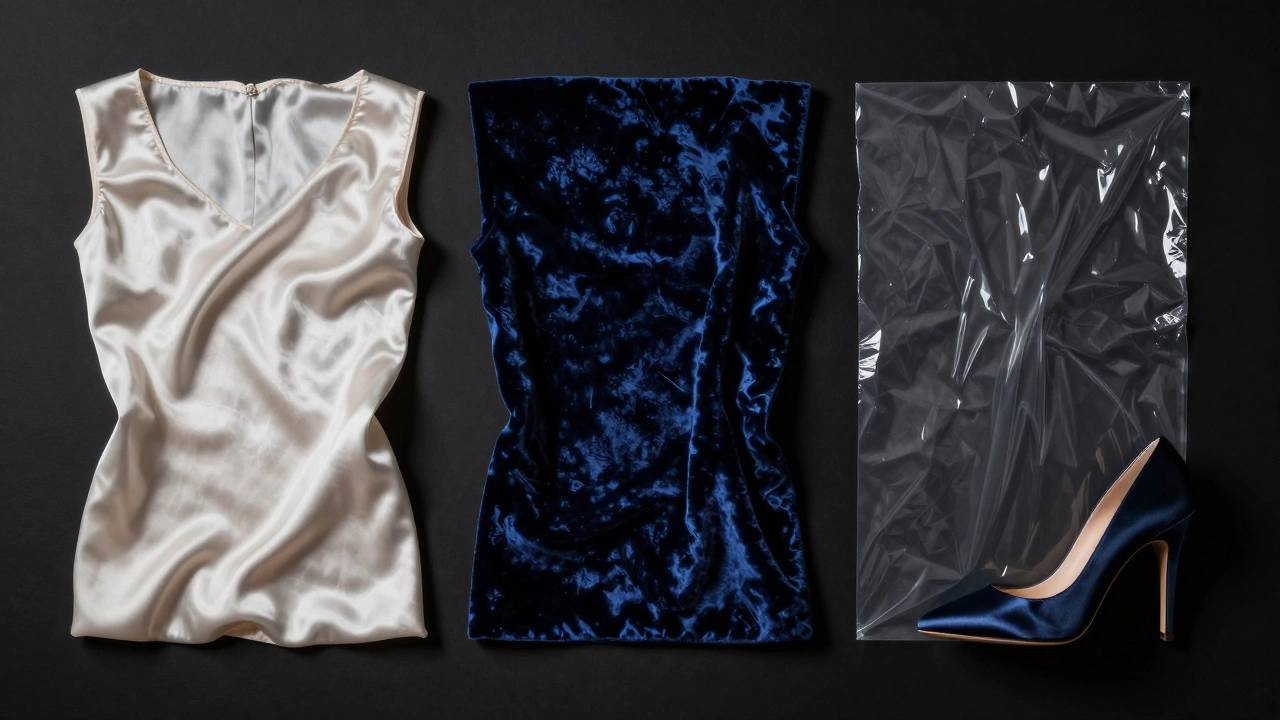
It’s easier to spot what doesn’t belong. A dress made of cotton jersey? Not evening wear. A dress with visible seams or cheap zippers? Not evening wear. A dress that wrinkles in five minutes? Not evening wear. A dress that requires constant tugging or adjusting? Not evening wear. If it doesn’t hold its shape, reflect light, or feel substantial, it’s just a dress. Evening wear has presence. It doesn’t disappear in a crowd. It leans in.
| Attribute | Evening Dress | Not Evening Dress |
|---|---|---|
| Fabric | Silk, satin, velvet, taffeta, organza | Cotton, polyester, jersey, spandex |
| Structure | Boning, internal lining, shaped silhouette | Unstructured, no support, hangs loosely |
| Embellishment | Hand-beaded, subtle embroidery, fine lace | Plastic sequins, glued appliqués, cheap prints |
| Fit | Tailored, requires alterations, hugs natural curves | One-size-fits-all, baggy, slides off |
| Length | Any length if fabric and structure are right | Short, but made with casual fabric |
| Light Reflection | Soft glow, depth, texture | Flat, shiny, plastic look |
How to Choose One for Yourself
Start with your body. Not your size. Your shape. Do you have broad shoulders? A V-neck or off-shoulder balances it. Narrow waist? Highlight it with a fitted bodice. Curvy hips? A-line or mermaid cuts add grace. Then consider the event. Is it black tie? Go for longer lengths and richer fabrics. Cocktail? A shorter silhouette with elegant detailing works. Finally, try it on in the lighting you’ll wear it in. Store lights lie. Natural light shows truth. Walk. Sit. Raise your arms. If you feel like you’re wearing a costume, it’s not right. If you feel like the most confident version of yourself? That’s the one.
Where to Find Real Evening Dresses
You don’t need to spend thousands. Independent designers in London, Milan, or even York often make stunning pieces at half the price of big labels. Look for small boutiques that use deadstock fabrics or local tailors who specialize in formal wear. Thrift stores in upscale neighborhoods sometimes hold vintage evening gowns from the 70s and 80s-silks that still shimmer, cuts that never go out of style. Avoid fast fashion chains. Their evening dresses are designed to be worn once. Real evening dresses are made to be remembered.
Can a short dress be considered an evening dress?
Yes, absolutely. Length isn’t the defining factor. A knee-length dress made of silk satin with a structured bodice, delicate beading, and elegant tailoring qualifies as evening wear. What matters is the quality of fabric, construction, and how it moves on the body-not how far it reaches.
Is black the only appropriate color for an evening dress?
No. While black is classic and versatile, deep jewel tones like emerald, ruby, sapphire, and plum are equally appropriate. Metallics like gold or silver also work well. The key is richness of color-avoid pastels, bright neons, or washed-out shades. Evening wear thrives on depth and saturation.
Do I need to wear heels with an evening dress?
Not necessarily. Heels enhance the line of the dress, but comfort matters too. Elegant flats made of satin or velvet, or low block heels, can work perfectly. The goal is balance: your shoes should complement the dress, not compete with it. If you can’t walk in them comfortably, they’re the wrong choice.
Can I wear an evening dress to a wedding?
Yes-if it’s not white, ivory, or cream, and it doesn’t clash with the bride’s dress. Avoid anything too flashy or overly revealing unless the invitation specifies a formal dress code. A tailored midi gown in navy or burgundy is a safe, elegant choice. Always check the dress code first.
How do I care for an evening dress?
Most evening dresses should be professionally dry cleaned, especially if they have beads, lace, or silk. Never machine wash or tumble dry. Hang it on a padded hanger in a cool, dark closet. Use a garment bag to protect it from dust and moths. If you spot a loose bead or seam, fix it immediately-don’t wait until the next event.
Final Thought: It’s About How You Feel
An evening dress isn’t about impressing others. It’s about how you feel when you wear it. Does it make you stand taller? Breathe deeper? Smile without thinking? That’s the real test. You don’t need to be tall, thin, or wealthy to wear one. You just need to believe you belong in it. And if you do-that’s what makes it an evening dress.