
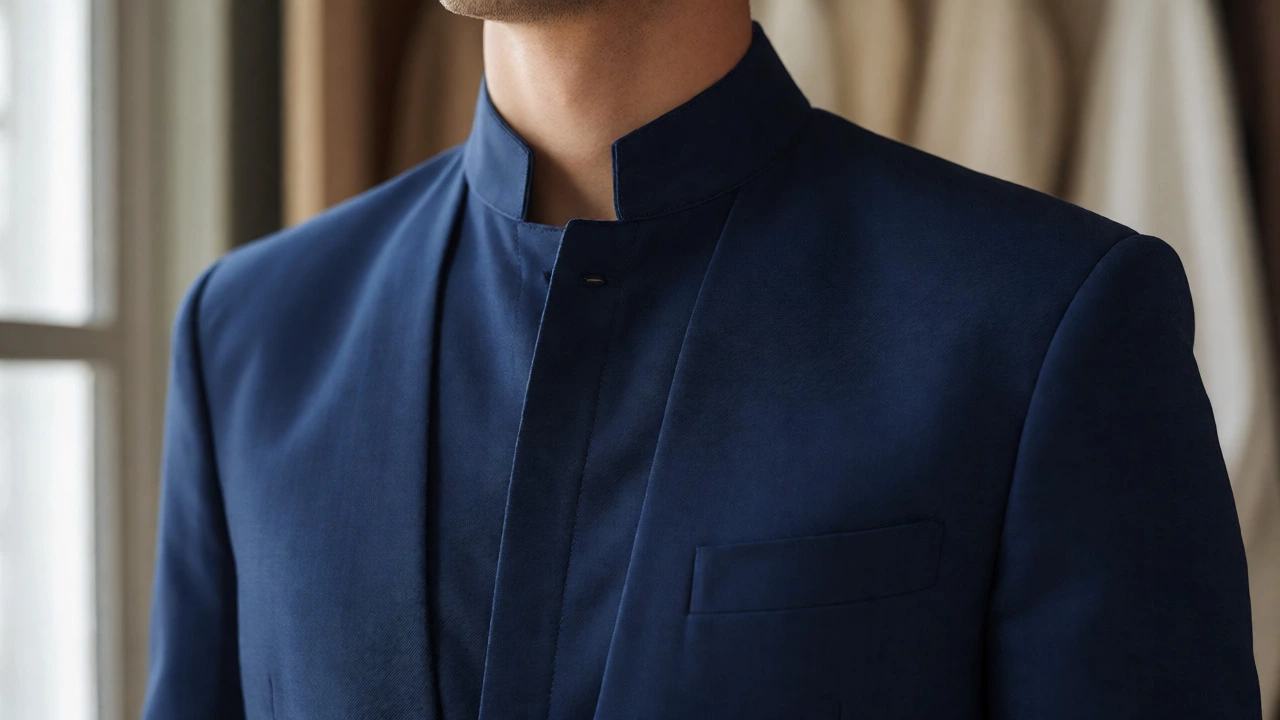
Collarless Jacket Identifier
Confused by the different names for collarless jackets? Answer these three quick questions to identify exactly what you are looking at or wearing.
Best For
Key Feature
You’re standing in front of your wardrobe, staring at that sleek, minimalist jacket. It looks sharp, modern, and incredibly versatile. But when you try to describe it to a friend or search for similar styles online, you hit a mental block. You know what it isn’t-it’s not a trench coat with a popped collar, and it’s definitely not a hoodie-but what is it?
The short answer? There isn’t just one name. Depending on the height, shape, and cultural origin of the neckband, this garment goes by several names: band collar, mandarin collar, stand-up collar, or simply collarless. Confusing? Absolutely. But once you understand the subtle differences, you’ll never mislabel a piece again.
The Anatomy of the Neckline
To understand what these jackets are called, you first need to understand what makes them different from traditional jackets like blazers or denim truckers. Standard collars have two distinct parts: the stand (the part that sits against your neck) and the leaf (the part that folds over). A collarless jacket removes the leaf entirely. Sometimes, it removes the stand too. Other times, it keeps a low version of the stand.
This structural change does more than just look different; it changes how the garment fits and feels. Without a bulky collar, the neckline sits closer to the skin, creating a streamlined silhouette that works beautifully under coats or as a standalone statement piece. It’s a design choice rooted in functionality-military uniforms needed clean lines that wouldn’t snag on equipment-and later adopted by high fashion for its minimalist appeal.
Band Collar vs. Mandarin Collar: What’s the Difference?
This is where most people get tripped up. In casual conversation, "band collar" and "mandarin collar" are often used interchangeably. Technically, they refer to slightly different things, though the line is blurry in modern fast fashion.
A band collar is a general term for any collar that stands upright without folding down. It can be tall or short, stiff or soft. Think of the collar on a classic polo shirt before you button it all the way up-that’s a type of band structure, though usually with a placket. In jackets, a band collar typically refers to a low, straight-standing neckband that follows the curve of the neck closely.
In contrast, a mandarin collar is a specific subtype of band collar. Originating from Chinese traditional clothing (the changshan), it features a short, unfolded standing collar that ends just below the chin. It’s rigid, structured, and usually has a small gap between the two ends rather than overlapping buttons. If you see a jacket with a stiff, vertical neckband that doesn’t quite meet in the middle, you’re likely looking at a mandarin style.
Then there’s the stand-up collar, which is often taller than a mandarin. This style gained massive popularity through military tunics and the iconic Nehru jacket. Unlike the delicate mandarin, a stand-up collar is robust, often featuring multiple buttons running vertically up the neck. It’s less about minimalism and more about authority and structure.
Why Do These Names Matter?
You might think, "Who cares what I call it? As long as I buy the right thing." But here’s why precision matters:
- Search Results: If you search for "collarless jacket," you’ll mostly find zip-ups and sweatshirts. If you want a tailored blazer with a clean neck, searching for "band collar blazer" yields completely different results.
- Fitting Expectations: A "mandarin" implies a specific fit around the throat. If you order a "stand-up" expecting a mandarin, you might find the neck too tight or too high.
- Cultural Context: Wearing a mandarin collar carries different stylistic connotations than a Western-style band collar. One leans towards Asian-inspired heritage; the other leans towards European minimalism.
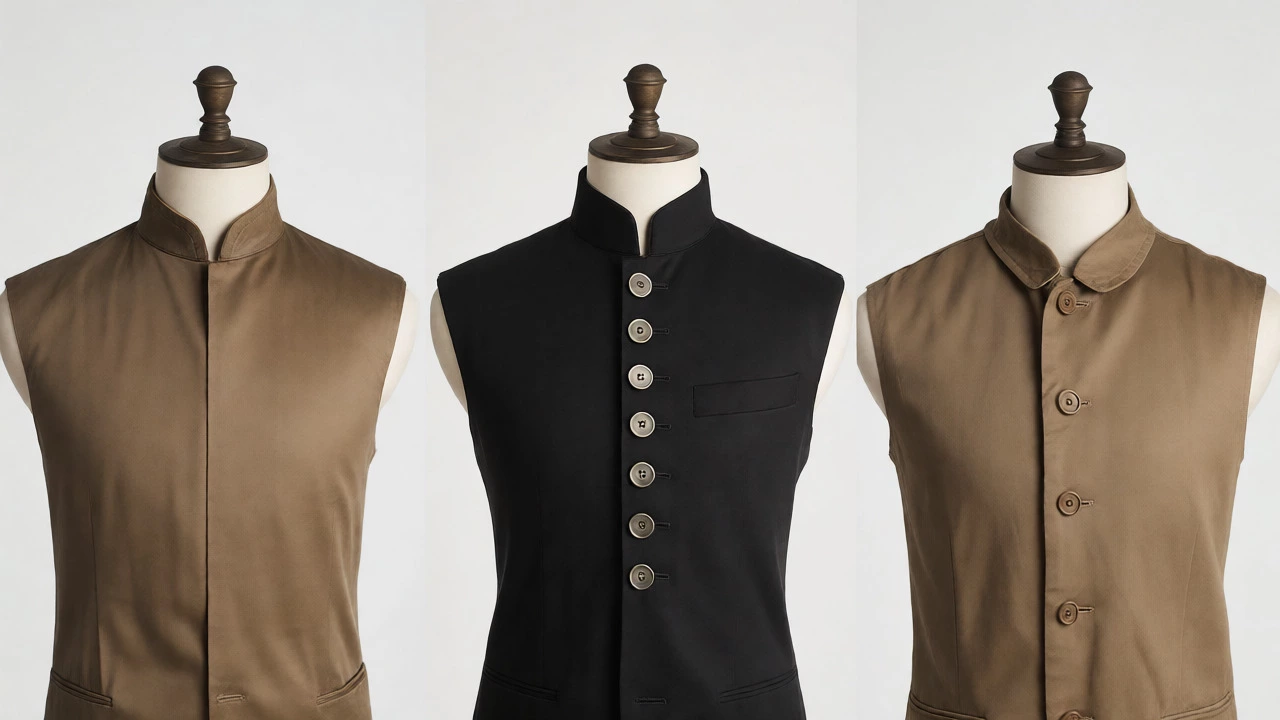
Common Types of Collarless Jackets
Let’s break down the specific garments you’re likely encountering. Knowing the specific name helps you find the exact vibe you’re going for.
| Style Name | Key Feature | Best For | Vibe |
|---|---|---|---|
| Nehru Jacket | Tall, stiff stand-up collar with vertical button closure. | Formal events, creative workplaces. | Retro-intellectual, authoritative. |
| Mandarin Shirt/Jacket | Short, rigid collar with a gap at the throat. | Smart-casual dinners, summer wear. | Elegant, culturally inspired. |
| Grandad Collar | Soft, low band collar, often rounded edges. | Relaxed weekends, layering. | Vintage, bohemian, relaxed. |
| Cuban Collar | Open camp collar, but often confused with collarless due to lack of tie space. | Summer parties, tropical climates. | Playful, retro, open. |
The Nehru jacket deserves special mention. Named after Jawaharlal Nehru, the first Prime Minister of India, this style became a global fashion phenomenon in the 1960s thanks to The Beatles. It’s essentially a suit jacket with a high, closed neckband instead of lapels. If you see a tailored jacket with no lapels and a high neck, it’s almost certainly a Nehru cut.
The grandad collar is the softer, more forgiving cousin. Often found on shirts and lightweight jackets, it uses a curved, low-profile band that hugs the neck loosely. It’s perfect if you find mandarin collars too restrictive. It gives off a vintage 1970s vibe, reminiscent of Woody Allen characters or indie folk musicians.
Styling Tips for the Collarless Look
Wearing a jacket without a collar requires a shift in thinking. Traditional styling rules rely on the collar to frame the face and create a V-shape with ties or scarves. Without that anchor, you need to compensate elsewhere.
First, pay attention to your neckwear-or lack thereof. Since there’s no collar to hide a tie knot, a collarless jacket demands an open neckline. Wear it alone, or pair it with a turtleneck underneath. A thin merino wool turtleneck sliding out from under a band-collar blazer is a power move in autumn. It adds warmth without cluttering the visual line.
Second, consider your accessories. Because the neck area is bare, it draws immediate attention to your face and jewelry. Statement earrings or a bold necklace work well with women’s collarless jackets. For men, a pocket square becomes crucial. Without lapels to hold a boutonnière or pin, the chest pocket needs some texture or color to balance the emptiness of the upper chest.
Finally, watch the fit. Collarless jackets sit higher on the neck. If the shoulder seams are even slightly off, the discomfort will be amplified because there’s no collar flap to adjust or fold away. Ensure the neckband sits comfortably against your throat without choking you. If you can’t fit two fingers between the collar and your neck, size up.

Is "Collarless" Always Better?
Not necessarily. While the minimalist aesthetic is trendy, it lacks the versatility of a traditional collar. You can’t pop a collarless jacket’s neck to protect yourself from wind. You can’t easily tuck a scarf into it for insulation. And in very formal settings, some purists still view the absence of lapels as too casual or avant-garde.
However, for modern wardrobes focused on capsule pieces, the collarless jacket is a winner. It bridges the gap between sportswear and tailoring seamlessly. A navy band-collar blazer can go from a Friday office meeting to a Saturday brunch without changing outfits. That versatility is exactly why this style has persisted since the mid-20th century.
Frequently Asked Questions
What is the difference between a band collar and a mandarin collar?
While often used interchangeably, a mandarin collar is a specific type of band collar originating from Chinese dress. It is typically shorter, stiffer, and has a distinct gap at the front. A band collar is a broader category that includes any upright, non-folding collar, such as those found on grandad shirts or military tunics.
Can I wear a tie with a collarless jacket?
Generally, no. Collarless jackets are designed to be worn open at the neck. Wearing a tie would look awkward because there is no collar point to anchor it or define the knot. If you want to add formality, opt for a bow tie with a Nehru-style jacket, but keep it loose and unbuttoned at the top.
Are collarless jackets suitable for formal occasions?
It depends on the context. In strict black-tie or business formal environments, a traditional notch-lapel suit is safer. However, for creative industries, weddings, or smart-casual events, a well-tailored band-collar or Nehru jacket is considered highly sophisticated and appropriate.
What is a Cuban collar?
A Cuban collar (or camp collar) is actually a folded collar, not a true collarless style. It lies flat against the chest and opens wide. It is often confused with collarless styles because it exposes the chest, but it technically has a collar leaf, unlike a mandarin or band collar.
How do I care for a mandarin collar jacket?
Because the collar is structured and close to the skin, it collects oils and sweat faster than other areas. Spot-clean the neckband regularly. When ironing, use a pressing cloth to avoid shine marks on the stiff fabric, and ensure the collar is completely dry before storing to prevent mold growth in the crease.