

T-Shirt Size Calculator
Enter your body measurements to find your recommended T-shirt size and understand the dimensions behind the label.
You’re standing in front of a rack of tees, eyeing a perfect graphic print. You grab the tag and see a big "M." It seems simple enough, right? But have you ever wondered why that same "M" fits like a glove at one store but feels like a tent at another? The letter M stands for Medium, which is a standard clothing size category designed for average adult body dimensions. However, "average" is a moving target that changes depending on who makes the shirt, where it was made, and what decade you were born in.
Understanding what M actually means goes beyond just knowing it’s between Small and Large. It involves chest width, shoulder seam placement, and sleeve length. If you’ve ever returned a shirt because it was too tight across the back or too long in the torso, this guide will help you decode the hidden language of garment tags so you never buy the wrong size again.
The Origin of Letter Sizing
Before we measure your chest, let’s look at how we got here. In the early 20th century, clothes were custom-made or bought by specific numerical measurements (like a 38-inch chest). This was slow and inefficient for mass production. In the 1940s, the US military needed a faster way to issue uniforms to millions of soldiers. They standardized sizes into categories: Small, Medium, Large, and Extra Large.
This system caught on with civilian fashion because it simplified shopping. Instead of memorizing complex measurement charts, consumers could remember their general size. An Alpha sizing system is a method of classifying clothing using letters (S, M, L) instead of numbers. While convenient, this shift removed precision. A "Medium" in 1950 had different proportions than a "Medium" today due to changes in average human height and weight over the decades.
Decoding the Dimensions of a Medium
So, what are the actual numbers behind the letter M? For men’s T-shirts, a standard Medium typically corresponds to a chest measurement of 38 to 40 inches (96 to 101 cm). For women’s T-shirts, a Medium usually fits a chest/bust measurement of 34 to 36 inches (86 to 91 cm). These ranges are not strict laws; they are industry guidelines that brands interpret differently.
Here is a breakdown of what those measurements mean for the physical cut of the shirt:
- Chest Width: Measured from armpit to armpit when laid flat. A medium men’s tee should be about 20-21 inches wide.
- Shoulder Seam: Should sit right at the edge of your shoulder bone. If it droops down your arm, it’s likely an L. If it pulls up toward your neck, it’s an S.
- Torso Length: Measured from the highest point of the shoulder to the bottom hem. Standard mediums range from 27 to 29 inches.
- Sleeve Length: Usually covers the bicep without hanging too far down the forearm.
If you fall exactly on the border between sizes-say, a 38-inch chest-you need to decide based on your preferred fit. Do you want the fabric hugging your frame (choose S), or do you want room to move (choose M)?
Why Your Medium Doesn’t Fit Everywhere
This is the most frustrating part of buying clothes online or at new stores. You know you are a Medium, but this shirt feels small. Why does this happen? The answer lies in three main factors: brand vanity sizing, regional standards, and intended fit style.
| Region | Typical Chest (Men) | Typical Bust (Women) | Cut Style |
|---|---|---|---|
| USA / Canada | 38-40 inches | 34-36 inches | Relaxed, generous cuts |
| Europe (EU) | 96-100 cm | 88-92 cm | Slimmer, tailored fit |
| Asia (JP/KR) | 92-96 cm | 84-88 cm | Compact, shorter torso |
| UK | 38-40 inches | 34-36 inches | Similar to US, slightly slimmer |
Vanity Sizing: Many American brands have expanded their sizes over the years to make customers feel better about their bodies. A Medium today might have been a Large twenty years ago. This is common in fast fashion brands like H&M or Zara.
Regional Differences: If you buy a Japanese brand, their Medium is often significantly smaller than an American Medium. Asian sizing tends to run smaller and shorter to accommodate average regional body types. Always check if the brand lists sizes in EU, US, or JP standards.
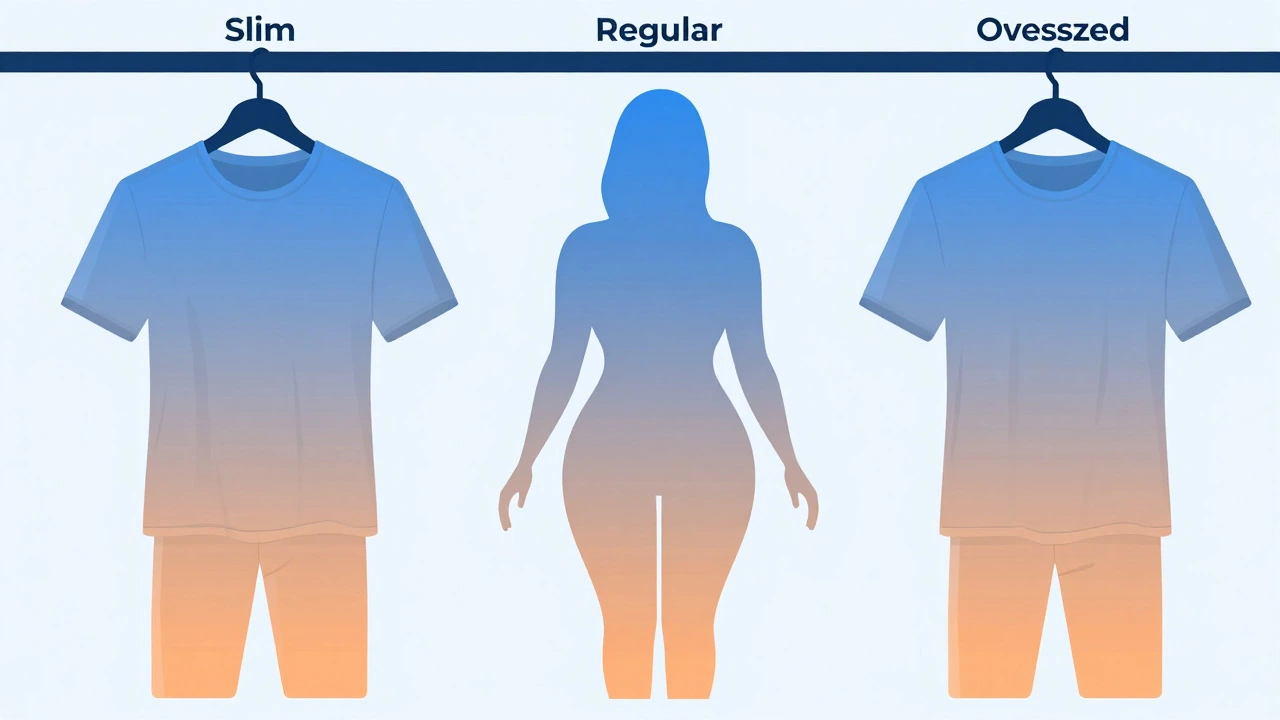
Fit Intent: A brand might offer a "Slim Fit" Medium and a "Classic Fit" Medium. The Slim Fit will have narrower shoulders and a tighter waist, even though both are labeled M. Ignoring the fit description is the number one reason for returns.
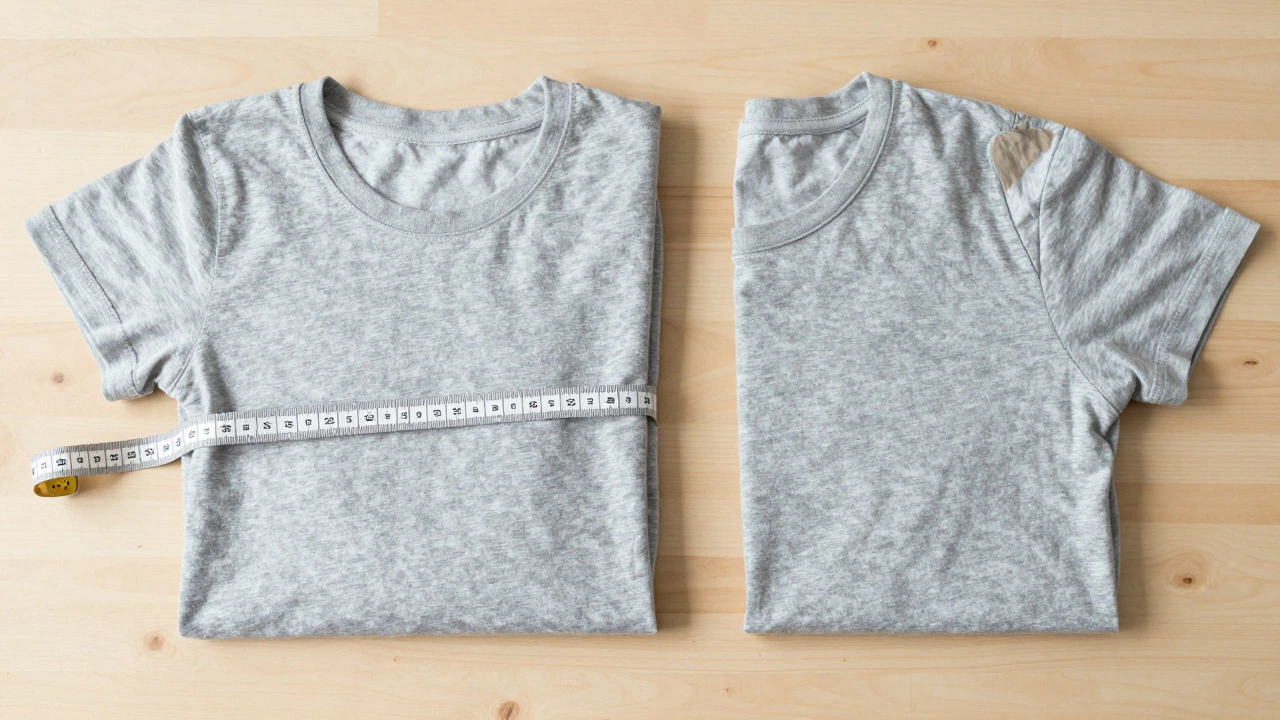
How to Measure Yourself Accurately
Relying on your memory of being a "Medium" is risky. Bodies change, and brands vary. The only way to shop confidently is to know your actual measurements. You don’t need a tailor; you just need a soft measuring tape and a mirror.
- Find Your Chest/Bust: Wrap the tape around the fullest part of your chest (for men) or bust (for women). Keep the tape level under your arms and across your shoulder blades. Don’t suck in your stomach; breathe normally.
- Measure Your Waist: Find your natural waistline, which is usually the narrowest part of your torso, above your belly button. This matters more for fitted shirts than boxy ones.
- Check Shoulder Width: Measure from the tip of one shoulder bone to the other. This helps determine if the seams will sit correctly.
- Compare to the Chart: Look at the specific brand’s size chart. Never assume. If your chest is 40 inches and the brand’s Medium tops out at 39, size up to Large.
Pro tip: If you have a well-fitting T-shirt already, lay it flat on a table. Measure the pit-to-pit width and double it. Compare that number to the brand’s listed chest measurement. This is often more accurate than measuring your body directly because it accounts for the ease (extra fabric) the designer built into the garment.
Navigating Gendered Sizing
The letter M means different things depending on whether the shirt is marketed as Men’s, Women’s, or Unisex. This distinction affects the shape of the garment, not just the scale.
Unisex sizing is a sizing standard that uses the same cut and measurements for all genders, typically based on male anatomy. Most basic cotton tees are unisex. A Men’s Medium and a Unisex Medium are usually identical. However, a Women’s Medium is cut differently. It often has a narrower shoulder width, a shorter sleeve, and a tapered waist to accommodate a curvier silhouette. If you are a woman buying a Men’s Medium, expect broader shoulders and a longer torso. If you are a man buying a Women’s Medium, expect it to be very tight and short.
Kids’ sizing also uses letters sometimes, but "Youth Medium" is vastly different from "Adult Medium." Youth sizes are for children roughly aged 14-16, with much shorter torsos and narrower chests. Always verify if the product is listed under "Kids," "Teens," or "Adults."">
Fabric Shrinkage and Care
Even if you get the right size, a T-shirt can turn into a Small after one wash. Cotton, the most common T-shirt material, shrinks. Pre-shrunk cotton (sanforized) minimizes this, but it doesn’t eliminate it entirely. Expect a 3-5% shrinkage rate if you wash in hot water and dry on high heat.
If you are between sizes, always size up if the shirt is 100% cotton. If it’s a polyester blend, it shrinks less, so you can stick to your true size. To preserve your M:
- Wash in cold water.
- Tumble dry on low or hang dry.
- Avoid ironing directly on prints, as heat can distort the fabric structure.
When to Size Up or Down
There are scenarios where ignoring the label is the smart move. Here is a quick decision tree:
- Size Up (to L): If you have broad shoulders, a muscular build, or prefer an oversized streetwear look. Also, size up if the fabric has no stretch (100% linen or rigid denim blends).
- Stay True (to M): If you have an average build and the shirt is described as "Regular Fit" or "Standard Fit."
- Size Down (to S): If you have a slender build, the shirt is described as "Oversized" or "Boxy," or the fabric has significant elastane/spandex content (which stretches).
Reading customer reviews is crucial here. Phrases like "runs large" or "tight across the chest" are gold mines of information. One person’s opinion isn’t enough, but if ten people say the Medium feels like a Large, trust them over the tag.
The Future of Sizing
The fashion industry is slowly realizing that letter sizing is broken. New technologies use 3D body scanning apps to recommend exact sizes based on your unique proportions, not just your chest width. Some brands now list measurements in centimeters alongside letters to reduce confusion. As remote shopping becomes the norm, expect to see more detailed size guides that show model heights and weights wearing each size.
Until then, the letter M remains a helpful hint, not a guarantee. By understanding the dimensions behind the label, checking regional standards, and measuring yourself accurately, you can master the art of T-shirt sizing. Stop guessing and start fitting.
Does M stand for Medium in all countries?
Yes, M universally stands for Medium in English-speaking markets and most international brands. However, the actual dimensions associated with M vary significantly by region. European M sizes are often slimmer, while Asian M sizes are generally smaller and shorter than US M sizes.
What is the difference between a Men's M and a Women's M?
A Men's M is cut with broader shoulders, a straighter torso, and longer sleeves. A Women's M is tailored with narrower shoulders, a shorter sleeve length, and a tapered waist to accommodate curves. They are not interchangeable despite sharing the same letter.
How many inches is a Medium T-shirt chest?
For men, a Medium T-shirt typically fits a chest measurement of 38 to 40 inches. For women, it fits a bust measurement of 34 to 36 inches. These are general guidelines; always check the specific brand's size chart for accuracy.
Why does my Medium T-shirt feel small?
This could be due to vanity sizing differences (where some brands run large and others run small), regional sizing standards (e.g., buying an Asian brand), or the intended fit (slim vs. regular). It could also mean the shirt has shrunk after washing in hot water.
Should I size up if I am between sizes?
If you are between a Small and a Medium, consider sizing up to Medium if you prefer a relaxed fit or if the fabric is 100% cotton (which shrinks). Choose Small if you prefer a fitted look or if the shirt contains stretch materials like spandex.