
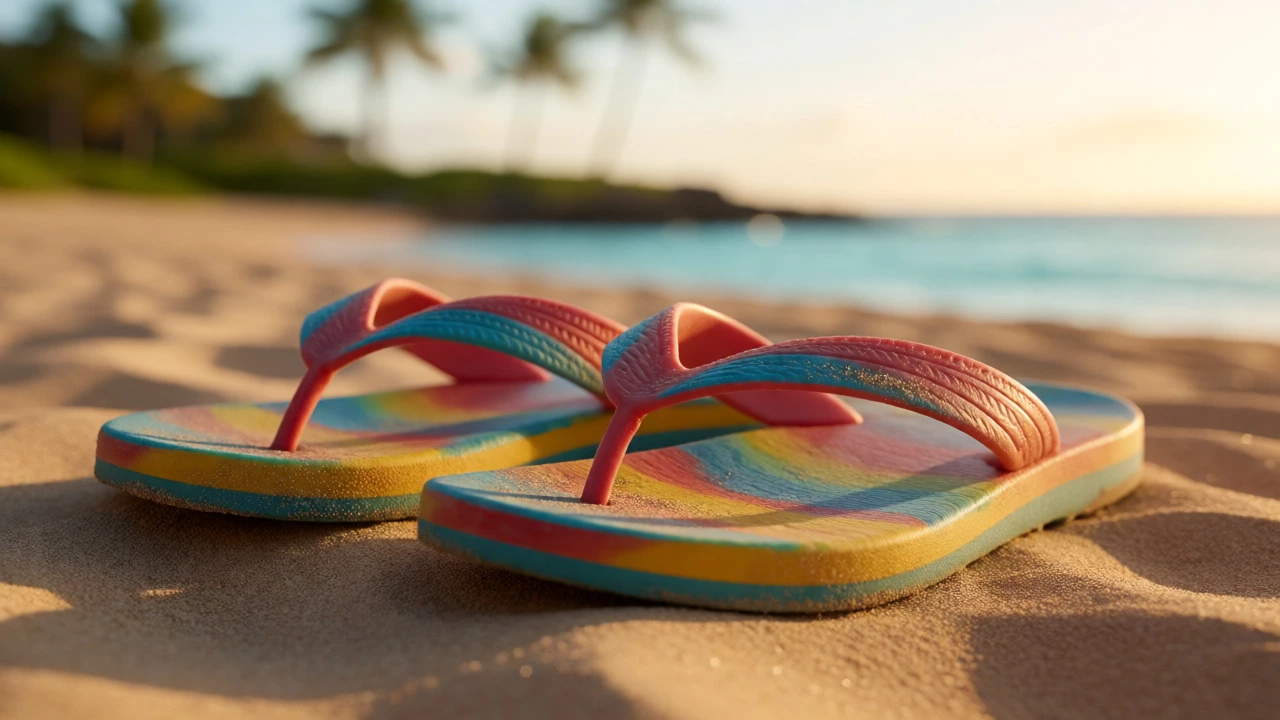
Hawaiian Slippah Etiquette Quiz
Welcome to the islands! Before you hit the beach, make sure you know how to talk about—and wear—your footwear like a local. Answer the following scenarios to test your "Slippah IQ."
You are walking into a local Walmart in Waikiki looking for sandals. Which aisle sign would you most likely see?
You receive an invitation to a wedding in Honolulu with a dress code of "Aloha Attire." What is acceptable footwear for men?
You are invited to a friend's house for dinner. You are wearing your favorite rubber slippahs. What should you do at the door?
Your friend asks if you want to go to the beach. They say, "Grab your _____." What word completes the sentence naturally in local dialect?
You just landed in Honolulu, grabbed your bags, and headed to the beach. You see locals wearing those iconic rubber sandals with a thong between the toes. You ask someone, "Nice slippers," and they look at you blankly before correcting you: "These are slippahs." It’s one of the first linguistic hurdles every visitor faces in Hawaii. But why the change? And is it just a cute nickname, or does it carry deeper cultural weight?
This isn't just about semantics. In Hawaii, the term "slippah" (often spelled slipper or slippah) refers specifically to the ubiquitous rubber flip-flop that serves as the default footwear for everything from grocery runs to black-tie events. Understanding this distinction helps you blend in faster and respect local norms. Let's break down exactly what Hawaiians call their beach shoes, where the word comes from, and why you should stop calling them "flip-flops" once you cross the Pacific.
The Local Term: Why It’s 'Slippah' Not 'Flip-Flop'
In mainland US English, we distinguish between "slippers" (soft indoor shoes) and "flip-flops" (rubber thong sandals). In Hawaii, this distinction largely evaporates. The word slippah is a Hawaiian Pidgin English term for rubber thong sandals, derived from the standard English word 'slipper' but pronounced with a distinct local accent has become the universal label for any open-toed, thong-style sandal worn outdoors.
Why did this shift happen? Linguists point to two main factors. First, the influence of Portuguese immigrants who arrived in Hawaii in the late 19th century. They brought the word chinelos, which referred to slip-on shoes. Over time, as languages mixed in the plantation camps, the phonetics shifted. Second, the sheer dominance of rubber sandals in daily life meant they needed a single, easy-to-say name. "Flip-flop" is onomatopoeic-it describes the sound. "Slippah" describes the function: something you slip on quickly.
If you walk into a Walmart in Waikiki, you won’t find an aisle labeled "Flip-Flops." You’ll find "Slippahs." This isn't marketing genius; it's reflecting how people actually talk. Using the local term shows you’ve done your homework. It signals that you aren't just passing through; you’re engaging with the culture.
Cultural Significance of the Hawaiian Slippah
Calling them "slippahs" isn't just slang; it's a marker of identity. For many Native Hawaiians and long-time residents, these sandals represent a relaxed, practical lifestyle that contrasts sharply with the rigid dress codes of the mainland. Here, comfort rules. If your feet can breathe and you can kick off your shoes instantly when entering a home, you’re doing it right.
| Feature | Mainland US Usage | Hawaii Usage |
|---|---|---|
| Term | Flip-flops / Sandals | Slippahs / Beach Shoes |
| Context | Beach only; rarely worn in cities | Universal; worn in offices, malls, weddings |
| Indoor Rule | Wear shoes inside unless specified | Always remove at the door |
| Dress Code | Formal = closed-toe leather shoes | Formal = clean slippahs + aloha shirt |
Notice the last row. In New York or London, showing up to a wedding in flip-flops might get you turned away. In Honolulu, if you’re wearing high-end leather slippahs (like Olukai or Haflinger) with a nice linen suit, you’re perfectly dressed. The shoe adapts to the occasion because the culture prioritizes ease over pretense.
Where Did the Word Come From? A Brief History
To understand why Hawaiians say "slippah," you have to look at the melting pot of Hawaii’s history. The islands were settled by Polynesians, then heavily influenced by American missionaries, Japanese laborers, Filipino workers, and Portuguese sailors. Each group left a linguistic fingerprint.
The pronunciation of "slippah" features a dropped final consonant, common in many Pacific Islander languages and Caribbean dialects. It’s softer, less percussive than the hard "t" sound in "slip-per." This softening makes the word flow better in casual conversation. Additionally, the term gained traction in the mid-20th century as tourism boomed. Visitors heard locals using it, adopted it, and spread it back to the mainland. Today, even non-Hawaiians use "slippah" to signal a connection to island vibes.
It’s worth noting that not everyone uses the term uniformly. Older generations might still say "beach sandals" or simply "sandals." Younger locals, especially those immersed in surf culture, almost exclusively use "slippah." If you’re unsure, listen to the context. If someone says, "Grab your slippahs, we’re heading to the beach," you know exactly what they mean.
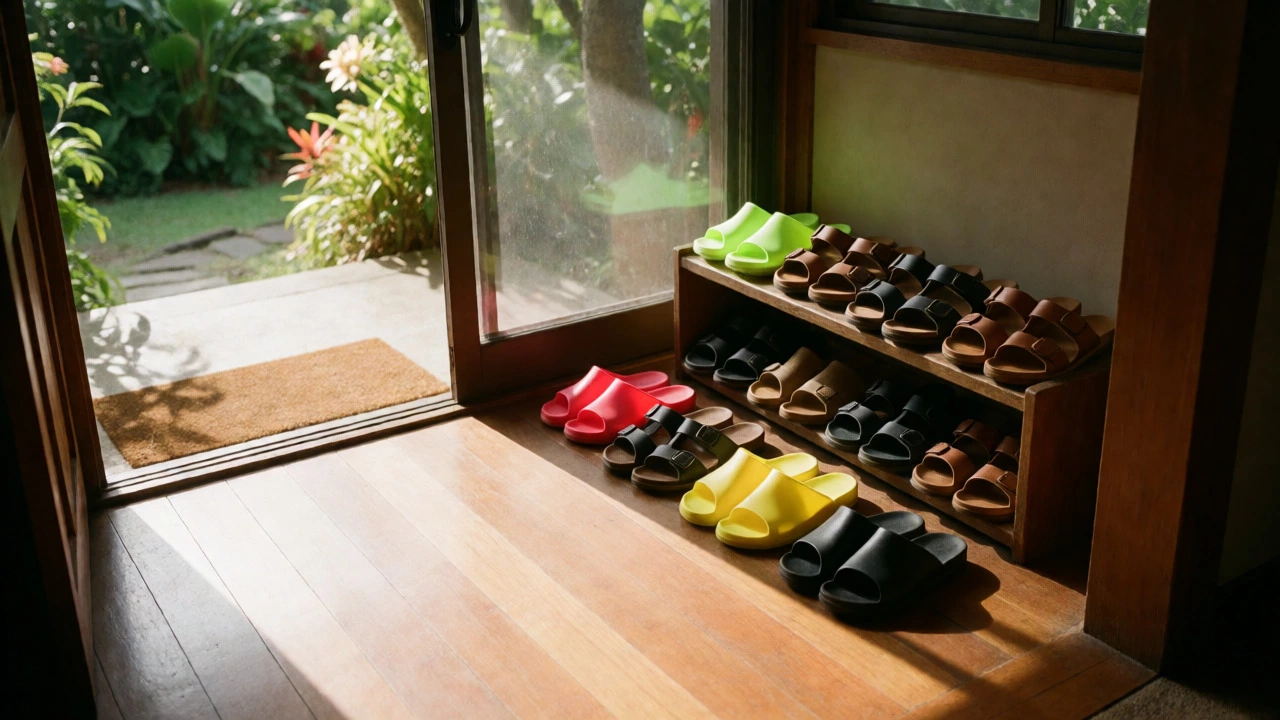
Types of Slippahs: Beyond the Basic Rubber Thong
Not all slippahs are created equal. While the basic $5 rubber pair from a gas station is functional, locals often invest in higher-quality versions for durability and style. Here’s what you’ll commonly see:
- The Classic Rubber Thong: Usually green, blue, or red. Brands like Havaianas dominate here. These are workhorses-used for gardening, surfing, and walking dogs. They’re cheap, replaceable, and waterproof.
- Leather Slippahs: Often branded as "Olukai" or similar premium names. These feature contoured footbeds and genuine leather straps. Locals wear these to dinner, to church, or to work in casual offices. They cost $80-$150 but last years.
- Reef-Safe Slippahs: With growing environmental awareness, some brands now make slippahs from recycled ocean plastics or natural rubber. These appeal to eco-conscious visitors and locals alike.
- Fashion Slippahs: Decorated with shells, beads, or floral patterns. These are more for tourists, though locals sometimes wear them for special events like luaus.
When shopping in Hawaii, avoid buying the cheapest plastic pairs if you plan to stay longer than a week. The heat and saltwater degrade low-quality rubber quickly. Your feet will thank you for investing in a pair with arch support. After all, you’ll be wearing them everywhere.
Etiquette: When to Wear Slippahs (And When Not To)
Just because they’re called slippahs doesn’t mean you can wear them anywhere. There are unwritten rules. Breaking them marks you as an outsider immediately.
Rule #1: Take them off indoors. This is non-negotiable. Whether you’re visiting a friend’s house, a business office, or a temple, remove your slippahs at the threshold. Walking in with dirty beach sand on your soles is considered rude. Most homes have a designated area near the door for shoes. Look for the pile of other people’s footwear-if there’s a stack outside, yours goes there too.
Rule #2: Mind the noise. Some slippahs slap loudly against the heel. In quiet settings like libraries, museums, or upscale restaurants, this clacking sound can be distracting. Opt for quieter materials if you’re attending a formal event.
Rule #3: Match the vibe. Wearing neon-colored beach slippahs to a fine-dining restaurant in Waikiki might feel out of place, even if the dress code is "Aloha Attire." Pair cleaner, neutral-toned slippahs with nicer outfits. Save the bright colors for the beach and poolside.
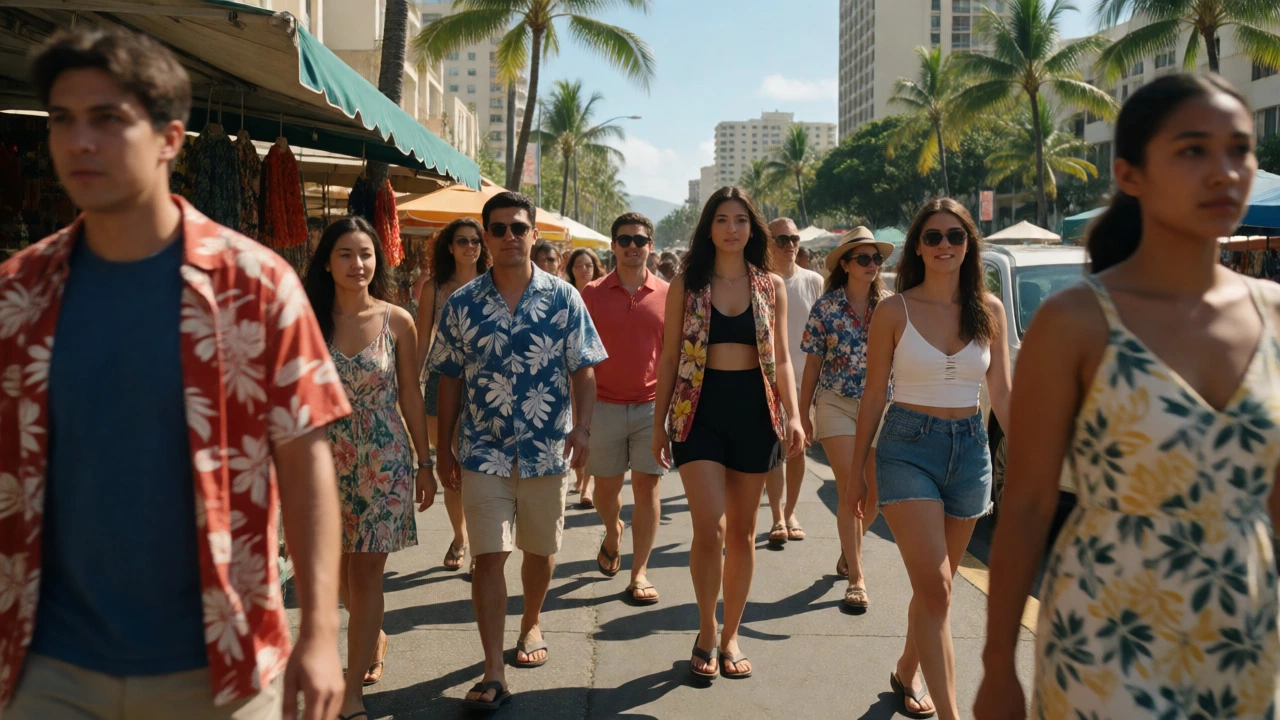
Common Misconceptions About Hawaiian Footwear
Visitors often confuse several terms. Let’s clear them up.
Misconception 1: "Slippers" means bedroom shoes. On the mainland, yes. In Hawaii, no. If someone asks, "Do you have slippers?" they’re asking for your outdoor beach sandals, not fuzzy socks. Don’t bring fluffy bunny slippers expecting them to serve as your primary footwear-they’ll melt in the heat.
Misconception 2: All flip-flops are slippahs. Technically, yes, but culturally, "slippah" implies a specific type of rugged, everyday utility. A delicate, jeweled evening sandal isn’t usually called a slippah. The term carries a connotation of informality and durability.
Misconception 3: You need to buy them in Hawaii. You can find "slippahs" online anywhere, but buying locally supports small businesses and ensures you get styles popular with actual residents. Plus, trying them on in person helps you avoid blisters from ill-fitting straps.
How to Use the Word Correctly in Conversation
Want to sound like a local? Here are a few phrases to practice:
- "Can I borrow your slippahs? Mine got lost in the sand."
- "I’m going to grab my slippahs and head to the store."
- "Take off your slippahs before coming in, please."
Notice the casual tone. You don’t need to force the accent. Just dropping the final "r" sound naturally will do the trick. Say "slippuh" instead of "slipper." It’s subtle, but it works.
Also, remember that "slippah" is pluralized as "slippahs," not "slippies" or "slippers." Stick to the local form to avoid confusion. If you accidentally say "flip-flops," no one will judge you harshly, but using "slippahs" earns you bonus points for cultural sensitivity.
Final Thoughts: Embrace the Slippah Lifestyle
At its core, the question "What do Hawaiians call slippers?" is really asking, "How do I fit into Hawaiian culture?" The answer lies in simplicity. By adopting the term "slippah," you’re acknowledging a different pace of life-one where comfort trumps formality, and community norms outweigh individual fashion statements.
So next time you pack for Hawaii, leave the heavy boots at home. Pack a good pair of slippahs. Learn to take them off at doors. Listen for the word in conversations. You’ll find that once you embrace the slippah mindset, the islands feel less like a destination and more like a second home.
Is it offensive to call them flip-flops in Hawaii?
No, it is not offensive. Most locals understand "flip-flops" perfectly well. However, using the local term "slippahs" shows respect for local dialect and can help you build rapport with residents. It’s a small gesture that demonstrates cultural awareness.
Why do Hawaiians remove their slippahs indoors?
This tradition stems from both practical and cultural reasons. Practically, it keeps dirt, sand, and lava rock debris out of living spaces. Culturally, it signifies respect for the host’s home and aligns with broader Asian and Pacific Islander customs of separating outdoor and indoor spaces.
Are slippahs appropriate for formal events in Hawaii?
Yes, provided they are clean and in good condition. High-quality leather slippahs are widely accepted at weddings, dinners, and business meetings under the "Aloha Attire" dress code. Avoid worn-out rubber pairs for formal occasions.
What is the difference between slippahs and sandals?
In Hawaii, the terms are often used interchangeably, but "slippah" specifically refers to thong-style flip-flops. "Sandals" can refer to any open footwear, including strapped gladiators or sporty hiking sandals. If it has a toe post, it’s likely a slippah.
Can I wear slippahs to work in Hawaii?
In many industries, yes. Tourism, retail, and creative fields often allow slippahs. Corporate environments may require closed-toe shoes or dressier leather slippahs. Always check your company’s specific dress code policy upon arrival.