

US Footwear Terminology Translator
Not sure what to call your shoes in America? Enter a British term or describe the shoe type below to find the correct American equivalent.
You walk into a shoe store in New York City and ask for "trainers." The clerk looks at you with genuine confusion. You walk into a shop in London and ask for "sneakers," and the assistant pauses before pointing you toward the running section. This is the classic transatlantic footwear divide. If you are wondering what Americans call trainers, the short answer is: sneakers. But if you want to actually buy the right pair without looking like a tourist, you need to understand the nuances of American shoe terminology.
Language shifts depending on where you stand on the map, and footwear is one of the biggest linguistic minefields. In the UK, Australia, and New Zealand, "trainers" is the default term for any casual athletic shoe. In the United States, that word rarely gets used for footwear. Instead, Americans use a variety of terms depending on the style, purpose, and subculture associated with the shoe. Understanding these differences helps you navigate shopping trips, read fashion blogs, or simply order the correct item online when shipping from the US.
The Default Term: Sneakers
If you replace the word "trainers" with "sneakers" in almost every sentence, you will sound perfectly natural to an American ear. A sneaker is defined by its rubber sole, which allows the wearer to move quietly-or "sneak"-around. This etymology dates back to the late 19th century when Keds were marketed as "Sneakers" because they made no noise on wooden floors.
In the US, "sneakers" is the umbrella term. It covers everything from your everyday white canvas shoes to high-performance basketball gear. When an American says, "I need new sneakers," they could mean anything from a pair of Converse Chuck Taylors to expensive Nike Air Maxes. It is the direct equivalent of the British "trainers."
- Usage: Universal. Used in retail, casual conversation, and marketing.
- Vibe: Casual, comfortable, everyday wear.
- Examples: Adidas Stan Smith, Vans Old Skool, New Balance 574.
The Stylish Alternative: Kicks
If "sneakers" is the standard term, "kicks" is the slang. You will hear this word frequently in urban centers, among younger demographics, and within streetwear culture. "Kicks" refers specifically to stylish, often limited-edition, or brand-name athletic shoes. It implies that the shoes are part of your outfit statement, not just functional gear for walking.
When someone asks, "Nice kicks!" they are complimenting your shoes. You wouldn't typically refer to worn-out gym shoes as kicks unless you were being ironic. This term bridges the gap between athletic function and fashion accessory. It is heavily influenced by hip-hop culture and sneakerhead communities.
- Usage: Informal, slang, social media.
- Vibe: Trendy, expensive, collectible.
- Examples: Jordan 1s, Yeezys, Off-White collaborations.
Function-Specific Terms: Runners, Joggers, and Tennis Shoes
Americans are very specific about what their shoes are for. While "sneakers" is broad, other terms narrow down the purpose. If you are buying shoes for exercise, the terminology changes based on the activity.
Runners or Jogging Shoes: These are lightweight, cushioned shoes designed specifically for running. They have less structure than general sneakers. If you tell an American you bought "runners," they assume you plan to hit the pavement or a treadmill. In the UK, these might still be called trainers, but in the US, "trainer" can sometimes refer to a weightlifting shoe (see below), so specificity matters.
Tennis Shoes: This is an older term that persists in many parts of the US, particularly in the South and Midwest. Even if you never play tennis, people might call their casual white leather shoes "tennis shoes." It is a legacy term that has stuck around much longer than its literal meaning suggests. If you are over 40, there is a good chance you grew up calling them this.
| Term | Primary Use | Formality Level | UK Equivalent |
|---|---|---|---|
| Sneakers | General casual/athletic | Neutral | Trainers |
| Kicks | Fashion/Streetwear | Slang | Trainers/Sneakers |
| Runners | Running/Cardio | Functional | Running Shoes |
| Tennis Shoes | Casual/Heritage | Dated/Casual | Trainers |
| Trainers | Weightlifting/Gym | Technical | Trainers |
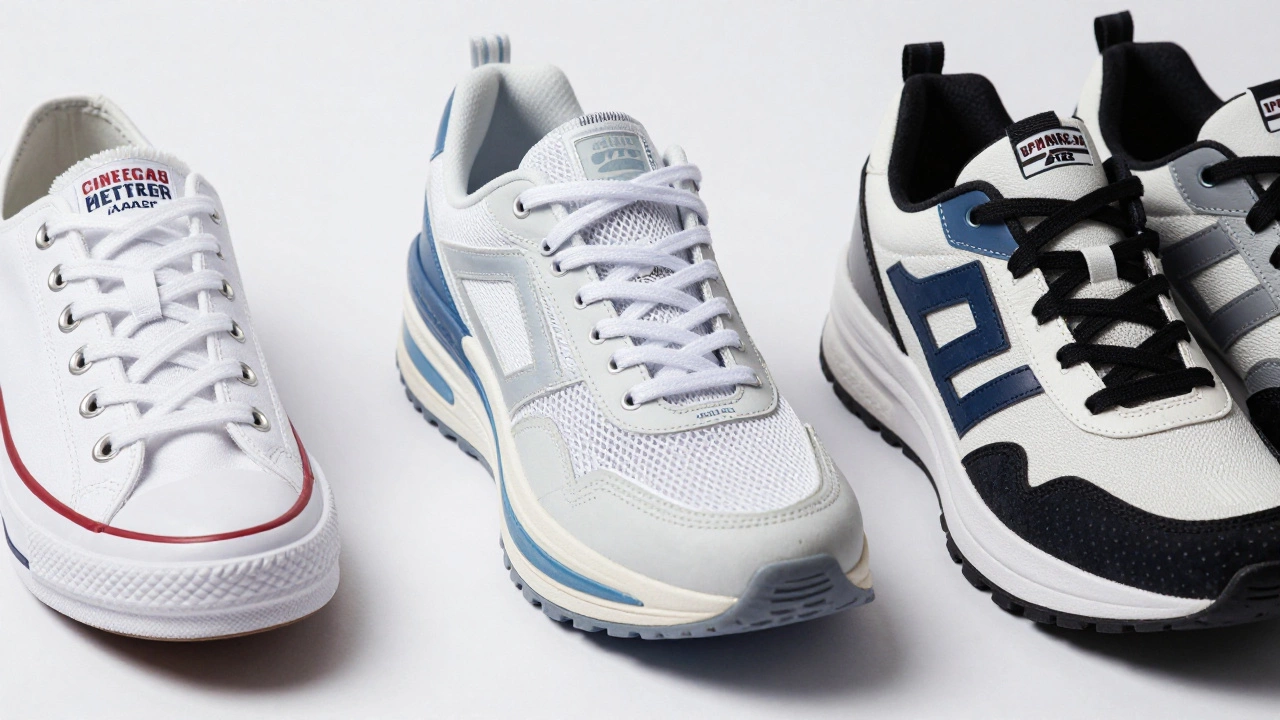
The Confusion Point: What About "Trainers" in the US?
Here is where it gets tricky. Americans do use the word "trainers," but rarely for the shoes you wear to work or school. In the US fitness industry, "trainers" often refers to a specific type of shoe used for weightlifting or CrossFit. These shoes have flat, hard soles to provide stability under heavy loads. Brands like Reebok market their Nano series as "training shoes" or "trainers."
So, if you are in a US gym and ask for "trainers," the staff might hand you a pair of specialized lifting shoes rather than a comfortable pair of Nikes. This is a key distinction. In the UK, "trainers" includes everything from lifting shoes to fashion sneakers. In the US, "trainers" is a subset of athletic footwear focused on gym performance, while "sneakers" is the catch-all.
Regional Variations Within the US
Even within America, language varies by region. The term "sneakers" is dominant nationwide, but pockets of regional slang exist. In parts of the Northeast, you might still hear "plimsolls" (though this is rare and mostly understood through British influence). In the South, "tennis shoes" remains surprisingly common across all age groups.
Additionally, the rise of global brands has standardized some terms. Everyone knows "Air Jordans" or "Converse." Brand names often bypass the generic terminology entirely. An American might say, "I'm wearing my Jords," avoiding the need to classify them as sneakers or kicks altogether.
How to Shop Like a Local
To avoid confusion when shopping in the US, follow these simple rules:
- Use "Sneakers" for general searches: Whether you are browsing Amazon, Nike.com, or a local mall, searching for "sneakers" yields the widest range of results.
- Specify the sport: If you need shoes for a specific activity, add the verb. "Running shoes," "basketball shoes," or "walking shoes" are clearer than trying to guess the generic term.
- Avoid "Trainers" unless lifting weights: Unless you are specifically looking for flat-soled gym shoes, skip this term. It limits your results unnecessarily.
- Embrace "Kicks" in social settings: If you are talking to friends about fashion, using "kicks" shows cultural awareness. Just don't use it in a formal email to a retailer.
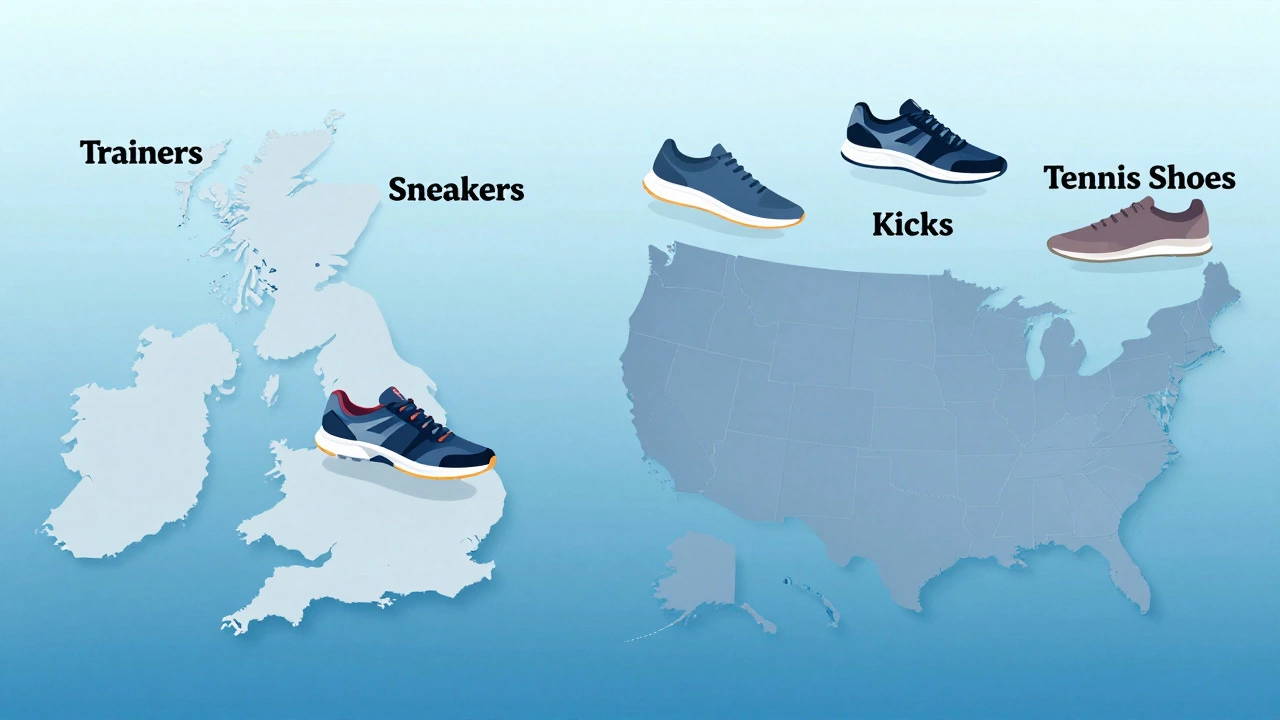
Why Does This Difference Exist?
Linguistic evolution is often driven by marketing and culture. The term "sneaker" gained traction in the US due to early advertising campaigns emphasizing quiet movement. Meanwhile, the UK retained "trainers" because the shoes were primarily viewed as equipment for physical training. As athletic shoes became fashion staples in the US during the 1980s and 90s, the term "sneaker" evolved to encompass both utility and style. The UK kept the functional label, even as the shoes' primary use shifted to casual wear.
This divergence highlights how language reflects cultural priorities. In the US, the emphasis was on the action (sneaking/moving) and later the style (kicks). In the UK, the emphasis remained on the original purpose (training).
Global Context: What Do Other Countries Say?
While this guide focuses on the US, it is helpful to know where else these terms apply. Canada generally follows US usage, preferring "sneakers." Australia and New Zealand align with the UK, using "trainers" predominantly. In India, "sports shoes" is a common term. Knowing this helps if you are traveling internationally or sourcing products globally.
For example, if you are an e-commerce seller targeting multiple markets, you cannot rely on a single keyword. Your product listings must include synonyms. A pair of Adidas Ultraboosts should be tagged as "sneakers," "running shoes," and "trainers" to capture search traffic from both sides of the Atlantic.
Summary of Key Takeaways
Understanding American footwear terminology is less about memorizing a dictionary and more about recognizing context. "Sneakers" is your safest bet for general communication. "Kicks" adds flavor for fashion discussions. "Runners" and "Tennis Shoes" specify function or heritage. And "Trainers" is reserved for the gym rat. By adjusting your vocabulary, you communicate more effectively and avoid those awkward moments in the shoe aisle.
Next time you cross the ocean, remember: leave the "trainers" at home (unless you're going to the gym) and step out in your "sneakers." It’s a small change that makes a big difference in how you’re perceived.
Do Americans ever use the word trainers for shoes?
Yes, but rarely. In the US, "trainers" usually refers specifically to weightlifting or CrossFit shoes with flat soles. For everyday casual shoes, Americans almost exclusively use "sneakers" or "kicks." Using "trainers" for general footwear may confuse native speakers.
What is the difference between sneakers and runners?
Sneakers is a broad category covering all casual athletic shoes. Runners are a specific type of sneaker designed for running, featuring extra cushioning and flexibility. All runners are sneakers, but not all sneakers are runners.
Is it okay to call shoes kicks in a professional setting?
Generally, no. "Kicks" is slang and informal. In professional or formal contexts, stick to "sneakers" or "shoes." Use "kicks" only in casual conversations with friends or in creative/fashion industries where slang is accepted.
Why do some Americans say tennis shoes?
It is a historical term that persisted in certain regions, especially the Southern and Midwestern US. Originally referring to shoes used for playing tennis, the term expanded to cover any casual white leather shoe. It is considered slightly dated but still widely understood.
What do Canadians call trainers?
Canadians largely follow American usage and call them "sneakers." However, due to proximity to the UK and diverse immigration, you might occasionally hear "trainers," especially in multicultural cities like Toronto or Vancouver. "Sneakers" remains the dominant term.