

Color Compatibility Checker
Your Outfit Base Colors
Select the colors you wear most often. These will determine which jacket color works best.
Tip: For maximum versatility, choose one of these three colors: black, navy, or beige. These are the only colors that work with your everyday basics like jeans, t-shirts, and sweaters.
There’s one jacket in your closet you reach for more than any other. It’s the one you throw on over jeans, dresses, sweaters, even workout gear. It doesn’t clash. It doesn’t look out of place. It just works. But what color is it? If you’re still searching for that one jacket that goes with everything, you’re not alone. Most people overthink it. They buy bold colors, trendy patterns, or statement cuts - only to realize they wear it once and hang it up for good.
The truth about "everything"
"Everything" doesn’t mean every outfit you own. It means every basic outfit you actually wear. That’s jeans, t-shirts, black leggings, white shirts, gray sweaters, navy pants, and neutral-toned dresses. If your jacket can handle those, it’s doing its job. You don’t need it to match your red velvet party dress or your neon green running shorts. You need it to survive Monday mornings, grocery runs, coffee dates, and airport terminals.The jacket that goes with everything isn’t flashy. It’s quiet. It’s reliable. And it’s almost always one of three colors: black, navy, or beige.
Black: The Silent Workhorse
Black is the default for a reason. It absorbs light, hides dirt, and disappears against shadows. A black jacket - whether it’s a tailored blazer, a cropped moto, or a long trench - works with almost every color in your wardrobe. Pair it with white? Clean. With denim? Classic. With pastels? Unexpected but sharp. With patterns? It doesn’t compete - it anchors.Real-world test: I wore the same black wool-blend coat for three winters in York. It went with my wool scarves, my leather boots, my floral dresses, and even my bright red knit hat. No one noticed the jacket. That’s the point. It didn’t demand attention. It just made everything else look better.
Black jackets work best when they’re not too shiny. Avoid patent leather or metallic finishes unless you’re going for a specific look. Stick to matte wool, cotton twill, or pebbled leather. These textures keep it grounded.
Navy: The Sophisticated Alternative
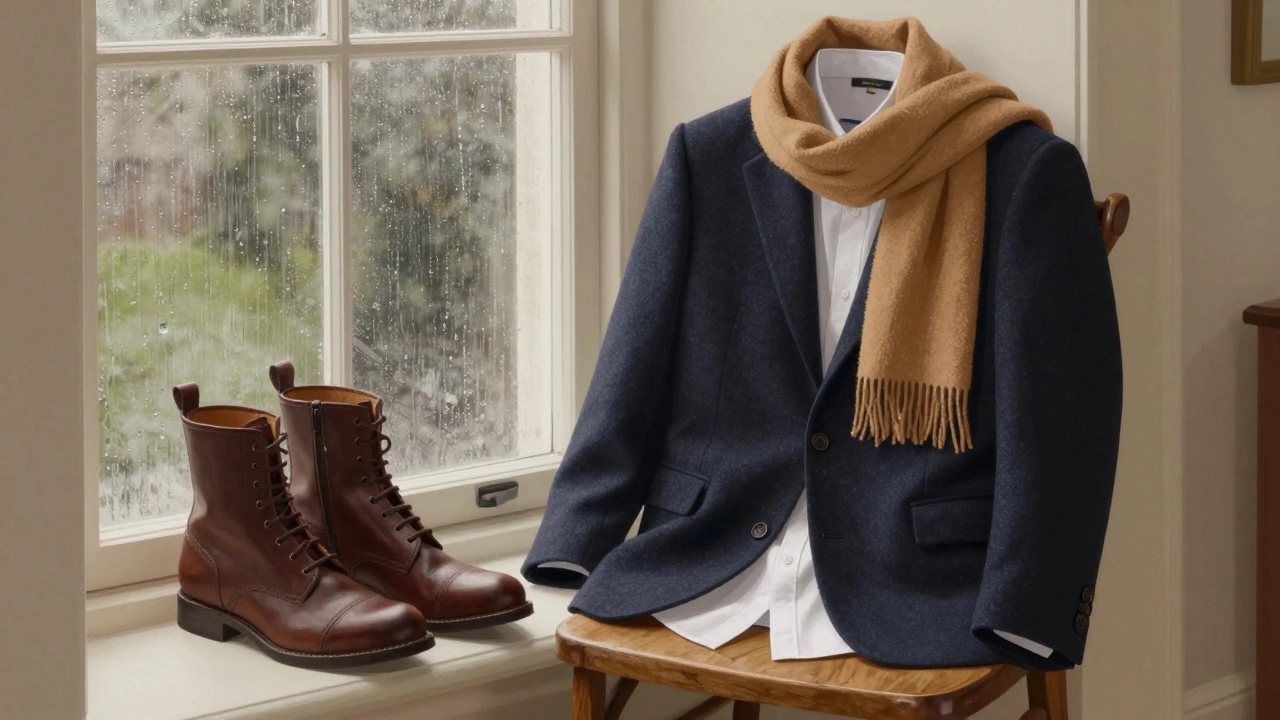
If black feels too harsh, navy is your quiet upgrade. It’s warmer than black, less formal than charcoal, and surprisingly versatile. A navy jacket reads as polished without trying too hard. It’s the color of business-casual offices, weekend brunches, and rainy walks along the river.Here’s why navy wins: it matches brown better than black does. That’s huge. Most people avoid pairing black with brown, fearing it looks mismatched. But navy and tan, cognac, or chestnut? They’re a match made in fashion heaven. Your navy jacket will look right with your suede loafers, your camel scarf, and your olive cargo pants.
Try this: wear a navy blazer over a white button-down, dark jeans, and brown boots. That’s a look that works in London, New York, or York. No one questions it. No one remembers the jacket. That’s the goal.
Beige: The Neutral That Breathes
Beige is the underdog. People think it’s boring. Or that it stains easily. But a well-made beige jacket - think camel, khaki, or stone - is the most forgiving color you can own. It’s the perfect bridge between warm and cool tones.Beige works with cream, gray, burgundy, olive, and even deep blue. It softens the edge of black pants. It lifts up a dark sweater. It doesn’t disappear like black or navy - it adds light. And in places like York, where winters are gray and skies are often overcast, a beige jacket feels like a breath of fresh air.
Just avoid light beige if you live somewhere with snow or mud. A medium to dark beige - like the color of dried grass or sandstone - holds up better. Look for fabrics with a bit of structure: linen blends, cotton canvas, or wool tweed. These don’t wrinkle into oblivion and don’t show every speck of dust.
Why other colors don’t make the cut
You might be thinking: what about gray? Green? Burgundy? They’re popular. They’re stylish. But they’re not universal.- Gray is tricky. Light gray looks washed out next to white. Dark gray can blend too much with black. It’s a middle ground that often disappears - and that’s not always a good thing.
- Green (even olive) is seasonal. It pairs beautifully with earth tones in fall, but clashes with bright winter whites and spring pastels.
- Burgundy is gorgeous, but it’s a statement. It demands attention. You can’t wear it with another red or purple without risking a clash.
- Bold colors - red, yellow, electric blue - are for outfits you plan around. Not for grabbing on the way out the door.
There’s a reason fashion editors and stylists always have at least two of these three: black, navy, beige. They’re not trendy. They’re timeless. They’re not chosen for Instagram. They’re chosen for real life.
Texture matters more than you think
Color isn’t everything. The fabric makes the difference between a jacket that blends in and one that feels intentional.A black leather jacket screams attitude. A black wool coat whispers elegance. A beige cotton chore jacket feels casual. A navy wool-blend blazer says, "I’m ready for anything."
Here’s a simple rule: if you’re buying one jacket for daily use, pick a medium-weight fabric that’s not too stiff and not too flimsy. Wool blends, cotton twill, and technical nylon are your friends. Avoid polyester that shines or velvet that collects lint.
Also, pay attention to the lining. A jacket with a smooth, breathable lining (like cupro or silk blend) will feel better against your clothes and won’t cling or slide awkwardly when you put it on.
Real people, real closets
I asked five people in York - a teacher, a barista, a nurse, a freelance designer, and a retired librarian - what jacket they wore most. Four of them said black. One said navy. None said red, green, or white. One of them had two black jackets: one for work, one for weekends. "They’re different cuts," she said, "but they do the same thing. They make me look put together without thinking about it."That’s the secret. It’s not about fashion. It’s about ease.

What to look for when buying
- Fit: Should be roomy enough to layer over a sweater, but not so big it swallows you. Sleeves should end at your wrist bone.
- Length: Hip-length or slightly longer. Anything shorter than waist-high looks juvenile. Anything longer than mid-thigh is for formal occasions.
- Details: Minimal hardware. One or two buttons, maybe a hidden zipper. No big logos, no excessive stitching.
- Washability: Can you machine wash it? If not, is it dry-clean only? If you’re wearing it every week, choose something you can care for.
Don’t buy a jacket because it’s on sale. Buy it because you can imagine wearing it next winter. And the one after that.
One jacket, three ways
Take a navy wool coat. Wear it with:- A white turtleneck and black pants → office-ready
- A gray hoodie and jeans → weekend chill
- A floral midi dress and ankle boots → date night
Same jacket. Three different vibes. That’s the power of neutrality.
Final tip: Don’t overbuy
You don’t need five jackets. You need one that works. Then maybe one for special occasions. Most people spend too much time chasing variety. They end up with a closet full of jackets they rarely wear.Start with one. Black, navy, or beige. Pick the one that matches your skin tone best - black if you’re cool-toned, navy if you’re neutral, beige if you’re warm-toned. Then live with it for a year. See how many times you reach for it. If it’s more than 30 times, you’ve found your everything jacket.
It’s not about being trendy. It’s about being ready.
Can I wear a black jacket with brown shoes?
Yes, but it’s not ideal. Black and brown can clash if they’re too contrasting. Navy is a much better match for brown. If you love your black jacket, stick to black or dark gray shoes to keep it cohesive. If you want to wear brown shoes, switch to a navy jacket - it’s the only neutral that plays nicely with both.
Is a beige jacket too casual?
Not if you choose the right cut. A beige trench, wool pea coat, or structured blazer in camel tones looks just as polished as black or navy. Avoid oversized, slouchy beige jackets if you want to wear it to work. Stick to tailored silhouettes with clean lines. Beige isn’t casual - it’s understated elegance.
What’s the best season for a beige jacket?
Beige works best in fall and spring. It’s too light for snowy winters and can look washed out under bright summer sun. But in those in-between months - when the leaves turn and the air gets crisp - beige adds warmth without heat. It’s the color of autumn mornings and quiet walks.
Should I buy a jacket in my size or go one size up?
Go one size up if you plan to wear it over sweaters or layers. Jackets should never be tight. But don’t go two sizes up - you’ll look lost. The ideal fit lets you slip a thick sweater underneath without straining the seams. Try it on with a knit top and check the arm movement. If you can raise your arms fully without the jacket riding up, it’s right.
Do I need more than one neutral jacket?
Not unless you have different needs. One black jacket for formal or rainy days, one navy for work and weekends, and one beige for mild weather. That’s three. Most people only need one. Start with navy - it’s the most forgiving color. If you’re still unsure, try it on with your most-worn outfit. If you feel confident, you’ve got your answer.