
Leather Shoe Value Calculator
Your Annual Cost:
Based on your input: $ for years
Full Grain
$27/year (Example: $400 shoes lasting 15 years)
Strongest, develops patina, lasts decades
Top Grain
$50/year (Example: $200 shoes lasting 4 years)
Smoother finish, lasts years but doesn't develop patina
Corrected Grain
$80/year (Example: $80 shoes lasting 1 year)
Plasticky finish, cracks easily, often peels
- Natural marks and texture variations
- Edges often rough/unfinished
- Earthy, natural leather smell
- Develops unique patina over time
- Smooth, even surface
- Consistent color
- Edges often sealed with coating
- Develops some patina but slower
- Too perfect appearance
- Plasticky smell and feel
- Printed grain pattern
- Cracks easily when bent
When you buy leather shoes, you’re not just buying a pair of shoes-you’re buying a material that can last decades or fall apart in months. The difference? It all comes down to the grade of leather used. Most people don’t know what they’re really paying for, and that’s okay. But once you understand the three main grades of leather, you’ll never buy a pair of shoes blind again.
Full Grain Leather: The Best You Can Get
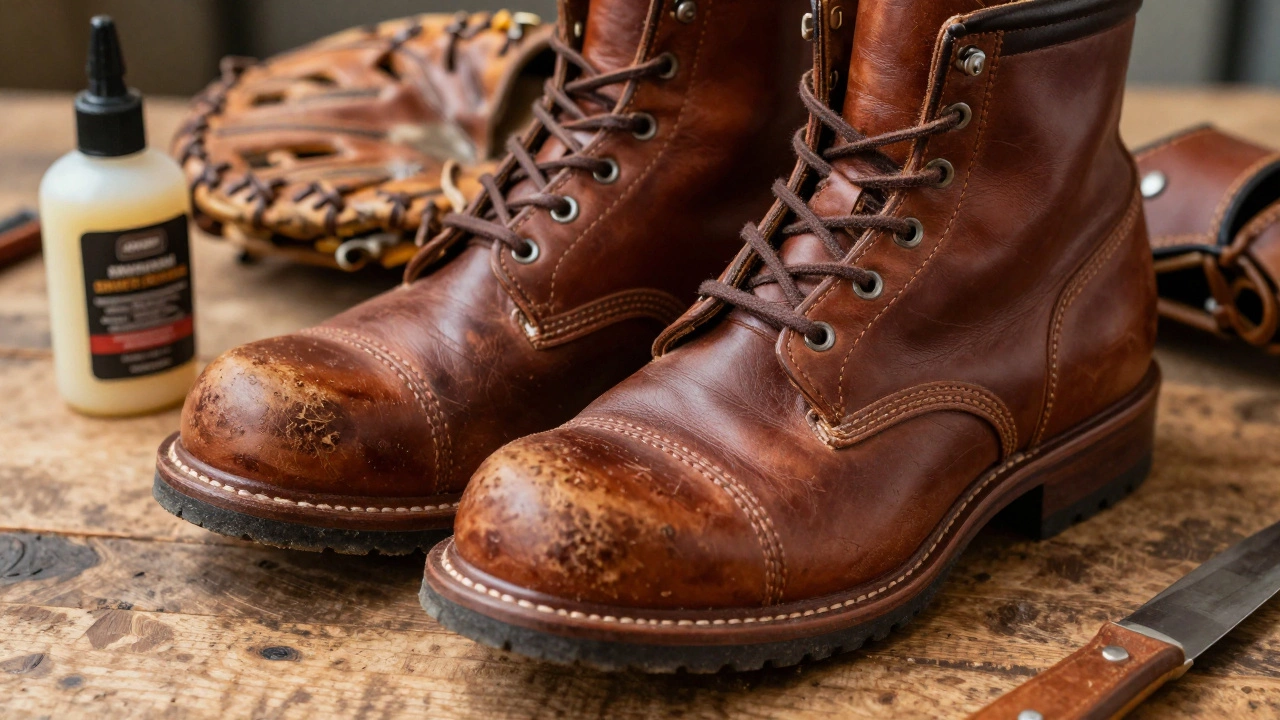
Full grain leather is the top tier. It’s the outermost layer of the hide, untouched and unaltered. This means every scar, vein, and natural mark is still there. Sounds bad? It’s actually the opposite. These imperfections aren’t flaws-they’re proof of authenticity. Full grain leather is the strongest because it keeps the tightest fiber structure. It’s also the most breathable and develops a beautiful patina over time.
Think of it like a well-worn baseball glove. The more you use it, the better it looks. That’s full grain. Brands like Red Wing, Allen Edmonds, and John Lobb use it for their premium lines. If you see a price tag over $300 for a pair of dress or work boots, chances are it’s full grain. You’ll know it by the way it smells-rich, natural, almost like a new saddle. And if you spill water on it? It’ll absorb a bit, then dry without a trace. That’s because it’s untreated. No sealants, no coatings. Just raw, honest leather.
Top Grain Leather: The Common Middle Ground
Top grain leather is what you’ll find in most mid-range shoes. It’s the second layer under full grain, and it’s been sanded down to remove surface imperfections. That makes it smoother and more uniform in appearance. But here’s the trade-off: sanding weakens the fibers. Top grain is still real leather, but it’s not as durable or breathable as full grain.
It’s often finished with a pigment coating to give it a consistent color and a slight shine. That’s why your top grain loafers look sleek but never develop that deep, personal patina. They stay looking new longer, but they don’t age well. If you’re shopping for a pair of office shoes under $200, you’re likely looking at top grain. It’s a solid choice if you want something that looks good and lasts a few years without breaking the bank. Just don’t expect it to last 20 years like full grain.
Corrected Grain Leather: The Budget Option
Corrected grain leather is where things get tricky. It’s made from the lower layers of the hide-sometimes even split from the bottom third. These layers are too weak on their own, so manufacturers sand them heavily, then slap on a thick synthetic coating to hide the damage. Finally, they print a grain pattern on top to make it look like real leather.
It’s not fake leather-it’s still made from animal hide-but it’s the lowest grade you’ll find in real leather shoes. You’ll often see it in discount stores, fast fashion brands, or shoes priced under $100. It doesn’t breathe. It doesn’t flex. It cracks. And when it does, it doesn’t just wear out-it peels. If your shoes start looking like they’re peeling paint after six months, you’ve got corrected grain.
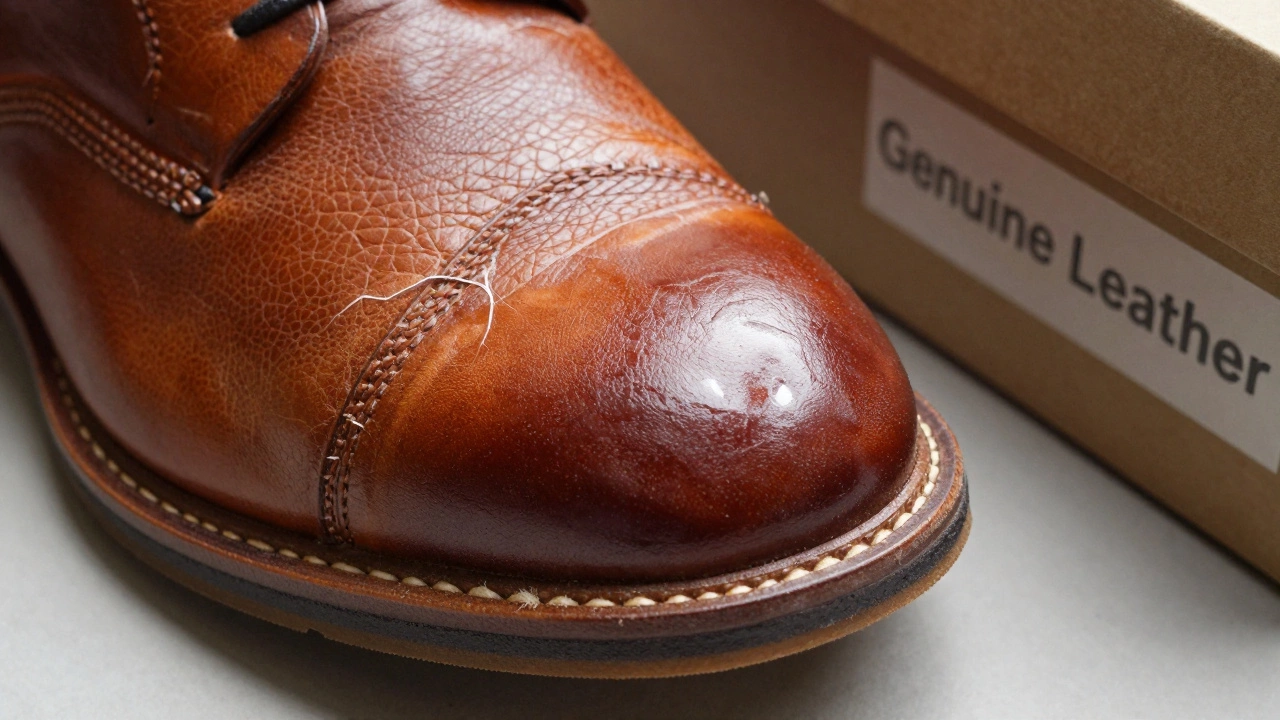
Some brands label it as "genuine leather," which sounds fancy but is actually a red flag. "Genuine leather" is a marketing term, not a grade. It can mean anything from top grain to corrected grain. Always look for "full grain" or "top grain" on the label. If it just says "genuine," walk away.
Why It Matters: Long-Term Value
People think leather shoes are expensive. But that’s only true if you buy the wrong kind. A pair of full grain boots might cost $400, but they’ll last 15 years with basic care. A pair of corrected grain shoes at $80 might last a year. That’s not a bargain-that’s a waste.
Think about it this way: if you spend $400 on full grain shoes and replace them every 15 years, you’re paying $27 a year. If you buy $80 shoes every year, you’re paying $80 a year. The math doesn’t lie. And that’s before you factor in the environmental cost of churning out cheap shoes every 12 months.
Leather is a natural material. It’s meant to last. The grade tells you how well it’ll hold up. Full grain = lifelong. Top grain = solid years. Corrected grain = disposable.
How to Tell Them Apart
You don’t need a lab to tell the difference. Here’s how to spot each one:
- Full grain: Look closely at the surface. You’ll see natural marks, uneven color, and texture that changes under light. The edges are often rough or unfinished. Smell it-it should smell like leather, not plastic.
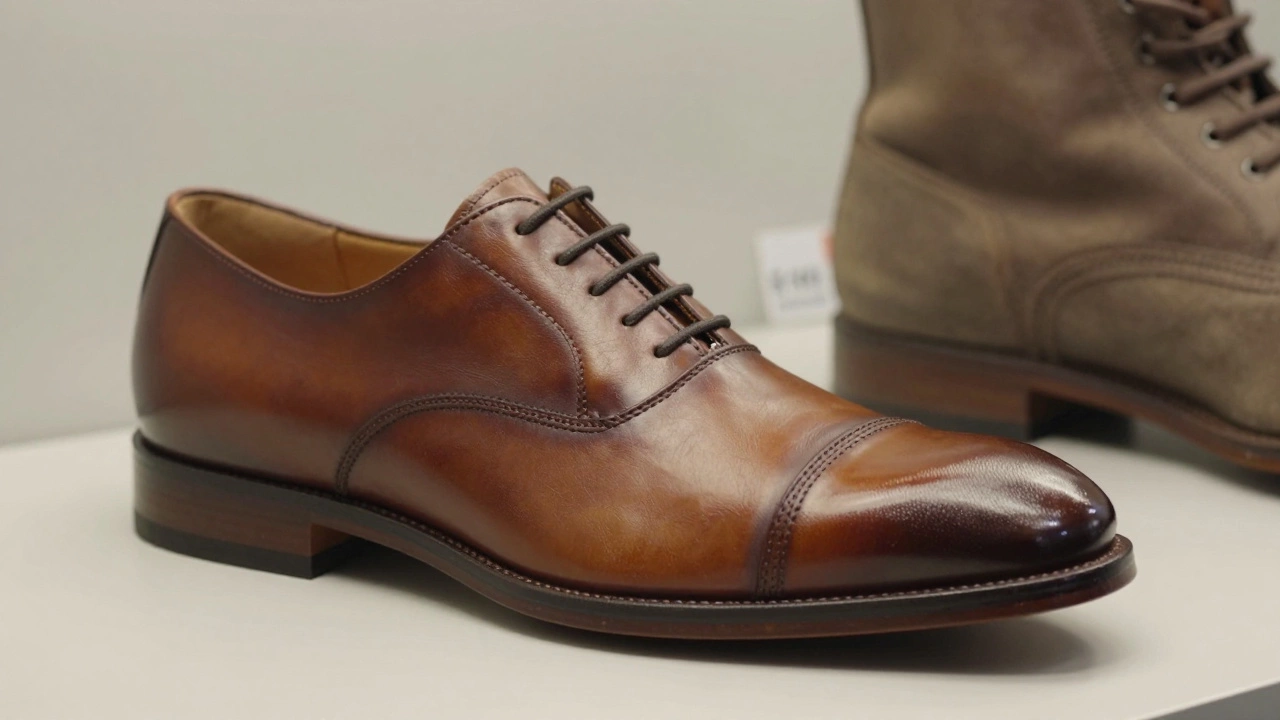
- Top grain: Smooth, even surface. Color is consistent. Edges are often sealed with paint or coating. It feels slightly stiff at first but softens over time.
- Corrected grain: Too perfect. No variation in color or texture. Feels plasticky. The grain pattern looks printed, not natural. If you bend it sharply, you might see white cracks forming.
Also, check the label. Reputable brands will say "full grain" or "top grain." If it just says "genuine leather," dig deeper. Ask the salesperson. Look up the brand online. Most don’t hide it-they just don’t advertise it.
What About Suede and Nubuck?
Suede and nubuck aren’t grades-they’re finishes. Both come from top grain or full grain leather, just buffed differently. Suede is the inner side of the hide, soft and fuzzy. Nubuck is the outer side sanded lightly for a velvety feel. They’re both high quality if they come from full grain. But if they’re made from corrected grain? They’ll stain easily and fall apart faster.
So if you’re looking at suede loafers, ask: "Is this full grain or corrected?" If they can’t answer, assume the worst.
Final Rule: Don’t Trust the Word "Genuine"
"Genuine leather" is the most misleading term in footwear. It’s not a grade. It’s not a quality mark. It’s a loophole. By law, even corrected grain can be called "genuine leather." That’s why you need to look for the real terms: full grain, top grain, corrected grain.
When you’re shopping, ask yourself: Do I want shoes that look good for a season, or shoes that get better with age? If it’s the latter, you’ll pay more upfront-but you’ll never need to buy another pair like this again.
Are all leather shoes made from real leather?
Most are, but not all. Some brands use synthetic materials like PU or PVC and call them "leather-look" or "vegan leather." Real leather always comes from animal hides. Check the label for "100% leather" or "full grain leather." If it just says "leather" without specifics, it could be corrected grain or a blend.
Can you repair corrected grain leather shoes?
Not well. Because corrected grain has a thick synthetic coating, most repair shops won’t touch it. The coating doesn’t absorb conditioners or dyes, and when it cracks, it peels in layers. You can resole them, but the upper will keep breaking. It’s better to replace them than spend money trying to fix them.
Is full grain leather waterproof?
No, not naturally. Full grain leather absorbs water because it’s untreated. But that doesn’t mean it’s ruined. It’ll dry out on its own and often looks better after. If you want waterproofing, use a beeswax-based conditioner. Avoid silicone sprays-they clog the pores and trap moisture inside.
Why do some leather shoes smell like plastic?
That smell usually comes from corrected grain leather with heavy synthetic coatings. Real leather has a warm, earthy scent. Plastic-smelling shoes are often low-grade, mass-produced, and made to look good on the shelf-not to last. If it smells like a new vinyl car seat, you’re not getting real quality.
Do expensive brands always use full grain leather?
Not always. Some luxury brands use top grain for comfort and consistency, especially in dress shoes. But they’ll usually say so on the product page. If a brand charges $500 and doesn’t specify the leather grade, that’s a red flag. Reputable makers are proud of their materials-they’ll tell you exactly what they use.