
Summer Dress Coolness Calculator
Configure Your Summer Dress
Your Coolness Rating
Select your dress options and click calculate to see how cool you'll stay!
It is May 24, 2026. The air in York is already thick with that specific humidity that makes a simple walk to the shops feel like a workout. You step outside, and within ten minutes, your shirt is sticking to your back. We have all been there. The question isn't just about looking good; it is about survival. When temperatures spike, your choice of clothing becomes a matter of physical comfort, not just style. If you want to stay cool this summer, you need to rethink what you wear. It is not about the color or the pattern. It is about the fabric, the cut, and how much skin you actually expose.
Most people make the mistake of choosing clothes based on trends alone. They pick a trendy polyester mini-dress because it matches their shoes, only to realize an hour later that they are trapped in a plastic bag. That ends today. Let’s talk about the actual science of staying cool and which summer dresses deliver on that promise without sacrificing your personal style.
The Fabric First Rule: Why Material Matters More Than Design
If you take nothing else from this guide, remember this: natural fibers breathe; synthetic fibers trap heat. This is the golden rule of summer dressing. When your body sweats, that moisture needs to evaporate to cool you down. Fabrics like cotton, linen, and rayon allow that evaporation to happen quickly. Synthetics like polyester, nylon, and acrylic block it. They hold the heat against your skin, creating a greenhouse effect that raises your core temperature.
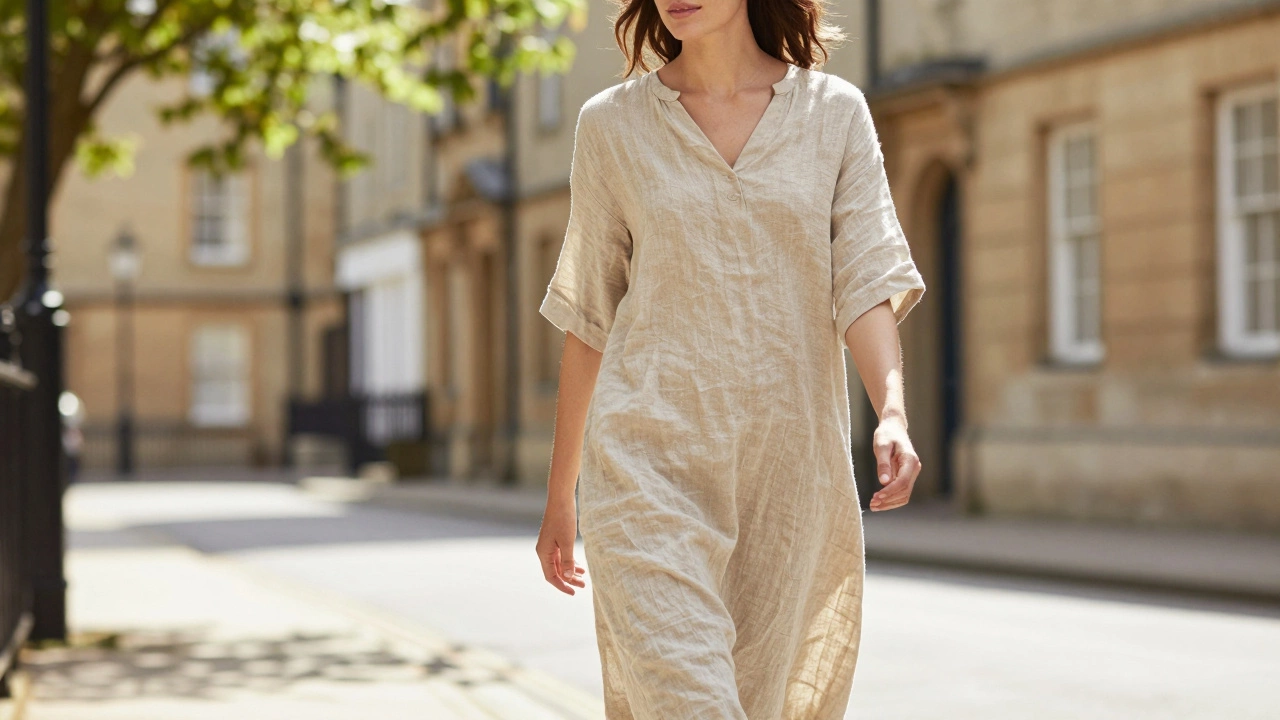
Linen is the king of summer fabrics for a reason. Made from the flax plant, it has a loose weave that allows maximum airflow. It wrinkles easily, yes, but that texture is part of its charm and function. The irregular surface area helps dissipate heat. A pure linen dress might look slightly rumpled after a morning coffee, but it will keep you comfortable during a midday heatwave when everyone else is melting.
Cotton is the reliable runner-up. Look for lightweight weaves like voile, lawn, or chambray. Avoid heavy denim-on-denim looks or thick jersey knits. These are winter fabrics disguised as casual wear. Rayon and Tencel (lyocell) are excellent semi-synthetic options derived from wood pulp. They drape beautifully and wick moisture away from the body better than standard cotton, making them perfect for humid days.
| Fabric Type | Breathability | Moisture Wicking | Best For |
|---|---|---|---|
| Linen | Excellent | Good | Dry heat, outdoor events |
| Cotton Voile | Very Good | Moderate | Daily wear, office settings |
| Tencel/Lyocell | Good | Excellent | Humid climates, active days |
| Polyester Blend | Poor | Poor | Avoid in summer |
Cut and Silhouette: Creating Airflow Channels
Once you have the right fabric, the next factor is the shape of the dress. Tight-fitting garments restrict airflow and press fabric directly against your skin, eliminating the insulating layer of air that keeps you cool. You want dresses that float around your body rather than cling to it.
Maxi dresses with a high slit are a strategic choice. The length protects your legs from direct sun exposure, which prevents overheating from radiant heat. The slit allows air to circulate up your legs, creating a chimney effect that draws hot air out. Pair this with a lightweight fabric, and you have a dress that works actively to cool you down.
Shirt dresses are another powerhouse. The structured collar and button-down front can be left open at the top to expose the chest and neck-areas where blood vessels are close to the skin surface, allowing for efficient heat dissipation. Roll up the sleeves, loosen the belt, and you have a garment that adapts to rising temperatures throughout the day.
Off-the-shoulder styles are also highly effective. By exposing the shoulders and upper arms, you increase the surface area available for sweat evaporation. Just ensure the neckline is secure enough that you aren’t constantly adjusting it, which adds stress and heat. A wide-neckline sundress achieves a similar effect while remaining casual and easy to throw on.
Color Strategy: Reflecting vs. Absorbing Heat
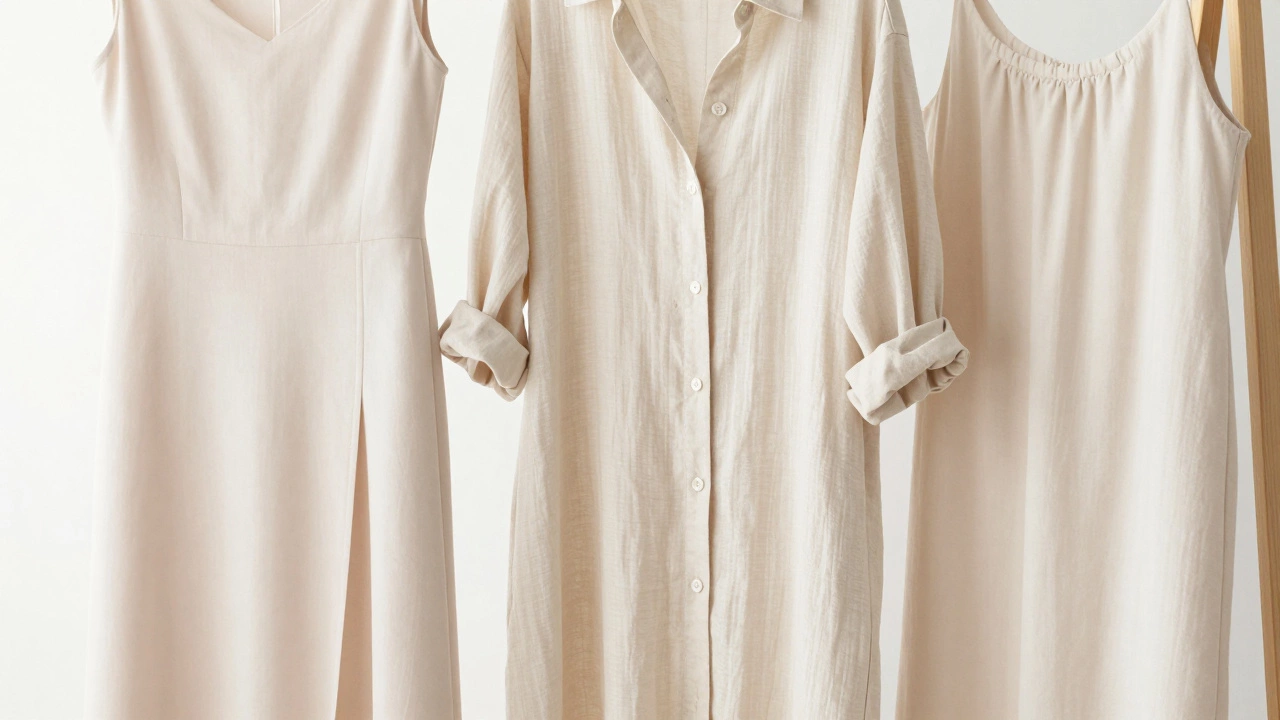
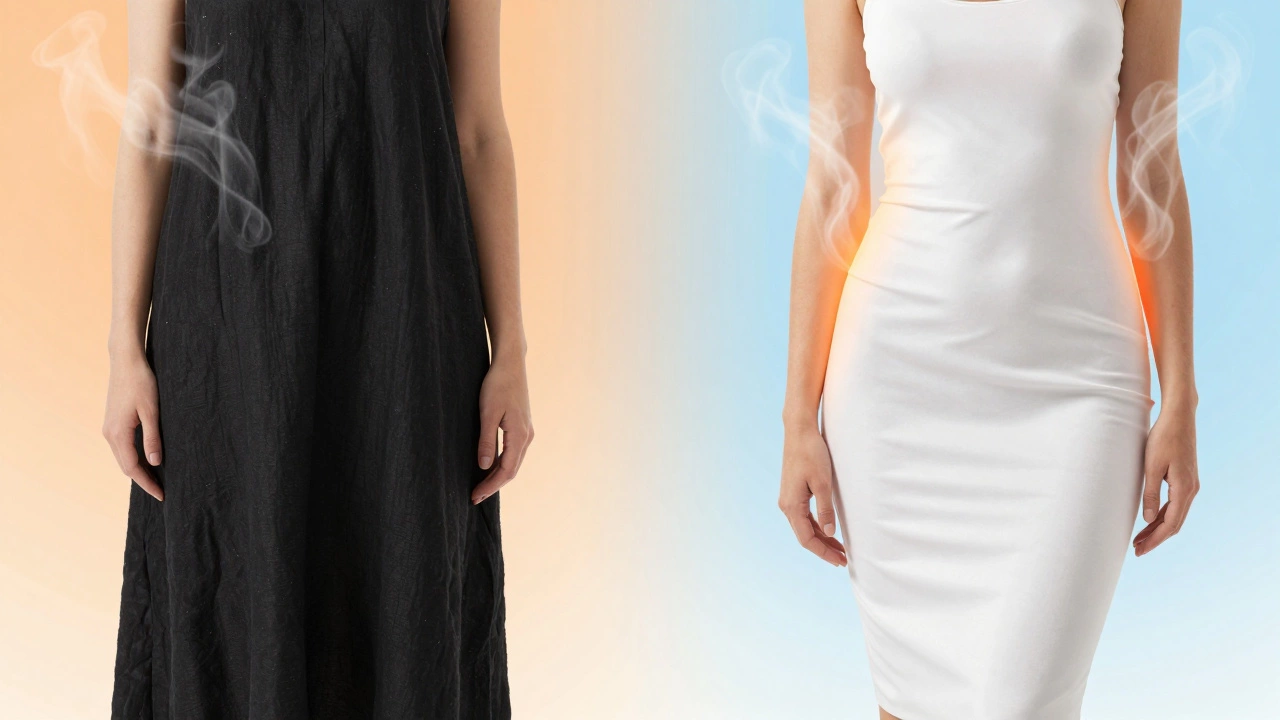
We learned in school that white reflects light and black absorbs it. This physics lesson applies directly to your wardrobe. Light colors like white, beige, pastels, and light gray reflect solar radiation, keeping your body temperature lower. Dark colors absorb that energy and convert it into heat, warming the fabric and, consequently, your skin.
However, color psychology and style preferences matter too. If you love dark dresses, don’t abandon them entirely. Instead, choose loose-fitting cuts in dark natural fibers. The volume of the fabric creates distance between the material and your skin, reducing the transfer of absorbed heat. A loose black linen maxi dress will feel significantly cooler than a tight black polyester midi dress.
Patterns can also play a role. Small, busy patterns may hide sweat stains better than solid whites, which is a practical consideration for humid days. But opt for lighter background colors to maintain thermal efficiency.
Layering Smartly: The Paradox of Summer Coverage
It sounds counterintuitive, but covering up can sometimes keep you cooler. Direct sunlight heats your skin rapidly. A lightweight, long-sleeved cardigan or a sheer kimono over a sleeveless dress can act as a barrier against UV rays and direct heat. As long as the outer layer is made of breathable fabric and fits loosely, it traps less heat than bare skin exposed to intense sun.
This strategy is particularly useful for early mornings or late evenings when the sun is still strong but the air temperature hasn’t peaked. It also provides versatility. When you move indoors to air-conditioned spaces, you can remove the layer without feeling overdressed.
Accessories matter too. A wide-brimmed hat shades your face, neck, and ears, preventing localized overheating that can trigger overall discomfort. Sunglasses protect your eyes and reduce squinting, which can tense facial muscles and contribute to headaches in the heat.
Practical Tips for Choosing Your Summer Wardrobe
Before you buy anything new, audit your current closet. Hold each dress up to the light. Can you see through it? Is the weave tight or loose? Check the label. Does it say 100% linen or 95% polyester? Be honest with yourself about what works and what doesn’t.
- Check the stretch: Some natural fibers have no stretch. Ensure the dress fits comfortably without pulling. Pulling creates tension and reduces airflow.
- Test the drape: Hold the fabric in your hand. Does it fall softly or stand stiffly? Soft draping indicates a lighter weight and better movement.
- Consider the occasion: A beach cover-up doesn’t need to be polished. An office dress needs structure. Choose fabrics that match the setting’s formality while prioritizing breathability.
- Wash wisely: Natural fibers often shrink or lose shape if washed incorrectly. Follow care labels strictly. Cold water washing preserves fiber integrity and saves energy.
Invest in quality over quantity. A well-made linen dress will last for years, developing a soft patina that looks more stylish with age. Fast fashion synthetics degrade quickly, losing their shape and becoming uncomfortable after just a few washes.
Common Mistakes to Avoid
One major error is ignoring the underlayer. Even the best summer dress won’t save you if you’re wearing synthetic underwear or tights. Always pair breathable dresses with cotton or bamboo underwear. Avoid opaque tights in summer unless absolutely necessary for formal events, and even then, choose sheer, lightweight options.
Another mistake is neglecting footwear. Heavy boots or closed-toe shoes trap heat and moisture, leading to blisters and discomfort. Opt for sandals, espadrilles, or breathable leather loafers. Your feet should be able to breathe just as much as your torso.
Finally, don’t underestimate the power of hydration. No amount of cool clothing will compensate for dehydration. Drink water consistently throughout the day. Your body’s ability to regulate temperature depends heavily on internal fluid balance.
What is the coolest fabric to wear in summer?
Linen is widely considered the coolest fabric for summer due to its high breathability and moisture-wicking properties. It allows air to circulate freely and dries quickly, making it ideal for hot and humid conditions. Cotton voile and Tencel are also excellent alternatives.
Do loose-fitting dresses really keep you cooler?
Yes, loose-fitting dresses create a channel for air to flow between the fabric and your skin. This airflow facilitates evaporation of sweat, which is the body's primary cooling mechanism. Tight clothing blocks this process and traps heat.
Is it better to wear white or black in the summer?
White and other light colors reflect sunlight and heat, keeping you cooler. Black absorbs heat, raising the temperature of the fabric. However, if you prefer dark colors, choose loose-fitting natural fibers to minimize heat transfer to your skin.
Can I wear synthetic fabrics in the summer?
It is generally not recommended. Synthetic fabrics like polyester trap heat and moisture, leading to discomfort and odor. If you must wear synthetics, look for technical performance fabrics designed for moisture wicking, but natural fibers are superior for everyday comfort.
How do I style a linen dress without looking wrinkled?
Embrace the wrinkles! Linen’s texture is part of its aesthetic. To minimize excessive creasing, steam the dress lightly before wearing and avoid folding it tightly in your bag. Wear it with relaxed accessories to enhance the effortless, breezy look.