
Leather Shoe Fit Checker
Enter the measurements from your test walk to determine if your current pair of leather shoes is causing potential foot damage or if they are a perfect match.
Fit Assessment
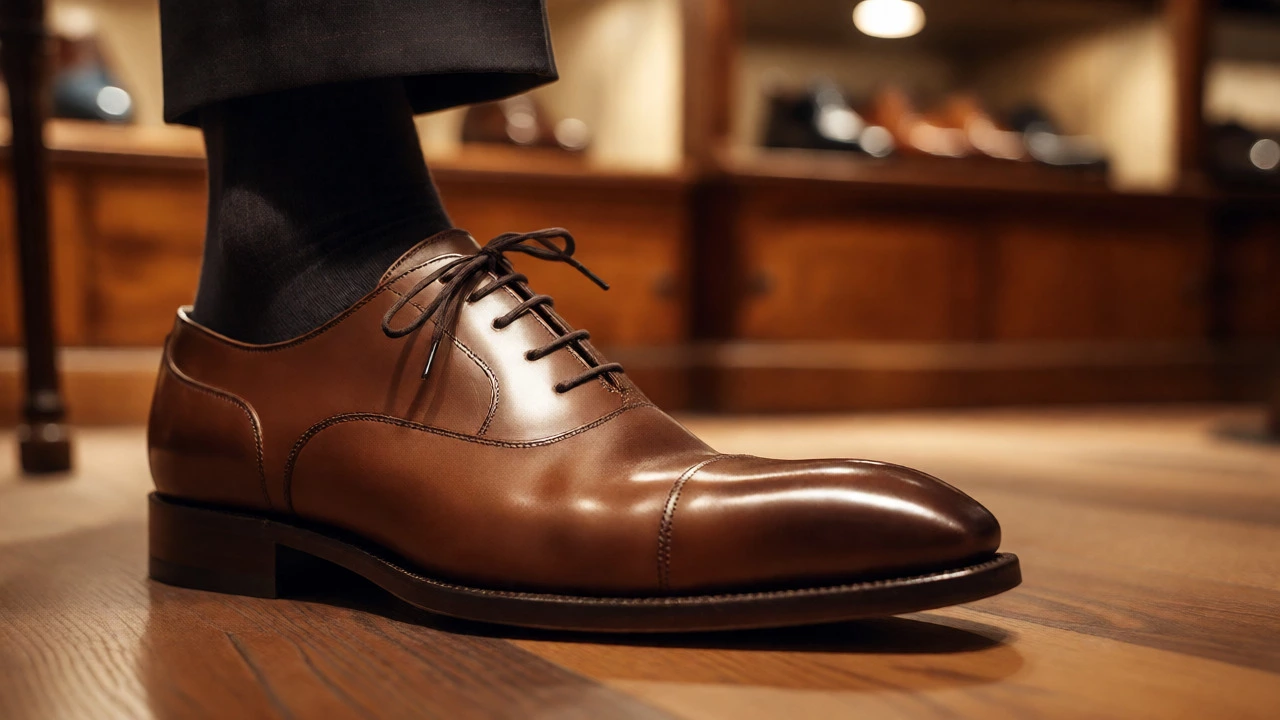
PendingYou are standing in a shoe store, or maybe you just unboxed that pair of Italian leather oxfords you ordered online. You slip them on, stand up, and wiggle your toes. They brush against the front lining. Is this normal? Should they touch? The answer isn't a simple yes or no because toe box space is one of the most misunderstood aspects of footwear fitting, especially when dealing with natural materials like leather shoes.
Here is the reality: if your toes are jammed tight against the end while you are standing still, you have a problem. But if they gently graze the material only when you take a step, you might actually be perfectly fine. It depends entirely on how the shoe moves with your foot. Let’s break down exactly what should happen inside your shoe so you don’t end up with blisters, black toenails, or permanent damage to your feet.
The Mechanics of How Feet Move Inside Shoes
To understand why your toes touch (or shouldn’t), you need to look at biomechanics. Your foot isn’t a static block of wood. When you walk, your arch collapses slightly, your heel lifts, and your toes splay out to grip the ground. This process is called pronation and supination, but let’s keep it simple: your foot gets longer and wider as you push off.
Research from podiatry associations consistently shows that during the push-off phase of walking, the forefoot extends forward by approximately 5 to 8 millimeters compared to its resting position. If your shoe has zero gap between your longest toe and the front wall, that extension hits a hard stop. That impact happens hundreds of times per mile. Over time, this repetitive trauma causes bruising under the nail plate, leading to those dreaded black toenails, or worse, stress fractures in the metatarsals.
However, leather is different from synthetic mesh or canvas. Genuine full-grain leather is a living material. It stretches. It molds. It breathes. A brand-new pair of stiff leather boots will feel tighter than a broken-in pair. This is why the "touch test" changes over time. In the first week, you want more room. By month three, the shoe has settled into the shape of your foot, and the internal volume effectively increases.
The Thumb Test vs. The Walking Test
Most people rely on the thumb test: press your thumb against the heel counter (the back part of the shoe) and see if there is enough space for your index finger at the toe. While this is a good starting point for static fitting, it fails to account for movement. Here is a more accurate way to check fit:
- Stand Up Fully: Never try on shoes sitting down. Your feet spread and lengthen when bearing weight. Always stand on a hard surface.
- Check the Longest Toe: Most people think their big toe is the longest. For many, it’s actually the second toe. Press firmly on the top of the shoe where you think your longest toe ends. Can you feel a slight give? Or does it hit bone immediately?
- Walk on Hard Flooring: Take ten steps. Stop abruptly. Do your toes slide forward and hit the front? If yes, the shoe is too short.
- The Heel Slip Check: While walking, does your heel lift significantly? If your heel slips up and down, your foot slides forward with every step, forcing your toes to collide with the front. This is often a sign the shoe is too wide or the lacing is loose, not necessarily too short.
| Fitting Metric | Acceptable Range | Warning Sign |
|---|---|---|
| Toe Room (Static) | 10-15mm (approx. thumb width) | <5mm (cramped feeling) |
| Heel Slip (Walking) | <3mm vertical movement | >6mm (causes friction blisters) |
| Width Pressure | Firm hold, no pinching | Numbness or tingling after 10 mins |
| Bend Point | Aligns with ball of foot | Bends mid-foot (too stiff/wrong size) |
Why Leather Shoes Behave Differently Than Sneakers
If you wear running sneakers, you know they usually have a thick foam midsole and a rigid toe cap. There is little stretch. With leather dress shoes, the upper material dictates the fit long-term. Calfskin, cordovan, and suede all react differently to heat and moisture from your feet.
Calfskin tends to stretch about half a size in width and a quarter size in length after 20-40 hours of wear. Cordovan, made from horsehide, is denser and resists stretching much more, retaining its shape for years. Suede stretches quickly but can lose structure if overstretched. Because of this variability, buying leather shoes requires planning for future expansion.
A common mistake is buying a shoe that feels perfect on day one. If it fits snugly now, it will likely become too loose in six months. Conversely, if it feels slightly uncomfortable-just shy of painful-it may mold to your foot and become comfortable. The key is identifying whether the discomfort comes from length (toes touching) or width (pinching sides). Length issues rarely resolve themselves through stretching. Width issues often do.
Situations Where Toes Touching Is Okay
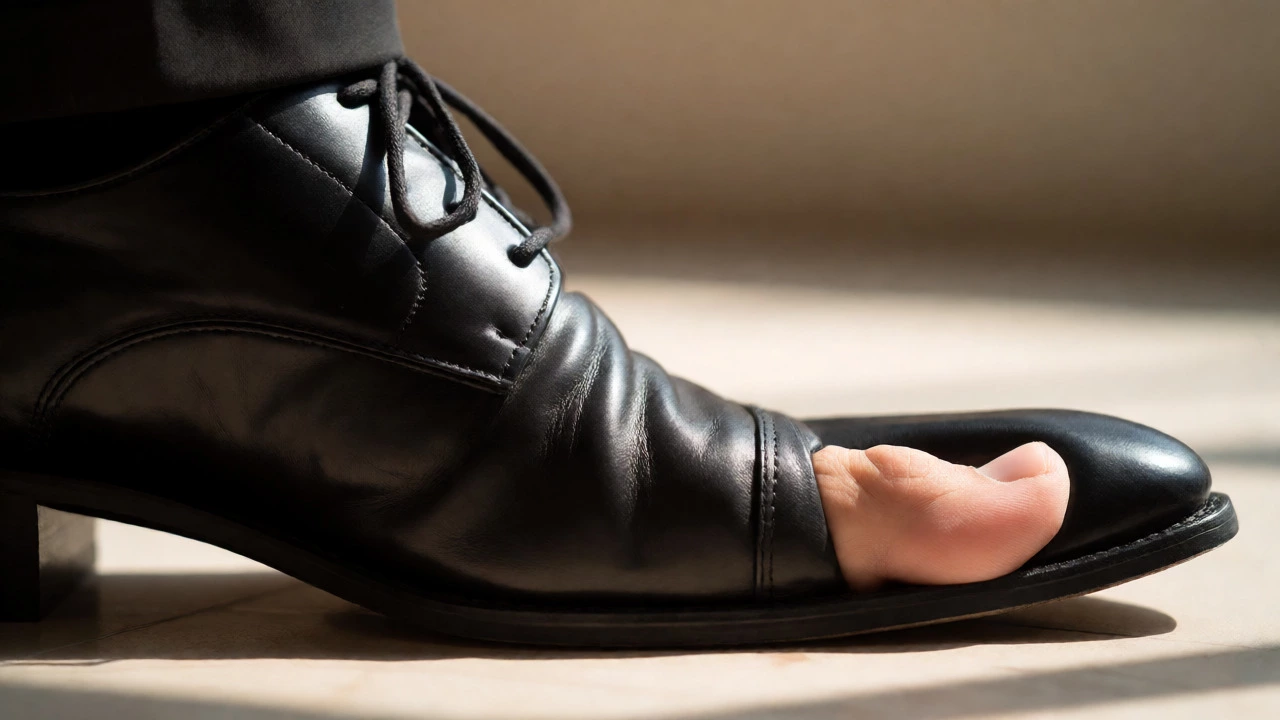
There are specific scenarios where light contact is acceptable, provided it doesn’t cause pain:
- Pointed Toe Styles: Fashion-forward pointed-toe loafers often have less functional toe box space than round-toe oxfords. If you choose this style, accept that your toes will sit closer to the edge. Just ensure they aren’t curled downward (claw toe).
- Short Walks: If you are wearing heels or formal pumps for an event lasting two hours, minor toe contact is tolerable. It becomes problematic if you are walking 10,000 steps.
- Custom Fit: Bespoke shoemakers sometimes create a "snug" fit intentionally to prevent foot sliding. However, even bespoke shoes require clearance for the big toe.
In these cases, the shoe should still allow your toes to wiggle freely. If you cannot move your toes at all, the shoe is too small, regardless of the style.
The Dangers of Ignoring Tight Toe Boxes
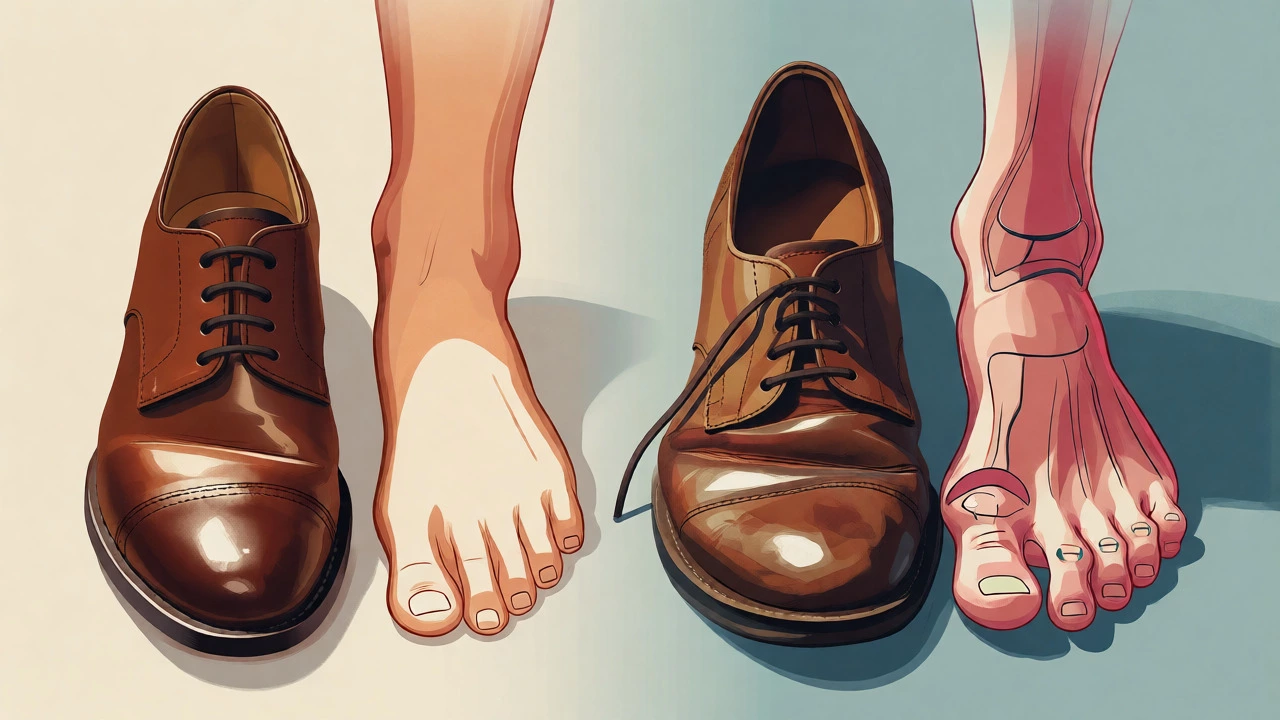
Ignoring the warning signs of cramped toes leads to chronic issues. The most immediate consequence is subungual hematoma, which is bleeding under the toenail caused by repeated micro-trauma. This looks ugly and hurts, but it heals.
Long-term consequences are more serious. Constant compression restricts blood flow and nerve function. This can lead to Morton’s Neuroma, a thickening of tissue around nerves leading to your toes, causing sharp burning pain. Additionally, if your toes are forced into a narrow space, they may develop bunions (hallux valgus) or hammer toes. Once bone structure changes, no amount of shoe stretching will reverse the deformity.
For diabetics or those with peripheral neuropathy, sensation loss means you might not feel the damage occurring until it’s severe. Regular inspection of your feet after wearing new leather shoes is critical.
How to Fix Shoes That Are Too Short
If you realize your leather shoes are too short, you have limited options. Stretching machines work well for width but offer minimal gains in length. Here is what you can try:
- Professional Stretching: A cobbler can use a mechanical stretcher to expand the toe box by 2-4mm. This is often enough to relieve pressure without ruining the shoe’s structure.
- Thick Socks and Heat: Wear thick wool socks, put on the shoes, and use a hair dryer on medium heat for 20 seconds per area. Keep walking around as they cool. This helps relax the leather fibers.
- Insoles: Paradoxically, adding a thin insole can help if the shoe is slightly too long overall but your foot slides forward. It raises the arch, preventing the foot from sliding down into the toe box.
- Lacing Techniques: Use a "heel lock" lacing pattern. This secures the ankle and prevents the foot from sliding forward, keeping your toes away from the front wall.
If none of these work, the shoe is simply the wrong size. No amount of DIY magic fixes a fundamental length error.
Final Verdict: What Should Happen?
So, should your toes touch the end? When standing still, ideally, there should be a small gap-about the width of a pinky finger (10-12mm). When walking, your toes may briefly brush the front lining as you push off, but they should never slam into it. If you feel a distinct thud or pinch with every step, the shoe is too short.
Remember that leather shoes are an investment. Buying a pair that fits correctly protects both your wallet and your feet. Don’t compromise on length for style. A beautiful shoe that hurts is a shoe you’ll leave in the closet.
How much room should my toes have in leather shoes?
You should have approximately 10 to 15 millimeters of space between your longest toe and the end of the shoe when standing upright. This allows for natural foot expansion during walking.
Do leather shoes stretch in length?
Leather shoes stretch primarily in width and girth. Gains in length are minimal, typically less than 5mm even after extensive wear. Therefore, never buy leather shoes expecting them to grow significantly longer.
Is it bad if my toes touch the front of my shoes?
It is bad if they touch while standing still or if they hit the front forcefully while walking. Light brushing during the push-off phase is normal, but constant pressure causes blisters, black toenails, and structural foot deformities.
Which toe determines shoe size?
Size your shoes based on your longest toe, which is not always the big toe. For many adults, the second toe is longer. Ensure there is adequate space for whichever toe extends furthest.
Can I fix shoes that are too short?
Fixing length is difficult. Professional stretching can add 2-4mm, which may relieve mild discomfort. However, if your toes are jammed against the front, the shoe is likely fundamentally too small and should be exchanged.