
T-Shirt Fit & Sizing Advisor
Recommendation
Buy True Size
Standard FitBased on your selections, sticking to your standard size will provide the best balance of comfort and structure.
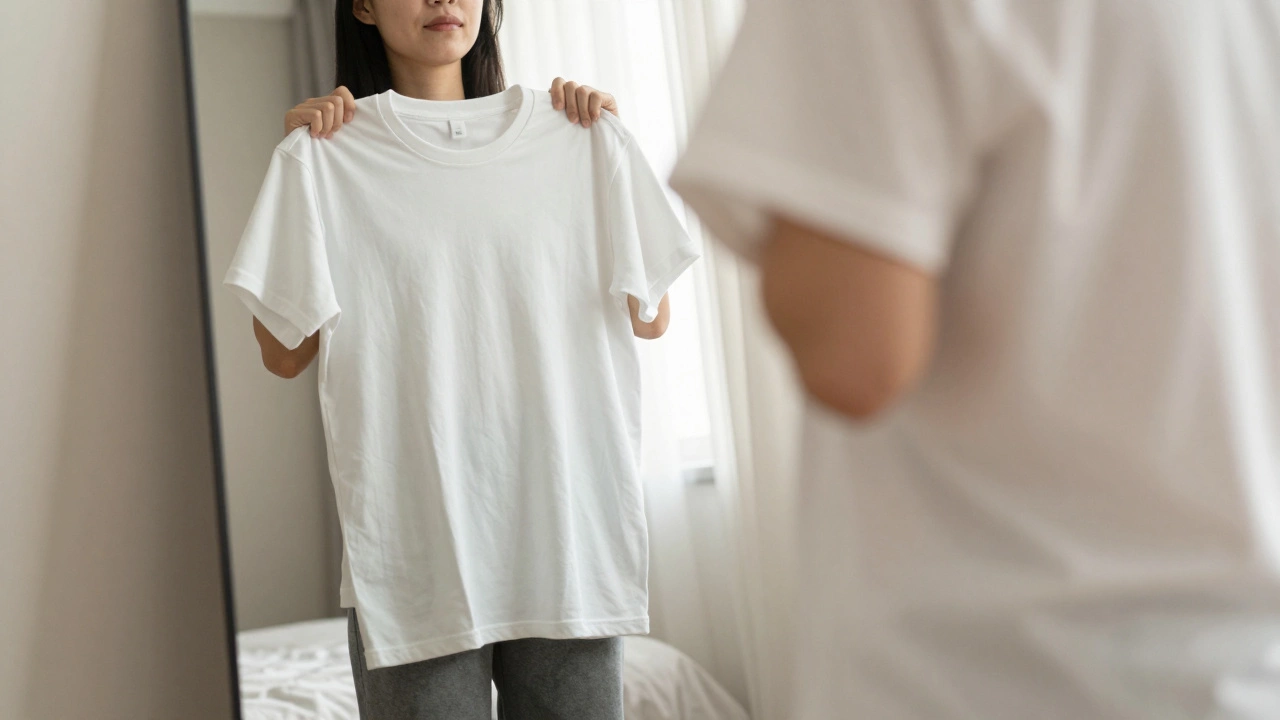
There is a specific feeling every shopper knows. You pick up a basic white t-shirt, check the tag, and hesitate. Do you grab your usual medium, or do you reach for the large just to be safe? This tiny moment of indecision happens in stores and online carts millions of times a day. The answer isn't a simple yes or no. It depends entirely on what you are trying to achieve with your look, the fabric you are holding, and how your body moves.
In recent years, the definition of a "good fit" has shifted dramatically. We have moved away from the skin-tight silhouettes of the early 2000s toward looser, more relaxed cuts. But buying a size bigger than your standard measurement is not always the right move. Sometimes it creates a polished, intentional look. Other times, it makes you look like you borrowed someone else's clothes. Let’s break down when to size up and when to stick to your true size.
The Rise of the Oversized Aesthetic
If you scroll through social media or look at street style photos from 2025 and 2026, one trend dominates: volume. The oversized t-shirt is no longer a mistake; it is a statement. This style draws inspiration from skate culture, hip-hop fashion, and minimalist design movements that prioritize comfort and ease over rigid structure.
When you buy a t-shirt a size bigger intentionally, you are aiming for this aesthetic. The goal is a drape that falls loosely off the shoulders. The hem should hit mid-hip or lower, creating a boxy shape. This works exceptionally well if you want to create a balanced silhouette. For example, if you have broader shoulders, an oversized tee can soften that area. If you have a slender frame, adding volume can make you appear more substantial.
However, there is a difference between "oversized" and "ill-fitting." An intentional oversized look usually involves specific cut details. Look for dropped shoulders (where the seam sits further down the arm), wider necklines, and heavier fabrics. If you take a standard fitted shirt and simply buy two sizes up, it might look sloppy rather than stylish because the proportions aren't designed for that extra space.
Fabric Weight and Shrinkage Factors
One of the most practical reasons people ask if they should buy a size bigger is fear of shrinkage. Cotton is a natural fiber, and it reacts to heat and water. If you wash a 100% cotton t-shirt in hot water and dry it on high heat, it will shrink. How much? Typically, pre-shrunk cotton shrinks about 3-5%. Unpre-shrunk cotton can shrink up to 10%.
This is where the decision gets tricky. If you buy a shirt that fits perfectly today, it might feel tight around the chest and arms after three washes. In this case, sizing up one notch is a smart protective measure. But here is the catch: cheap, thin cotton often loses its shape and becomes baggy in weird places, while high-quality heavyweight cotton holds its structure better even if it shrinks slightly.
Consider the blend. Polyester-cotton mixes (like 50/50 blends) shrink less but may pill over time. Pure linen breathes beautifully but wrinkles instantly. Merino wool offers temperature regulation but requires delicate care. Knowing the material helps you decide. If you plan to machine wash everything on a heavy cycle, sizing up in pure cotton is a wise hedge against future tightness.
| Fabric Type | Shrinkage Risk | Sizing Advice |
|---|---|---|
| 100% Cotton (Pre-shrunk) | Low (3-5%) | Buy your true size |
| 100% Cotton (Raw/Unsanforized) | High (8-10%) | Size up one full size |
| Polyester-Cotton Blend | Very Low | Buy your true size |
| Linen | Moderate | True size or size up for loose drape |
Anatomy of the Fit: Shoulders and Sleeves
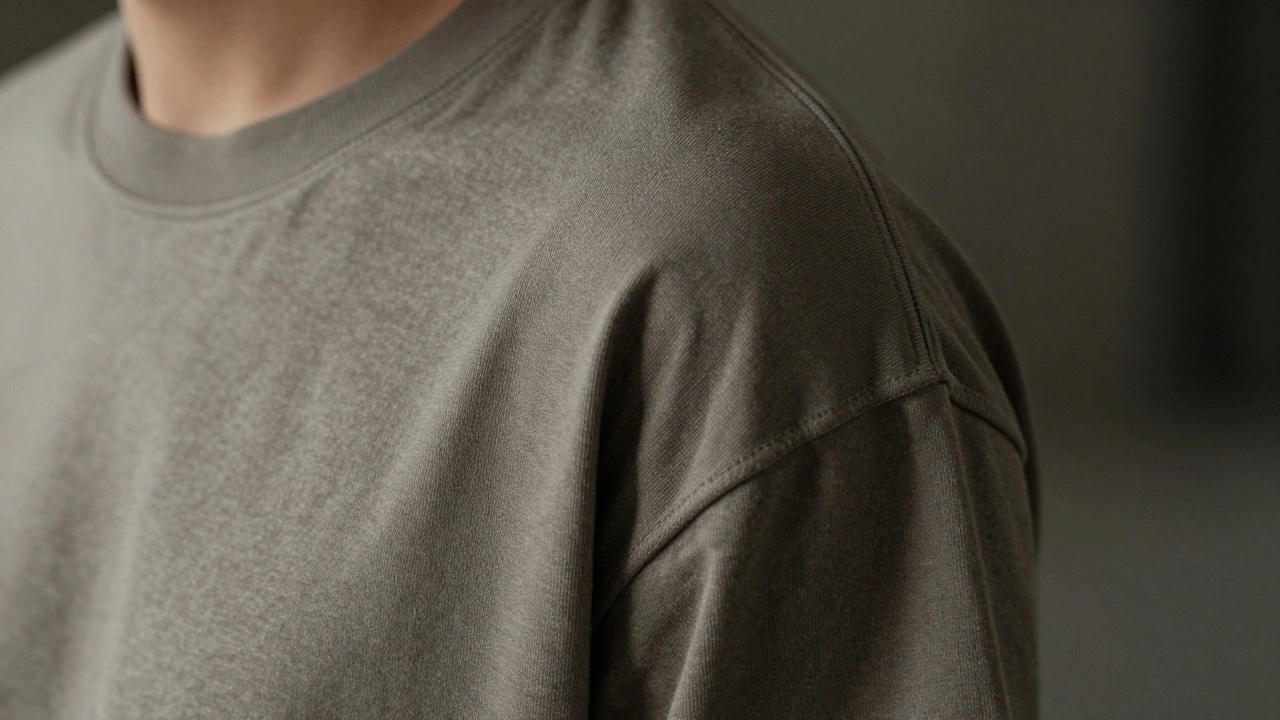
Even if you love the idea of a loose fit, certain areas of a t-shirt must remain proportional. The shoulder seam is the anchor of the garment. On a fitted tee, this seam should sit right at the edge of your shoulder bone. On an oversized tee, it can drop down your bicep by 1-2 inches. But if it drops too far, the shirt looks like a sack.
Pay attention to the sleeve length. When you size up, the sleeves get longer. Ideally, the sleeve should cover the top part of your bicep without hanging down to your elbow. If the sleeves are too long and wide, they can make your arms look shorter and your torso wider. This is a common pitfall for taller individuals who size up to get length in the body but end up with comically large sleeves.
The neckline is another critical factor. Cheap t-shirts often have necklines that stretch out after a few wears. If you buy a size bigger, the neck hole is already larger. After washing, it might gape open, revealing too much chest or requiring a camisole underneath. Look for reinforced neckbands (ribbed collars) that maintain their shape. If the brand is known for stretchy necks, sticking to your true size-or even sizing down-might preserve the collar's integrity better than going up.
Body Shape and Proportion Balancing
Your body type plays a huge role in whether sizing up works for you. Fashion is largely about balance. If you have a pear-shaped body (wider hips than shoulders), wearing a tighter t-shirt can emphasize the contrast. Sizing up creates a straighter line, balancing the upper and lower body. This is why many people with curvier figures prefer boxy, oversized tees-they create a uniform silhouette.
Conversely, if you have an athletic build with broad shoulders and a narrow waist, a fitted t-shirt highlights your V-taper. Sizing up might hide those hard-earned muscles under excess fabric. In this case, you might want a "regular" fit rather than an "oversized" one. Regular fit allows room to move without drowning your frame.
For petite frames, sizing up can be dangerous. A shirt that is too big can overwhelm a smaller stature, making you look like you are swimming in fabric. Instead of buying a larger size, look for brands that offer "cropped" or "short torso" lengths. This gives you the relaxed fit in the shoulders and arms without the excessive length in the body.
Styling Strategies for Larger Sizes
If you decide to buy a size bigger, how you wear it matters just as much as the shirt itself. An oversized t-shirt can look lazy if thrown on with sweatpants. It looks intentional when styled with purpose. Here are a few ways to make the extra fabric work for you:
- Tuck it partially: Do a front tuck into high-waisted jeans or shorts. This defines your waistline and prevents the shirt from looking like a tent.
- Layer it: Wear the oversized tee over a fitted long-sleeve shirt. The contrast between the tight layer underneath and the loose layer on top creates depth and interest.
- Knot the hem: Tie a knot at the side or front to shorten the length and add shape. This is great for turning a too-long shirt into a crop-top alternative.
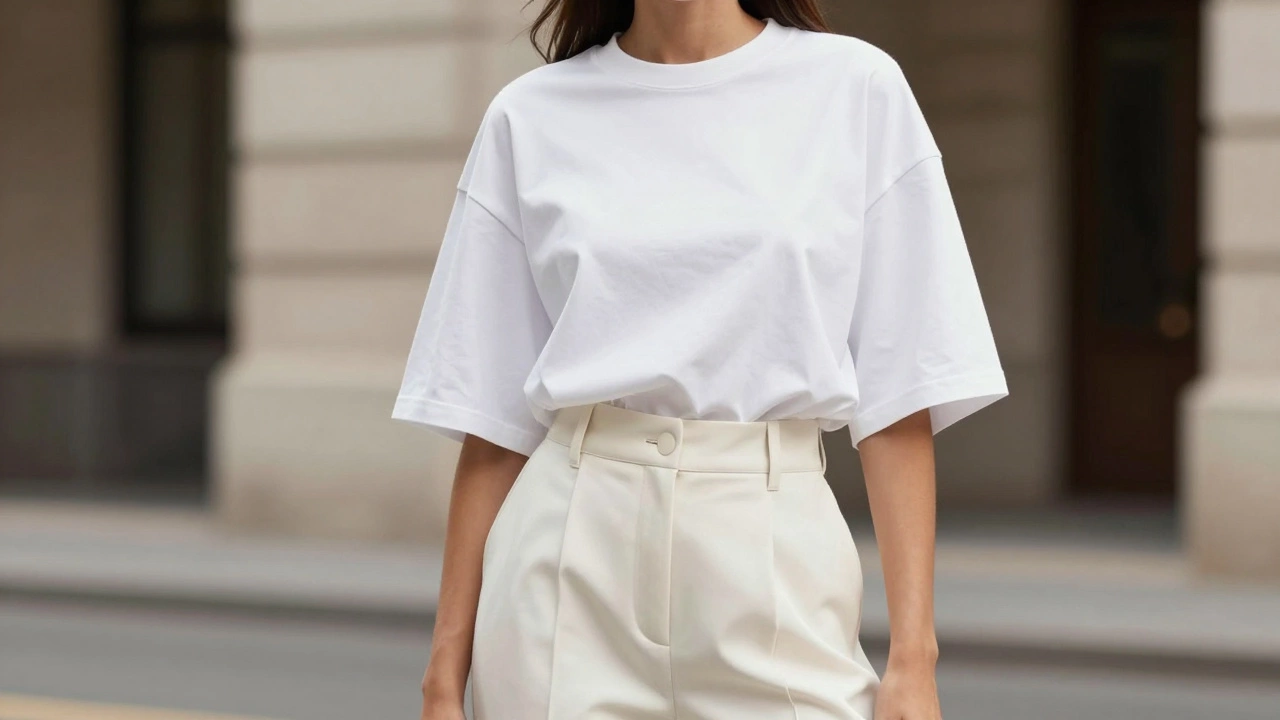
- Pair with structured bottoms: Balance the softness of an oversized tee with tailored trousers, crisp chinos, or a structured skirt. The mix of textures and fits keeps the outfit looking polished.
Accessories also help. A belt over an oversized t-shirt worn as a dress is a popular trend. Statement jewelry or a cap can draw the eye upward, ensuring the bulk of the shirt doesn't swallow your features.
Online Shopping vs. In-Store Trials
Buying clothes online adds another layer of complexity. You cannot try things on. Return policies vary wildly. Some retailers charge for returns, which makes guessing your size risky. Always check the size chart. Never rely solely on "Small," "Medium," or "Large." These labels mean different things to different brands. A Medium in one brand might be a Large in another.
Look for measurements in centimeters or inches for chest width, length, and sleeve length. Compare these numbers to a t-shirt you already own and love. Lay your favorite shirt flat and measure it. Then compare those numbers to the brand's size chart. If the brand's Medium matches your shirt's dimensions, buy the Medium. If the brand's Medium is 2 inches narrower across the chest, consider sizing up.
Read reviews. Other shoppers often mention if a item runs small, large, or true to size. Phrases like "runs slim" or "boxy fit" are goldmines of information. If multiple reviewers say "size up," listen to them. Collective experience is often more accurate than a generic size chart.
When to Stick to Your True Size
There are scenarios where buying a size bigger is a bad idea. If you are buying a performance t-shirt for gym workouts, you generally want a closer fit. Loose fabric can get caught in equipment, flap around during running, or look messy during yoga. Moisture-wicking materials are designed to hug the body to pull sweat away effectively. Sizing up reduces this functionality.
Formal or semi-formal contexts also call for precision. If you are wearing a t-shirt under a blazer for a smart-casual office look, an oversized tee will bunch up and create bulk under the jacket. You want a clean, smooth line. A true-to-size or slightly fitted tee ensures the blazer drapes correctly.
Finally, consider sustainability. Buying clothes that don't fit well leads to returns, which increases carbon emissions from shipping. Or worse, you keep them because returning is a hassle, and they end up in the back of your closet unworn. Mindful purchasing means choosing the size that fits your current life and style goals, not just guessing.
How much does a cotton t-shirt shrink?
A pre-shrunk cotton t-shirt typically shrinks between 3% and 5% after washing. Unsanforized or raw cotton can shrink up to 10%. To minimize shrinkage, wash in cold water and air dry or use low heat in the dryer.
What is the difference between oversized and regular fit?
Regular fit follows the natural lines of your body with some room for movement. Oversized fit is intentionally cut with extra width in the chest, shoulders, and length, featuring dropped shoulder seams and a boxy silhouette for a relaxed, streetwear-inspired look.
Should I size up if I am between sizes?
It depends on the desired look. If you prefer a looser, comfortable fit or are worried about shrinkage, size up. If you prefer a tailored appearance or are buying for athletic activities, size down to the smaller option for a closer fit.
Why do my t-shirts look baggy after washing?
Bagginess often results from low-quality fabrics that lose elasticity or from stretching out while wet. Heavy fabrics and reinforced stitching hold their shape better. Avoid hanging wet t-shirts by the shoulders, as the weight of the water can stretch the fabric permanently.
How do I know if a t-shirt is too big?
A t-shirt is too big if the shoulder seams fall past your biceps, the sleeves cover your elbows, or the neckline gaps excessively. While oversized styles are trendy, the proportions should still feel intentional, not sloppy or overwhelming to your frame.