
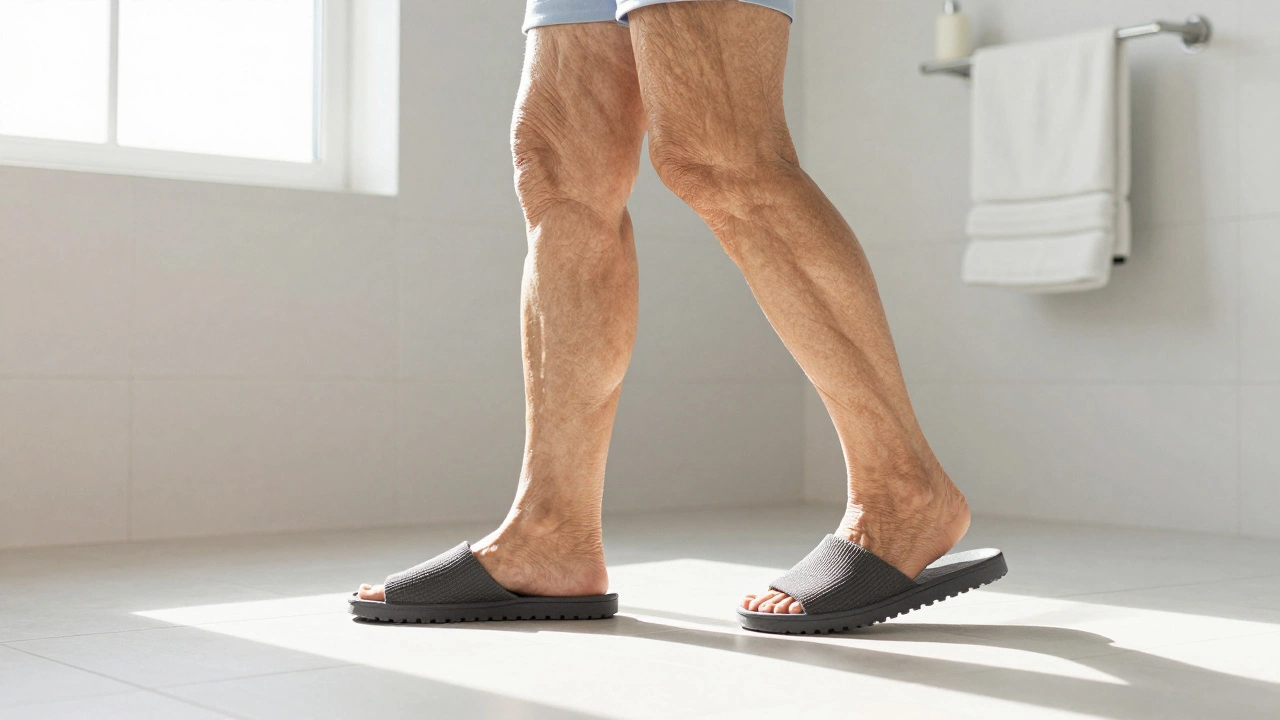
Slipper Safety Checker
This tool helps you evaluate whether your slippers are safe for everyday use at home. Based on CDC guidelines and senior safety research, assess your slipper's features below.
Slipper Safety Assessment
Safety Assessment Results
Your slipper safety score is based on four key factors: traction, fit, support, and usage context. Scores range from 4-12, with 12 being safest.
Every year, over 300,000 older adults in the U.S. end up in emergency rooms because of falls at home. And nearly half of those falls happen right inside the house-often near the bathroom, kitchen, or bedroom. One of the most common, quiet culprits? The wrong pair of slippers.
Why Slippers Matter More Than You Think
Slippers aren’t just about warmth or laziness. For seniors, they’re part of daily safety. A good pair can mean the difference between a smooth morning routine and a broken hip. Many older adults spend most of their day indoors, moving between rooms, standing at the sink, or walking to the bathroom. Their balance may be slower, their reflexes less sharp, and their feet may have lost padding or changed shape over time. That’s why footwear choice isn’t optional-it’s essential.Not all slippers are created equal. A fluffy, soft slipper with a thin sole might feel cozy, but it can slide on hardwood or tile floors. A slipper with a worn-out sole or no grip can turn a simple walk to the fridge into a risky move. The goal isn’t to look stylish-it’s to stay upright.
The Real Risks of Poorly Designed Slippers
Let’s be clear: slippers with smooth soles, high heels, or loose fits are dangerous for seniors. Here’s what happens when people wear them:- Sliding on smooth floors: Vinyl, tile, and even polished wood become ice rinks without traction. A 2023 study from the University of Michigan found that 68% of slip-related falls among seniors involved footwear with no grip.
- Tripping on loose uppers: Slippers that don’t secure the heel-like mules or open-back styles-can catch on rugs or carpet edges. The foot slips out, the body follows.
- Pressure points and poor support: Many slippers lack arch support. Over time, this strains the feet, knees, and lower back. Seniors with arthritis or plantar fasciitis often feel more pain because their slippers don’t cushion or stabilize.
- Worn-out soles: A slipper that’s been used for two years might look fine, but the rubber has flattened. That’s like walking on a pancake.
One woman in York, 78, told her physiotherapist she’d fallen three times in six months. She blamed the “old rug.” Turns out, her slippers had zero tread. She switched to a pair with a rubber outsole and hasn’t slipped since.
What Makes a Slipper Safe for Seniors?
Not every slipper on the shelf is right. Here’s what to look for:- Non-slip rubber sole: Look for deep treads, like those on sneakers. The tread should grip both dry and damp surfaces. Avoid foam or felt soles-they’re soft but useless on wet floors.
- Secure fit: Slippers with straps, Velcro, or a snug heel cup keep the foot locked in. Avoid mules unless they have a deep heel counter.
- Arch and heel support: Even if you don’t have foot pain now, support prevents long-term issues. Some slippers now include orthotic insoles designed for seniors.
- Lightweight and flexible: Heavy slippers make walking tiring. Aim for something under 12 ounces per slipper.
- Easy to put on: If laces are hard to tie, choose slip-ons with stretch fabric or wide openings. Some even have elasticized sides.
Brands like Vionic, Crocs, and Orthofeet make slippers specifically for seniors. They’re not fancy, but they’ve been tested on real feet with real mobility challenges.
When Slippers Are a Bad Idea
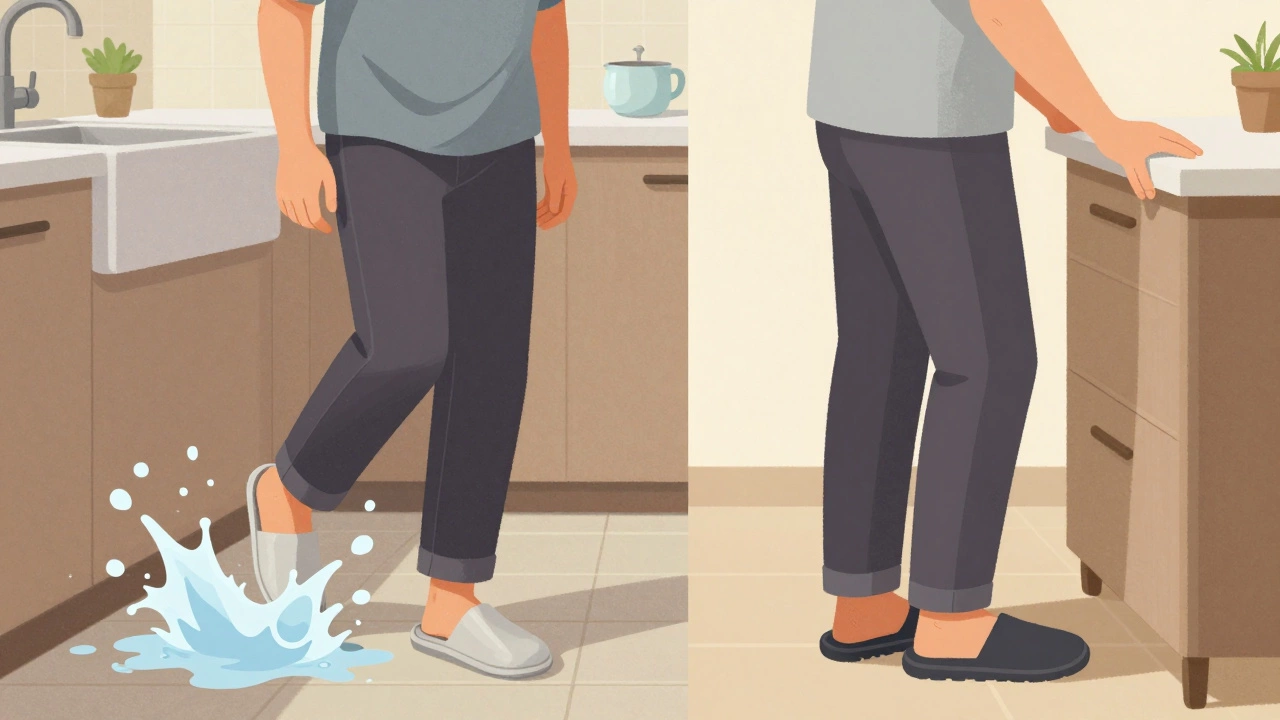
There are times when slippers shouldn’t be worn at all:- When walking outside: Even just to the mailbox or garden. Outdoor surfaces are uneven, wet, or icy. Swap slippers for sturdy, closed-toe shoes with grip.
- When using stairs: Slippers lack ankle support. Use shoes with a firm heel and non-slip tread.
- When standing for long periods: If you’re washing dishes or folding laundry, wear supportive house shoes-not fluffy loungers.
- If you have diabetes or neuropathy: You need slippers with seamless interiors and extra padding to prevent ulcers. Consult a podiatrist for recommendations.
What to Avoid
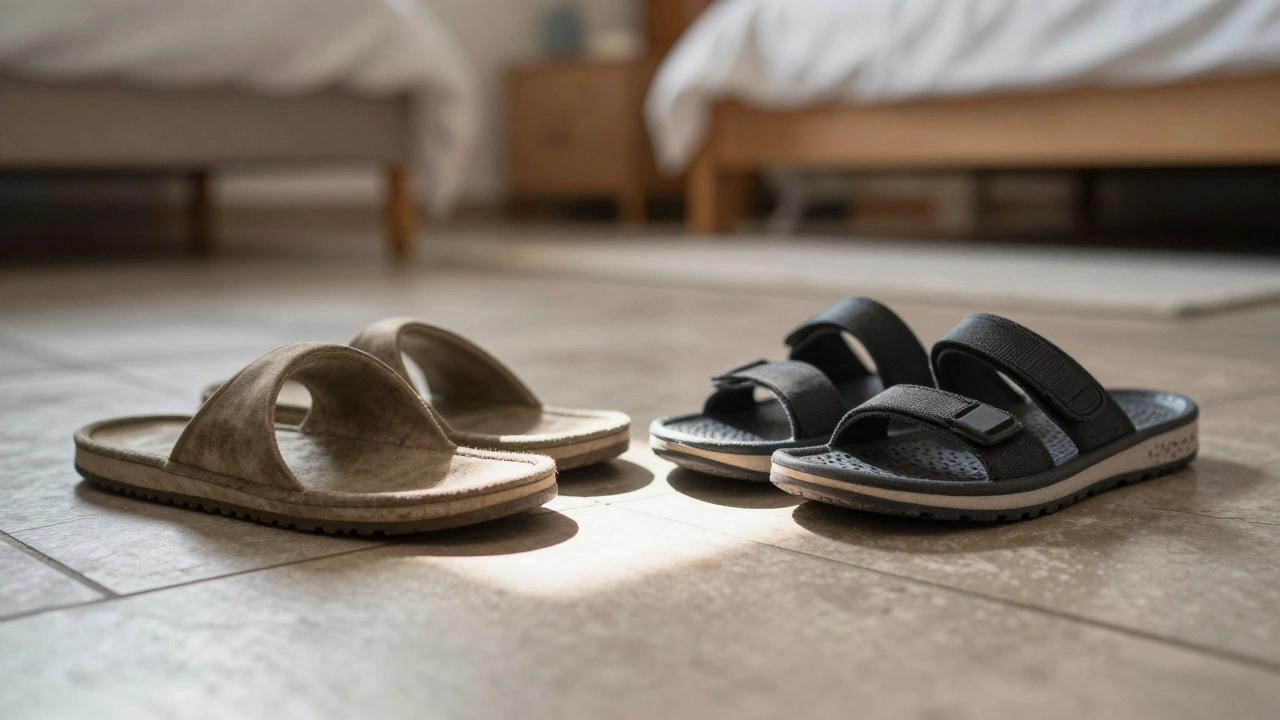
Here are three common mistakes seniors make with slippers:- Wearing the same pair for years: Rubber soles degrade. Replace slippers every 6-12 months, even if they look fine.
- Choosing style over safety: A cute floral slipper with a plastic sole won’t save you from a fall. Function beats fashion every time.
- Ignoring foot changes: Feet swell, flatten, or widen with age. Don’t assume your old size still fits. Get measured every year.
One man in Leeds, 82, kept wearing his 2018 slippers because “they’re still comfortable.” He fell in the bathroom, broke his wrist, and spent three weeks in rehab. His slippers? The sole had worn down to the fabric. He now buys new ones every fall.
How to Test Your Slippers
You don’t need a lab to check if your slippers are safe. Try this quick test at home:- Put them on and walk across a tiled or hardwood floor-like you would after a shower.
- Go up and down a step or two (if safe to do so).
- Try to slide on the floor while standing still. If you slide easily, the sole isn’t grippy enough.
- Check the heel: Can you lift your heel without the slipper falling off?
If you answered “yes” to any of these problems, it’s time for new slippers.
Top 3 Slippers for Seniors in 2026
Based on testing by the UK’s National Ageing Research Group, here are three top-rated options:| Model | Sole Type | Fit | Support | Price Range |
|---|---|---|---|---|
| Vionic Relax Slippers | Deep-groove rubber | Strap with Velcro | Orthotic arch support | £45-£60 |
| Crocs Bistro Clog | Textured EVA foam | Slip-on with heel strap | Contoured footbed | £35-£45 |
| Orthofeet Proven Pain Relief Slipper | Non-slip rubber with heel grip | Adjustable elastic sides | Extra cushion, wide toe box | £65-£80 |
These aren’t luxury items. They’re medical-grade footwear designed for safety, not trends.
Final Thought: It’s Not About Slippers-It’s About Independence
Wearing the right slippers isn’t about being old. It’s about staying active, safe, and independent. A senior who doesn’t fall can still cook, garden, visit friends, and live on their own. A fall can change all that-sometimes permanently.Replace your slippers like you replace your toothbrush: regularly, and without waiting for something to break. Your feet carry you every day. Give them the support they deserve.
Are slippers bad for seniors?
Slippers aren’t inherently bad-they’re only dangerous if they’re poorly designed. Slippery soles, loose fits, and no support make them risky. But slippers with non-slip soles, secure closures, and arch support are one of the best things a senior can wear at home.
Should seniors wear slippers all day?
Not if they’re doing chores, walking stairs, or stepping outside. Slippers are meant for indoor, low-activity use. For cooking, cleaning, or walking to the mailbox, switch to supportive, closed-toe shoes. Use slippers only for resting, sitting, or short walks on flat, dry floors.
What’s the best material for senior slippers?
The sole should be rubber or textured EVA foam for grip. The upper can be soft fabric, memory foam, or stretch knit-but it must hold the foot securely. Avoid synthetic leather that doesn’t breathe, and never choose slippers with plastic soles.
How often should seniors replace their slippers?
Every 6 to 12 months, even if they look fine. Rubber soles lose grip over time, especially with daily use. If the tread looks flat or the slipper slides on smooth floors, it’s time for a new pair. Don’t wait for a fall to realize they’re worn out.
Can seniors wear slippers with socks?
Yes, but only if the slippers are sized to fit over socks. Wearing thick socks with tight slippers can cause pressure points or make the foot slide. Look for slippers with a roomy toe box, or choose a half-size larger if you plan to wear socks daily. Avoid thin socks that slip inside the slipper-those increase sliding risk.
Do insurance plans cover therapeutic slippers for seniors?
In the UK, some NHS foot clinics provide free or subsidized footwear for seniors with diabetes, arthritis, or mobility issues. Private insurance rarely covers slippers unless prescribed by a podiatrist as a medical device. If you have a foot condition, ask your GP or podiatrist for a referral-they may be able to help you access approved footwear.