
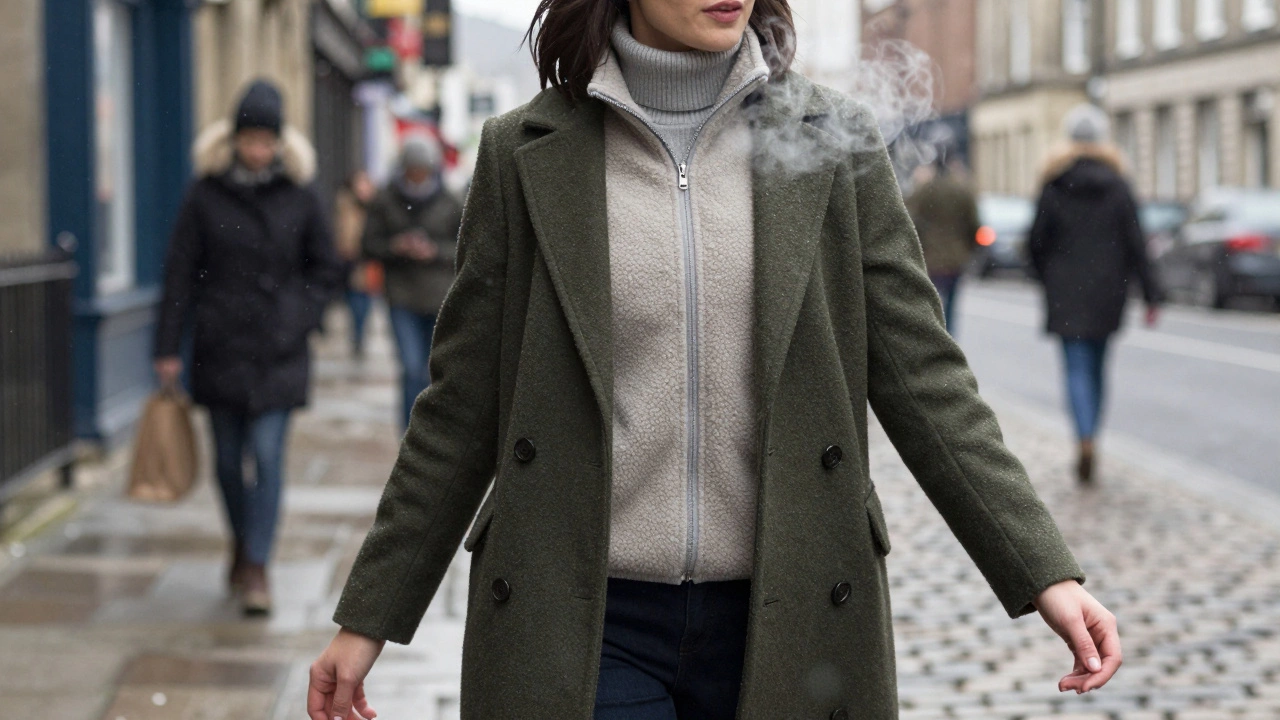
Ever bought a coat that felt like a tent on your shoulders, or one that left your arms stuck at your sides when you tried to zip it up? You’re not alone. Many people wonder: should coats be one size bigger? The answer isn’t simple-it depends on what you’re wearing underneath, where you live, and how you move through your day.
Why Coats Don’t Always Fit Like T-Shirts
Coats aren’t designed to hug your body the way a t-shirt does. They’re meant to layer. If you’re wearing a sweater, a hoodie, or even a thermal base layer under your coat, you need room. A coat that fits perfectly over a t-shirt will feel like a straitjacket when you throw on a chunky knit in December. In York, where winters can drop below freezing and wind cuts through the streets, people don’t just wear coats-they wear systems. A good winter coat needs to accommodate insulation without restricting movement. That’s why many experts recommend going up one size, especially if you plan to wear layers.When Going Bigger Makes Sense
If you live in a place with real winters-or just hate feeling cold-going one size up is often the smart move. Here’s when it matters most:- You wear thick sweaters, fleece jackets, or down vests regularly
- You need to move your arms freely (carrying bags, pushing strollers, biking)
- You want to avoid that awkward gap between your coat and your wrists
- You’re buying a long coat that should cover your hips and thighs
When a Bigger Size Can Backfire
Going up a size isn’t a magic fix. If your coat is too big, it becomes a liability.- It flaps in the wind, letting cold air in
- The sleeves hang past your hands, making it hard to type or hold a coffee
- The hem hits mid-thigh instead of mid-hip, making you look shorter
- It’s harder to move in, especially in crowded spaces like buses or stores
How to Test Fit Before You Buy
Don’t just guess. Try this simple test before you pay:- Put on the coat with the thickest layer you’ll wear under it-like a wool sweater or insulated vest.
- Zip it fully. Can you raise your arms without the fabric pulling tight across your chest?
- Can you fit two fingers between your neck and the collar? If not, it’s too snug.
- Check the sleeve length. When your arms hang naturally, the cuff should end just above your knuckles.
- Walk around. Does the coat ride up when you bend? Does it feel heavy or unbalanced?
Coat Styles and Sizing Differences
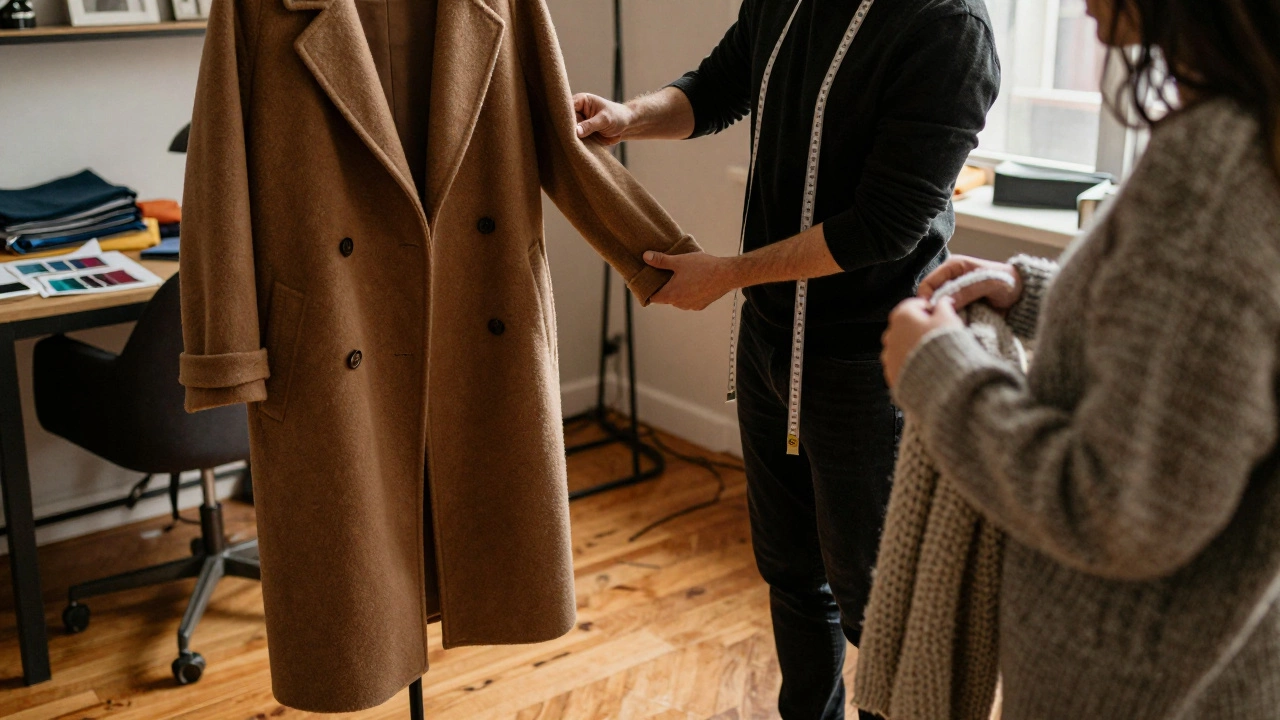
Not all coats are created equal. Sizing varies wildly by cut and brand.- Pea coats are usually tailored. Stick to your regular size unless you’re layering heavily.
- Long wool coats often run small. Go up one size for ease of movement and drape.
- Puffer jackets are designed to be roomy. If you’re between sizes, size down-oversized puffers look bulky and trap too much heat.
- Technical winter coats (like those from The North Face or Arc’teryx) are cut for layering. They usually list layer compatibility on the tag.
What the Experts Say
Tailors and outdoor gear specialists agree: the ideal coat has just enough room to move, not so much that it flaps like a sail. According to the British Weather and Climate Centre’s 2025 winter wear guidelines, optimal layering requires a 10-15% volume increase over your base layer to maintain warmth without bulk. That’s why many professionals recommend choosing a coat that fits your shoulders and chest snugly, but allows 1-2 inches of extra space in the torso. That’s usually one size up from your regular shirt size.Real-Life Example: York Winter Commute
Take Sarah, a teacher in York who walks her kids to school every morning. She wears a medium-sized wool coat that fits her perfectly over a turtleneck. But when she added a fleece mid-layer for January, she couldn’t zip it. She switched to a large-the same coat, one size up. Now she zips it easily, her arms move freely, and she doesn’t feel like she’s wearing a balloon. She didn’t go two sizes up. She didn’t buy a puffer. She just picked the size that worked with her actual layering needs.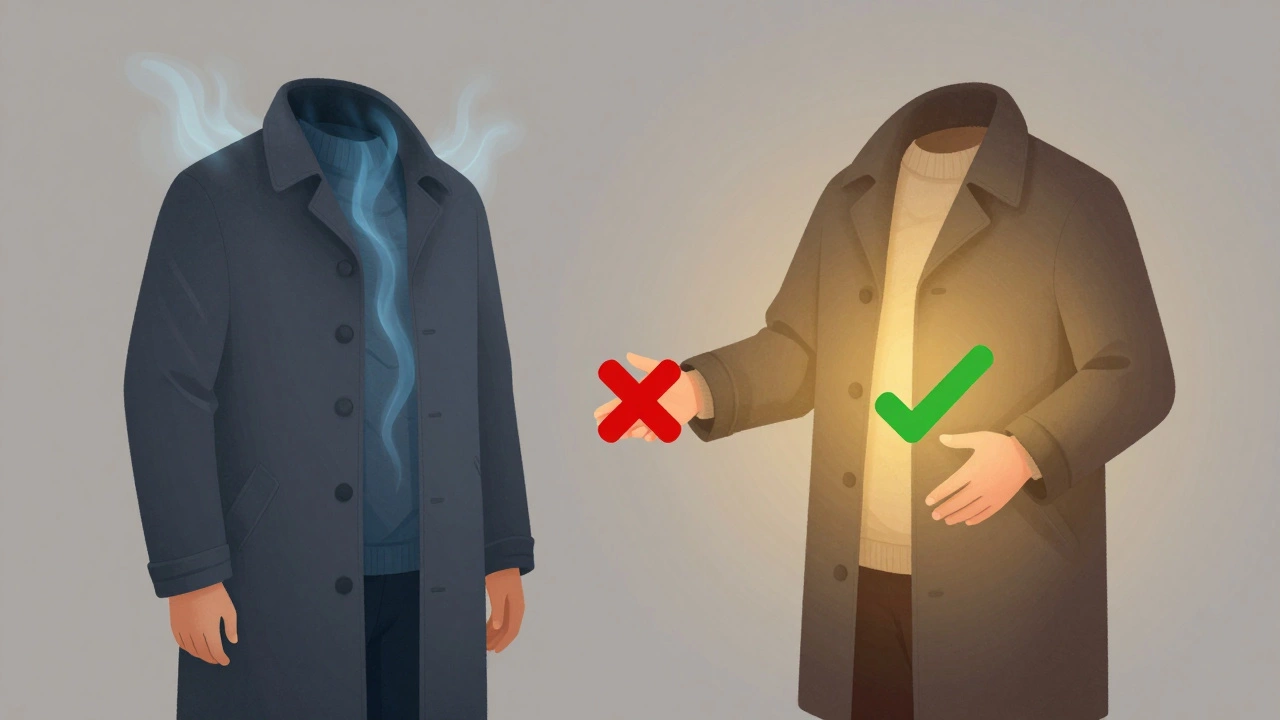
What About Slim Fits and Fashion?
Yes, slim-fit coats look sharp. But if you’re choosing style over function, you’re choosing discomfort. A coat that’s too tight will wrinkle, pull, and lose shape faster. It’ll also make you feel restricted-and you’ll take it off sooner. If you love the look of a tailored coat, go for one with a bit of stretch fabric or a slightly flared cut. Some brands, like Massimo Dutti or Zara’s winter line, now offer “slim but roomy” cuts that look sleek but still allow for a sweater underneath.Final Rule of Thumb
Here’s the simplest way to decide: if you plan to wear anything thicker than a thin sweater under your coat, go one size up. If you’re only wearing a shirt or light blouse, stick to your normal size. And remember: a coat that’s too big can be altered. A coat that’s too small? That’s a waste of money.What to Do If Your Coat Is Too Big
If you’ve already bought a coat that’s too roomy, don’t toss it. Here’s how to fix it:- Use belt loops or a hidden waist belt to cinch it at the middle
- Have the sleeves shortened by a tailor (costs under £20 in York)
- Use a thin inner liner to fill extra space without bulk
- Roll up the cuffs slightly if they’re too long
Should I buy a coat one size bigger than my usual size?
If you plan to wear sweaters, hoodies, or thermal layers underneath, yes-go one size up. If you’re only wearing a shirt or thin top, stick to your regular size. The goal is comfort and warmth, not just looking bigger.
Is it better to have a coat too big or too small?
It’s better to have a coat slightly too big than too small. A coat that’s too tight won’t insulate properly, restricts movement, and can damage the fabric over time. A coat that’s a bit loose can be adjusted with belts or tailoring. A coat that’s too small can’t be fixed.
Do all coat brands run the same size?
No. European brands like Barbour or Burberry often run smaller than American brands like Columbia or L.L.Bean. Always check the size chart, not just the label. A medium in one brand might be a large in another.
Can I wear a puffer jacket one size bigger?
Usually not. Puffer jackets are designed with built-in insulation and room for layering. Going up a size often makes them look bulky and traps too much heat. Stick to your true size unless you’re wearing multiple thick layers underneath.
What if my coat sleeves are too long?
Have them shortened by a local tailor. It’s one of the cheapest and most effective alterations-usually under £20. Long sleeves that hang past your hands make it hard to use your phone or hold a cup, and they catch cold air.