
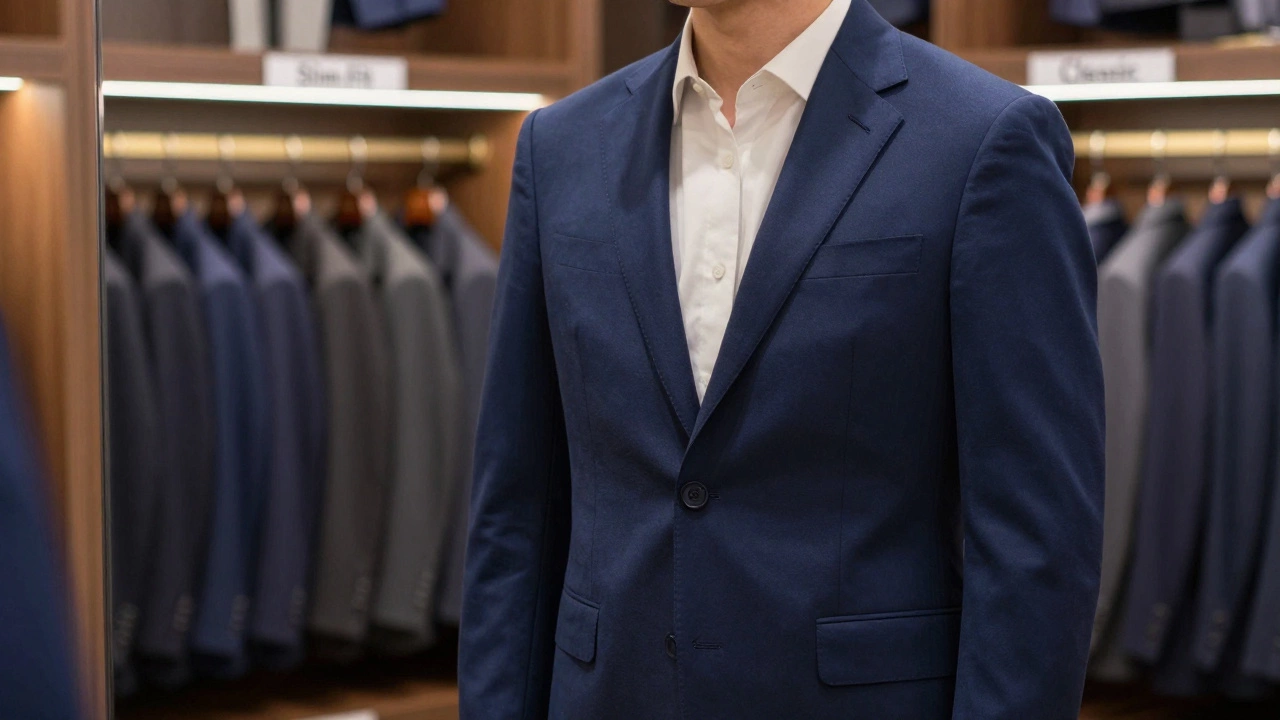
Interactive Suit Fit Checker
Click a suit area to start checking
Fit Assessment
Select an area on the suit diagram to begin your fit assessment.
Your Results
- No assessments completed yet.
Walk into any department store today, and you’ll be bombarded with labels: 'Slim Fit,' 'Super Slim,' 'Athletic Cut,' and 'Classic.' It’s enough to make your head spin. You try on a jacket that looks sharp in the mirror but feels like a second skin when you sit down. Then you try another that drapes beautifully but makes you look like you’re wearing your father’s clothes from 1985. So, here is the million-dollar question every man asks before buying a suit: should a suit be tight or loose?
The short answer? Neither. A well-fitting suit should be neither constricting nor baggy. It should skim your body, following your natural lines without pulling or sagging. But getting there requires understanding what 'fit' actually means in the context of modern menswear.
The Golden Rule: Skim, Don’t Squeeze
We need to bust a myth right out of the gate. For years, fashion trends pushed men toward increasingly tighter suits. Think back to the late 2000s-suits were so tight they looked painted on. If you raised your arms, the jacket buttons would strain dangerously close to popping off. That isn't style; that’s discomfort masquerading as fashion.
On the other end of the spectrum, we have the 'loose' look. This isn't about comfort either; it’s often just outdated or ill-fitted. A suit that hangs loosely around your shoulders and waist hides your physique and makes you look larger than you are. It lacks structure and intention.
The goal is the 'skim' fit. Imagine holding a piece of paper against your body. You want the fabric to follow the contour of your chest, shoulders, and waist, but not cling to every muscle twitch or belly bulge. There should be a small amount of space between your body and the fabric-enough to breathe, move, and maybe slip a hand underneath if you really wanted to (though you probably shouldn’t).
Anatomy of a Perfect Fit: Breaking It Down
Finding that sweet spot isn't a single decision; it’s a series of checks across different parts of your body. Let’s break down where the suit should interact with your anatomy.
The Shoulders: The Non-Negotiable Zone
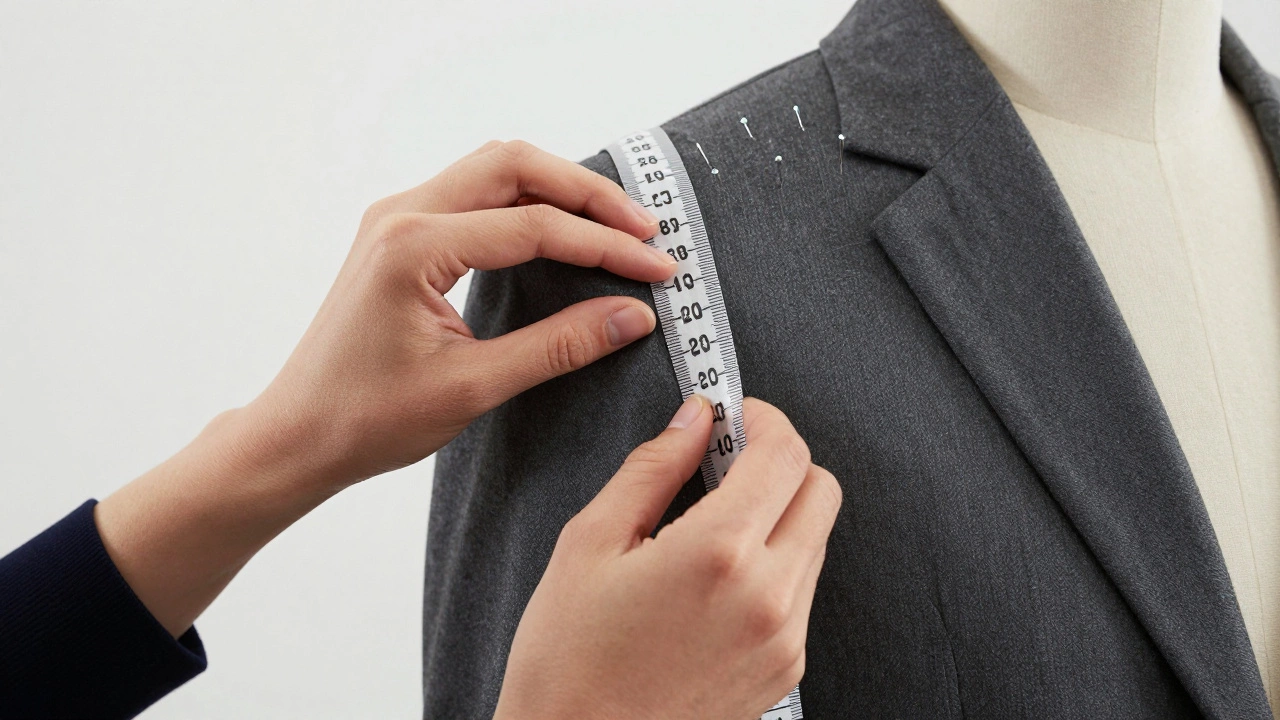
This is the most critical part of the suit. You can tailor the waist, shorten the sleeves, or take in the trousers, but fixing bad shoulder fit is nearly impossible and extremely expensive. The edge of the jacket shoulder should align perfectly with the edge of your actual shoulder bone.
If the jacket extends past your shoulder, you look like you’re drowning in fabric. If it ends before your shoulder bone, the jacket will pull across your back and restrict movement. When you stand naturally, the shoulder pad should lie flat against your body with no divots or bumps. If you see wrinkles radiating from the collar down the sleeve, the shoulders are too wide. If the fabric pulls horizontally across the back, they’re too narrow.
The Chest and Torso
Here is where the 'tight vs. loose' debate usually heats up. Button the top button of your two-button jacket (or the middle one on a three-button). Can you comfortably fit a fist inside the jacket between your chest and the fabric? If yes, you’re good. If you can fit two fists, it’s too loose. If you can’t fit a hand at all, it’s too tight.
Look in the mirror. Do you see an 'X' shape formed by wrinkles radiating from the button? That’s a classic sign of a jacket that’s too tight across the chest or waist. Conversely, if the fabric folds vertically down the sides of your torso, the jacket is too boxy or wide.
The Sleeves
Your shirt cuffs should peek out about half an inch (1-1.5 cm) beyond the jacket sleeve. This serves two purposes: it protects the jacket cuff from wear and tear, and it adds a layer of visual interest with contrasting colors. If your shirt is completely hidden, the jacket sleeves are too long. If you see more than an inch of shirt, they’re too short.
Also, check the armhole. High armholes are better because they allow the jacket to stay in place when you move your arms. Low armholes force the entire jacket to lift up when you raise your hands, exposing your lower back. You want the jacket to remain stationary while your arms do the work.
The Trousers: Rise and Break
Pants fitting has changed dramatically. In the past, high-waisted trousers with multiple pleats were standard. Today, mid-rise or low-rise flat-front trousers dominate. Regardless of rise, the pants should sit comfortably on your hips or waist without needing a belt to hold them up (though you should still wear one for formality).
The width of the leg is key. The fabric should taper slightly from the knee to the ankle but never hug your calf like skinny jeans. As for the hem, look at the 'break'-where the fabric meets the shoe. A 'no break' or 'slight break' is currently the most stylish choice. The pant leg should just touch the top of your shoe, creating a clean line. A full break, where the fabric bunches up over the shoe, looks dated and can make your legs appear shorter.
| Area | Too Tight Signs | Too Loose Signs | Ideal Fit |
|---|---|---|---|
| Shoulders | Horizontal pulling, restricted arm movement | Draping past shoulder bone, divots | Edges align with natural shoulder bone |
| Chest | 'X' wrinkles from button, straining seams | Vertical folds, excess fabric | Smooth drape, fits one fist inside |
| Sleeves | Shirt cuffs fully exposed (>1 inch) | Shirt cuffs hidden | 0.5 inch of shirt visible |
| Trouser Waist | Muffin top effect, digging in | Needs tight belt, sags at back | Sits comfortably, minimal belt needed |
| Trouser Hem | Bunching over shoes (full break) | Exposing socks when walking | Light touch on shoe (slight/no break) |
Body Types Matter: One Size Does Not Fit All
Here is the reality: off-the-rack suits are made for an average body type, which doesn’t really exist. Most men have some asymmetry or proportion variation. Maybe you have broad shoulders but a narrow waist. Perhaps you have a longer torso but shorter legs. Understanding your body type helps you choose the right starting point before tailoring.
V-Shape Build: Broad shoulders, narrower waist. This is the ideal suit silhouette. Look for jackets with structured shoulders and a tapered waist. Avoid boxy cuts that hide your definition.
Athletic Build: Muscular chest and arms, moderate waist. Off-the-rack slim fits might be too tight in the biceps. Look for 'athletic cut' suits, which offer more room in the chest and sleeves while maintaining a narrower waist.
Rectangular Build: Similar measurements for shoulders, waist, and hips. Your goal is to create the illusion of structure. Choose jackets with padded shoulders and double-breasted styles to add width and definition to your upper body.
Apple Shape: Weight carried around the midsection. Avoid super-slim fits that will pull tightly across your stomach. Opt for a 'classic' or 'regular' fit with a higher armhole to provide comfort without looking baggy. Single-breasted jackets with vertical patterns can help elongate your frame.
Off-the-Rack vs. Bespoke: Where to Start
Buying a suit straight off the rack is convenient, but it rarely fits perfectly. Even if you find a size that works for your shoulders, the sleeves might be too long, or the waist too big. This is where tailoring comes in. Budget for alterations. A $500 suit tailored professionally will always look better than a $1,500 suit worn off the rack.
If you frequently buy suits, consider Bespoke Tailoring. This involves having a suit made from scratch based on your exact measurements. It’s expensive-often starting at £1,500 and going up significantly-but the fit is unparalleled. The tailor constructs the jacket specifically for your posture, shoulder slope, and stance. For those who can’t afford bespoke, MTM (Made-to-Measure) is a great middle ground. You start with an existing pattern that is adjusted to your measurements.

Common Mistakes to Avoid
Even with the best intentions, many men fall into common pitfalls when selecting a suit.
- Ignoring the Posture: Stand up straight but naturally. Slouching while trying on a suit will lead to buying a jacket that’s too big. Remember, you’ll be standing upright during important events.
- Chasing Trends Blindly: Super-skinny trousers might be trendy on Instagram, but they aren’t practical for sitting in a car or office chair. Prioritize comfort and longevity over fleeting trends.
- Skipping the Movement Test: Sit down. Cross your arms. Reach for something on a high shelf. If the jacket rides up excessively or the trousers pinch your thighs, it’s not the right fit, regardless of how good it looks standing still.
- Wrong Shirt Combination: A thick dress shirt under a thin suit jacket can change the fit entirely. Always try on suits with a similar weight shirt to what you plan to wear.
Final Thoughts on Finding Your Fit
So, should a suit be tight or loose? It should be precise. It should respect your body’s geometry while allowing you to move freely. A suit is armor for the professional world, but it shouldn’t feel like a cage. Take your time. Visit a reputable tailor. Don’t be afraid to spend a little extra on alterations. The difference between a suit that fits well and one that doesn’t is the difference between looking put-together and looking like you borrowed someone else’s outfit. Invest in the fit, and it will pay dividends in confidence every time you wear it.
How tight should a suit jacket be around the waist?
A suit jacket should be snug but not restrictive. You should be able to fit a closed fist comfortably between your chest and the jacket when buttoned. If you see horizontal wrinkles pulling from the button area, it is too tight. If there is significant excess fabric folding vertically, it is too loose.
Is it better to buy a suit that is too big or too small?
It is generally better to buy a suit that is slightly too big, provided the shoulders fit correctly. A tailor can easily take in the waist, shorten the sleeves, and taper the trousers. However, adding fabric to a suit that is too small is extremely difficult and often results in poor proportions and visible patches.
What is the difference between slim fit and regular fit suits?
Slim fit suits are cut closer to the body with narrower lapels, a tapered waist, and slimmer trousers. Regular fit suits offer more room through the chest, waist, and thighs, providing a more traditional, relaxed silhouette. Slim fits are better for leaner builds, while regular fits suit broader or athletic frames better.
Should I leave my suit jacket buttoned or unbuttoned?
When standing, you should button the top button of a two-button suit (or the middle button of a three-button suit). When sitting down, always unbutton your jacket to prevent wrinkling and straining the fabric. The bottom button of a two-button jacket is traditionally left unbuttoned even when standing.
How much does tailoring a suit cost?
Basic alterations like hemming trousers and shortening sleeves typically cost between £20 and £50. More complex adjustments, such as taking in the waist or adjusting the shoulders, can range from £50 to £150 or more depending on the tailor's expertise and location. Always budget for these costs when purchasing an off-the-rack suit.