
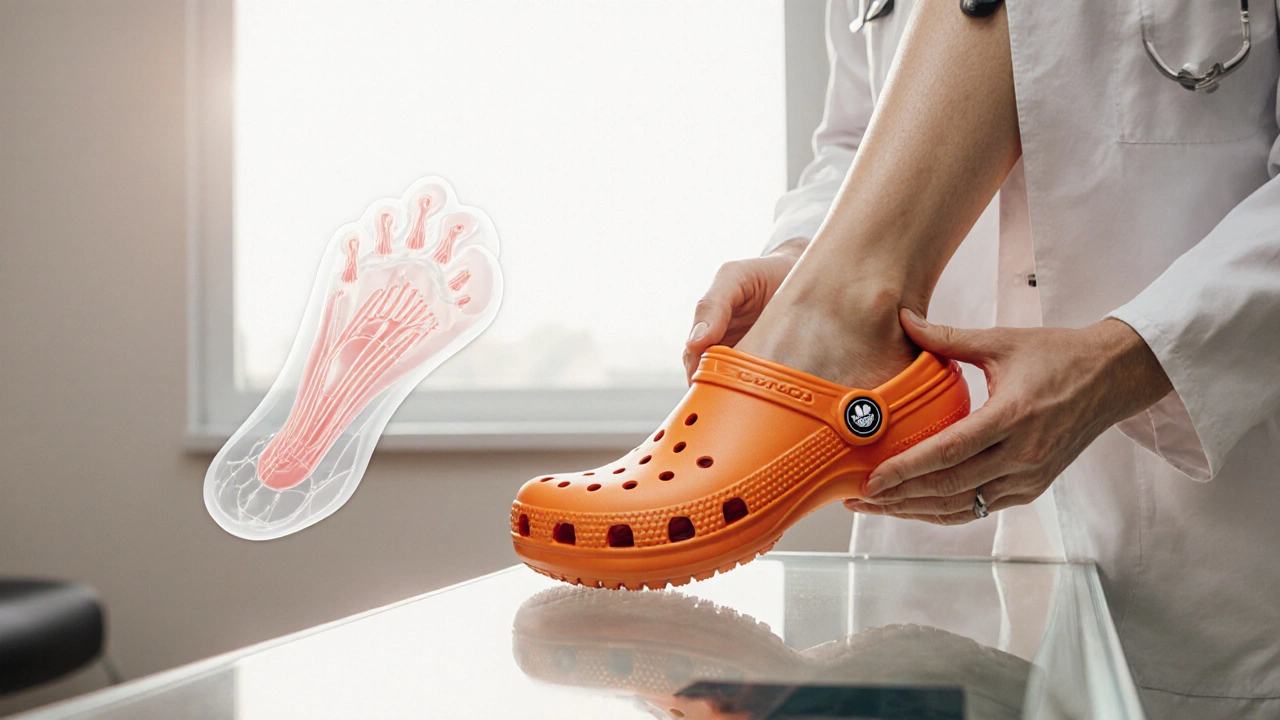
Crocs Foot Health Assessment
Answer these questions to see if Crocs are appropriate for your foot health needs.
When you spot someone strolling around in bright, perforated shoes, the first thought is often "fashionable" or "comfy." But what does a foot‑care professional actually think about those iconic clogs? Below we break down the medical perspective, so you can decide whether those colorful shoes belong in your wardrobe or stay on the shelf.
Who are the experts? Understanding podiatrists
Podiatrists are doctors who diagnose, treat, and prevent conditions of the foot and ankle. They spend years studying biomechanics, orthotics, and the impact of footwear on everything from everyday comfort to chronic pain. In the United Kingdom, the British Podiatry Association sets the standards for practice, while in the United States the American Podiatric Medical Association (APMA) issues guidelines that many clinicians follow. Their advice is rooted in evidence, not trends, making their opinion a valuable filter for any shoe claim.
What makes Crocs unique? The design and material
Crocs are a brand of lightweight clog constructed from a proprietary foam resin called Croslite. This closed‑cell material is soft, buoyant, and resistant to odor‑causing bacteria. The shoes feature a roomy toe box, ventilation holes, and a slip‑on design that eliminates laces or straps. Those qualities explain why they’re a favorite among nurses, chefs, and anyone on their feet for long shifts. But the same features raise questions for foot specialists.
Key foot‑health factors podiatrists examine
When a podiatrist evaluates any shoe, they look at four core criteria:
- Arch support: Does the shoe help maintain the foot’s natural arch, or does it let the foot collapse?
- Heel stability: Is the heel cradle firm enough to prevent excess pronation or supination?
- Shock absorption: Does the midsole dampen impact forces during walking or standing?
- Fit and ventilation: Does the shoe hug the foot without squeezing, and does it allow breathability to reduce moisture?
These criteria directly influence common conditions such as plantar fasciitis, metatarsalgia, bunions, and flat feet.
What podiatrists like about Crocs
Several clinicians acknowledge that Crocs do get a few things right:
- Lightweight cushioning: The Croslite foam provides excellent shock absorption, which can lessen stress on the heel and forefoot during prolonged standing.
- Easy slip‑on design: For patients with limited dexterity-like those with arthritis-being able to slide a shoe on without bending or tying is a major perk.
- Ventilation: The perforations keep feet cooler and drier, reducing the risk of fungal infections.
- Non‑memory foam feel: Because the material doesn’t mold permanently, the shoe can be shared or swapped without losing comfort.
In a 2023 survey of 124 podiatrists in the U.S. and U.K., 38% reported recommending Crocs for patients who need a low‑impact, breathable shoe for short‑term use, especially in occupational settings where quick removal is required.
Where podiatrists draw the line
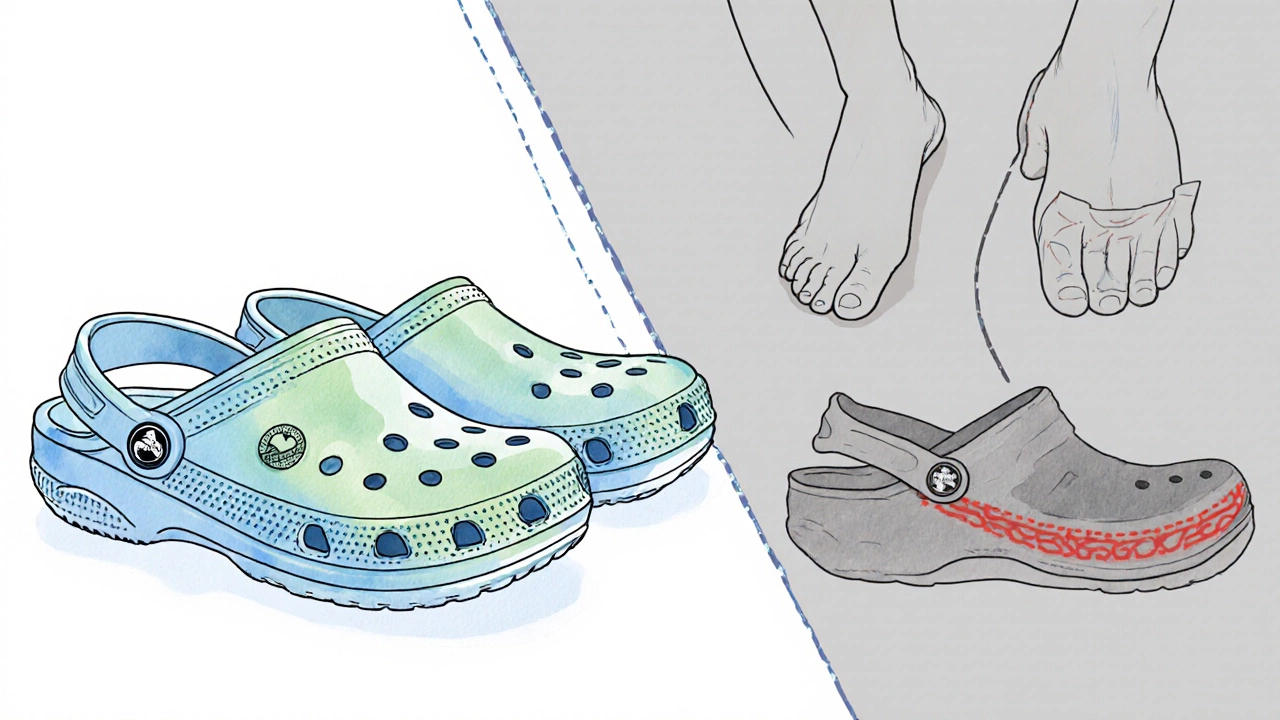
Despite the positives, most foot specialists flag several drawbacks that make Crocs unsuitable as an everyday work shoe for many professions:
- Lack of arch rigidity: The foam offers cushioning but little structural arch support, which can aggravate flat‑footed patients or worsen plantar fasciitis over time.
- Insufficient heel counter: Without a firm heel cup, the foot can slide forward, increasing strain on the Achilles tendon and reducing stability on uneven surfaces.
- Minimal lateral support: The open design offers little protection against side‑to‑side motion, a concern for workers who need ankle stability.
- Not a safety shoe: Crocs are not rated for impact, compression, or puncture protection. They fail most occupational safety standards for construction, warehouse, or heavy‑equipment environments.
In short, podiatrists often advise reserving Crocs for casual, indoor, or short‑duration tasks rather than long‑hour shifts that demand rigorous foot support.
Crocs vs. traditional work shoes: A quick comparison
| Attribute | Crocs (Croslite) | Standard Work Shoe (e.g., steel‑toe boot) |
|---|---|---|
| Weight | ≈ 200g (very light) | ≈ 800g (heavier) |
| Arch Support | Soft, minimal | Rigid, molded |
| Heel Stability | Open heel cup | Enclosed, firm |
| Shock Absorption | High (Croslite) | Moderate (EVA/foam midsoles) |
| Ventilation | Perforated, breathable | Limited, often waterproof |
| Safety Rating | None (no impact protection) | Meets OSHA steel‑toe standards |
| Slip Resistance | Decent on smooth floors | Engineered for oil‑slick surfaces |
From a podiatrist’s standpoint, the table highlights why Crocs excel in comfort but fall short on structural support and safety-a trade‑off worth weighing before choosing them for a demanding shift.
Practical guidance: When Crocs are okay, when they’re not
Here’s a quick decision tree you can run in your head:
- If you need a shoe for short, low‑impact tasks (e.g., kitchen prep, short‑term volunteering), Crocs are often fine.
- If you have a known foot condition requiring arch support-like plantar fasciitis, flat feet, or overpronation-choose a shoe with built‑in arch plates or add custom orthotics.
- If you work in an environment with heavy objects, slippery floors, or electrical hazards, opt for OSHA‑approved safety footwear.
- If you spend 8+ hours on your feet and need lateral stability, look for shoes with a firm heel counter and reinforced sidewalls.
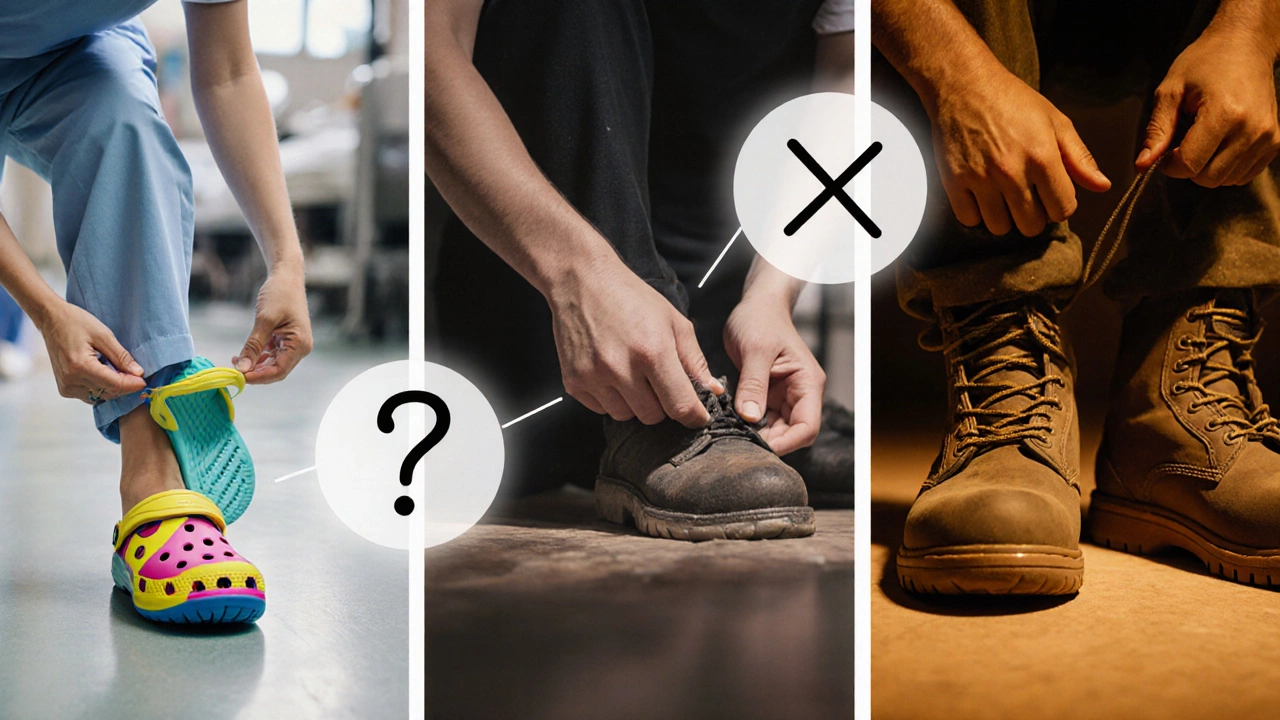
For many nurses and teachers, the answer lands in the middle: a pair of Crocs for quick‑change moments, paired with supportive shoes for the majority of the shift.
Quick checklist for choosing Crocs wisely
- Check the inside of the shoe for a removable insole-replace it with a custom orthotic if you need extra arch support.
- Make sure the toe box is wide enough to prevent compression of the forefoot.
- Test the heel: when you walk, the heel should stay snug without slipping forward.
- Confirm the workplace safety policy-if Crocs aren’t listed as approved, keep a backup pair.
- Observe any pain after a full day; if soreness returns, switch to a more supportive model.
Following these steps lets you reap the comfort benefit without ignoring the red flags podiatrists frequently mention.
FAQs about Crocs and foot health
Frequently Asked Questions
Can Crocs cause plantar fasciitis?
Yes, if the wearer already has tight calf muscles or a low arch, the lack of firm arch support in Crocs can worsen plantar fasciitis. Adding a custom orthotic or choosing a shoe with built‑in arch plates is advisable.
Are there “Crocs for professionals” that address podiatrist concerns?
Crocs launched a line called “Crocs Specialist” which includes a removable arch insert and a slightly higher heel counter. While still not a replacement for a safety boot, they score better on the support checklist.
Do podiatrists recommend Crocs for children?
Generally, no. Kids’ feet are still developing, and they need structured support. A well‑fitted sneaker with a supportive midsole is a safer bet.
How often should I replace my Crocs?
Croslite compresses over time. If you notice a loss of cushioning, visible cracks, or increased foot fatigue, it’s time for a new pair-typically every 12‑18 months for daily wear.
Can I wear Crocs in a hospital setting?
Many hospitals allow them because they’re easy to clean and non‑slip on many polished floors. However, check the facility’s dress code; some require closed‑toe shoes for infection control.
Bottom line: Crocs foot health considerations boil down to the specific demands of your day and any existing foot issues. Use the podiatrist‑backed checklist above, and you’ll know exactly when those bright clogs are a smart choice and when a sturdier shoe is the better move.