
Workplace Footwear Compliance Checker
Not sure if your shoes are safe for work? Select your environment and shoe features to get an instant compliance verdict based on OSHA guidelines and industry best practices.
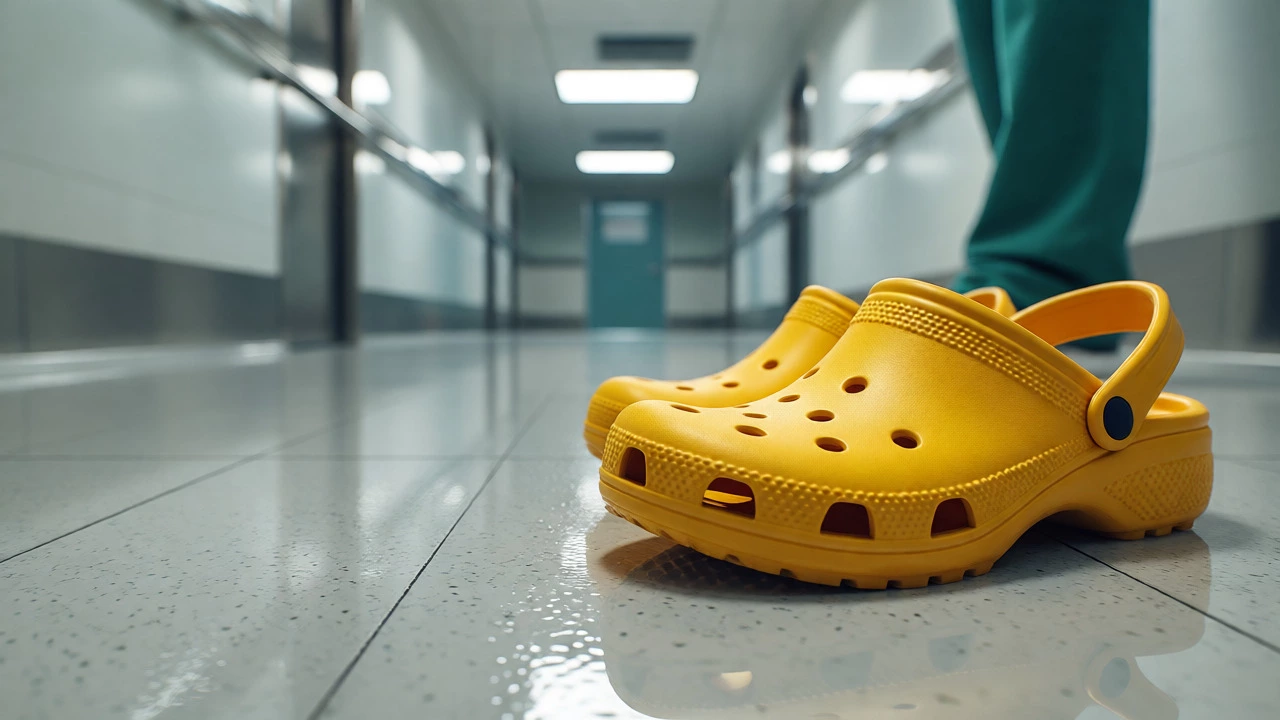
You’re standing in a hospital hallway or a factory floor, and your feet are screaming. The shoes you were issued-or the ones you chose-feel like concrete blocks. You glance down at your bag where a pair of bright yellow Crocs are closed-cell resin footwear known for their comfort and ease of cleaning sits waiting. But before you kick off those stiff boots, a nagging question hits: will this get me fired? Or worse, is wearing them actually breaking the law?
The short answer isn't a simple yes or no. It’s more like a "maybe, but probably not if you're careful." To understand why, we have to look past the meme status of Crocs and dive into what OSHA is the Occupational Safety and Health Administration, a federal agency responsible for ensuring safe working conditions actually requires versus what individual employers decide.
The Myth of the Specific Shoe Ban
Here is a fact that surprises most people: OSHA does not explicitly ban Crocs. There is no regulation in the Code of Federal Regulations (CFR) that says, "Thou shalt not wear clog-style footwear with holes." In fact, OSHA rarely dictates specific brands or styles. Instead, they set performance standards. They care about outcomes, not aesthetics.
The primary standard relevant here is 29 CFR 1910.136 is the OSHA standard requiring protective footwear when there is a danger of foot injuries. This rule states that employers must ensure employees use protective footwear when working in areas where there is a danger of foot injuries due to falling or rolling objects, objects piercing the sole, or other hazards. If your job involves heavy machinery, construction sites, or warehouses, standard Crocs fail this test immediately because they lack steel toes and thick soles.
However, if you work in healthcare, food service, or retail, the hazard profile changes. Here, the risk isn't usually a 50-pound weight crushing your toe. It’s slipping on wet floors, chemical splashes, or biological fluids. Does a Croc protect against these? That depends entirely on which Croc you buy.
Slip Resistance: The Real Deal-Breaker
If there is one reason Crocs get banned, it’s slipping. A standard classic clog has a smooth tread pattern designed for casual wear, not industrial traction. On a dry tile floor, they might be fine. But spill some oil, water, or sanitizer on that floor, and you become a human hockey puck.
OSHA references ASTM F2913-11 is a standard test method for measuring the coefficient of friction of footwear to evaluate slip resistance. While OSHA doesn’t mandate passing this specific test for all shoes, many safety managers use it as a benchmark. Standard Crocs often score poorly on wet, oily surfaces compared to certified non-slip shoes.
But wait-Crocs knows this. That’s why they launched the Crocs at Work is a specialized line of footwear featuring slip-resistant outsoles and enclosed designs collection. These aren’t your beach sandals. They feature:
- NVCi™ Slip-Resistant Outsoles: Designed to meet ASTM F2913 standards for wet and oily surfaces.
- Closed-Toe Design: Protects against spills and dropped items.
- Easily Cleanable Materials: Resistant to stains and bacteria, crucial for medical settings.
If you wear a pair from this professional line, you are likely compliant with slip-resistance requirements. If you wear the classic ventilated clogs with holes, you are gambling with your balance.
| Feature | Classic Crocs | Crocs at Work | Standard Sneakers | Steel-Toe Boots |
|---|---|---|---|---|
| Slip Resistance | Low (Poor on oil/water) | High (ASTM Tested) | Variable (Often poor) | High (Specialized treads) |
| Toe Protection | None | Enclosed (No Steel Toe) | Soft Toe Only | Steel/Composite Toe |
| Cleanability | Excellent | Excellent | Poor (Fabric absorbs fluids) | Moderate |
| Best For | Break rooms/Casual | Hospitals/Kitchens | Retail/Low Hazard | Construction/Warehousing |
Employer Policies vs. Federal Law
This is where most confusion happens. People say, "It's illegal," when they really mean, "My boss said it's against policy." There is a massive difference.
Under the General Duty Clause requires employers to provide a workplace free from recognized hazards, employers have the right-and responsibility-to establish safety protocols. If your hospital administration decides that only white, closed-toe, non-slip shoes are allowed, that is a valid internal policy. It doesn’t matter if OSHA didn’t write "no Crocs" into the rulebook. Your employer can impose stricter rules than the federal minimum.
Why would they do this? Liability. If you slip in a pair of holey Crocs and break your wrist, workers' compensation claims can skyrocket. By restricting footwear to proven safety gear, they reduce risk. So, check your employee handbook. Look for terms like "closed-toe," "non-marking," and "slip-resistant." If your Crocs meet those criteria, you’re usually good to go.
When Crocs Are Actually Dangerous
Not all workplaces are created equal. Wearing Crocs in a kitchen is different than wearing them in a machine shop. Let’s break down the risks by industry.
In Healthcare is a sector characterized by high exposure to bodily fluids and long periods of standing, the main enemies are blood, vomit, and urine. Classic Crocs with ventilation holes allow these fluids to soak directly onto your skin. This creates a hygiene issue and potential infection risk. Furthermore, if a sharp needle falls through the hole, it pierces your foot instantly. For nurses and doctors, the "Work" line or fully enclosed models are mandatory. The classic clog is generally discouraged unless you wear thick socks, which defeats the breathability purpose.
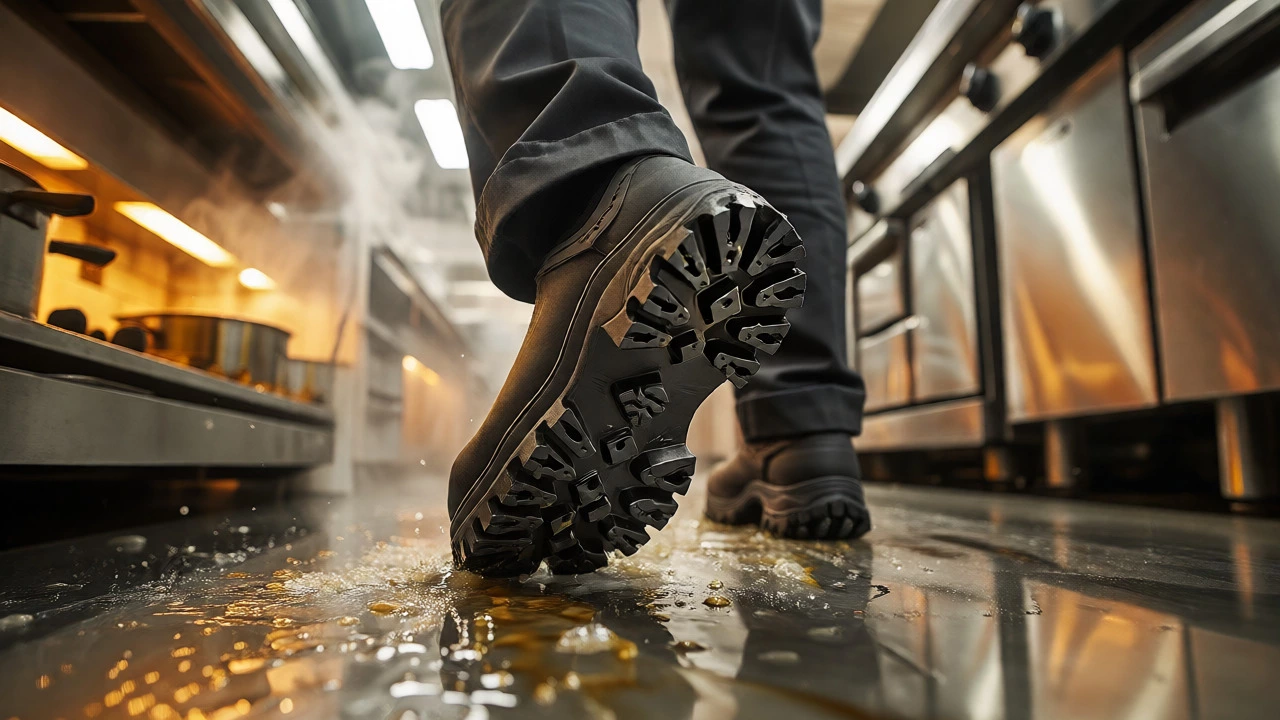
In Food Service involves slippery floors, hot liquids, and sharp knives, the stakes are higher. Hot oil splatters can burn through thin material. More importantly, grease makes floors incredibly slick. If you are a dishwasher or a line cook, standard Crocs are a lawsuit waiting to happen. You need a shoe with a deep lug pattern to channel liquids away from the contact point. Some chefs swear by Crocs because they are easy to hose down after a shift, but only if they are the slip-resistant variants.
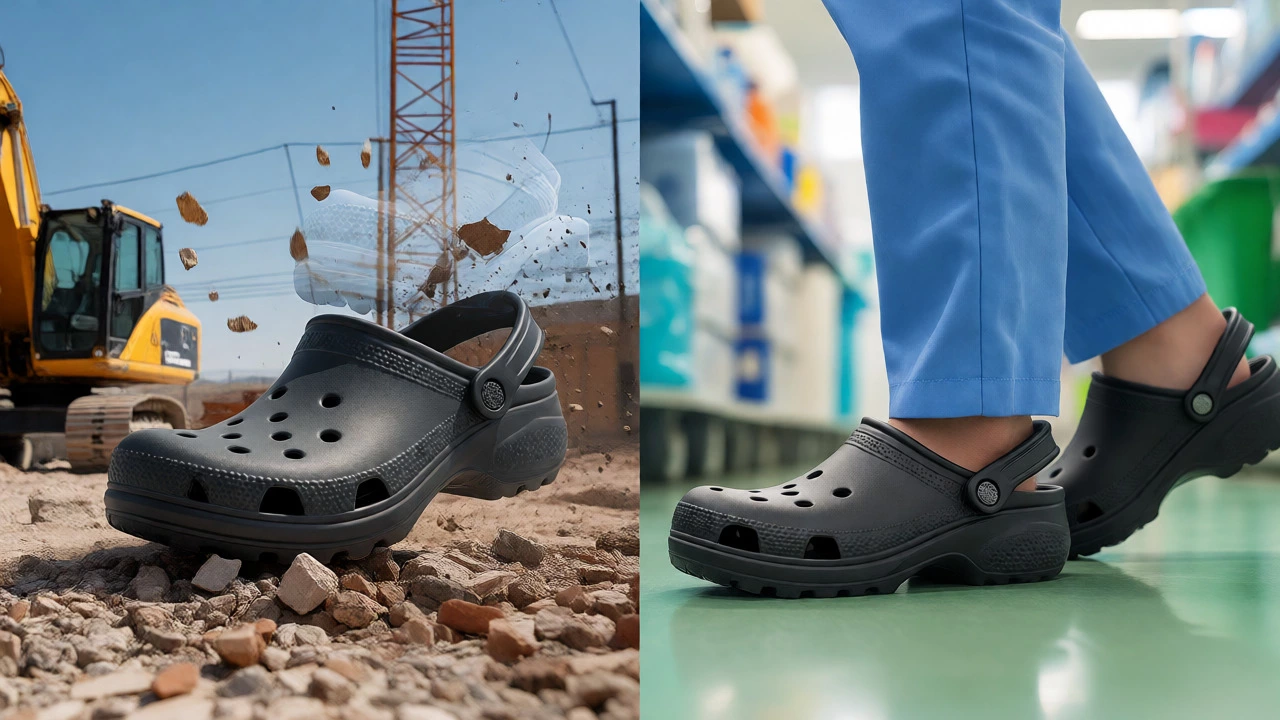
In Manufacturing and Construction environments involve heavy machinery, falling debris, and uneven terrain, Crocs are almost always prohibited. Why? Because they offer zero impact protection. If a wrench falls on your foot in a warehouse, a rubber clog won’t save you. You need composite or steel toes. Additionally, loose-fitting clogs can get caught in moving parts of machinery, posing a entanglement hazard. Tuck-in requirements often exclude open-back or loose-fitting shoes.
How to Check Your Pair for Compliance
Don’t just guess. Take five minutes to inspect your footwear. Use this checklist to see if your Crocs pass muster.
- Check the Sole Label: Look for markings that say "Slip Resistant" or reference ASTM F2913. If the bottom is smooth plastic, toss them for work use.
- Inspect the Coverage: Is your entire foot covered? No exposed toes, no heels hanging out, and no large ventilation holes on the top surface. Fluids must stay outside.
- Test the Fit: Are they too loose? A shoe that slides around increases trip hazards. Use the heel strap if available, or consider buying a half-size down for a snugger fit.
- Evaluate the Condition: Are the treads worn down? Smoothed-out soles lose grip. If the pattern is gone, replace the shoes.
If you fail any of these checks, you are creating a hazard. And remember, creating a hazard is a violation of the General Duty Clause, even if the specific shoe brand isn't named.
Beyond OSHA: Other Regulatory Bodies
Depending on your location, local laws might add another layer. In the UK, for example, the HSE is the Health and Safety Executive, which regulates workplace safety in Great Britain follows similar logic to OSHA but may have specific guidance on footwear selection based on risk assessments. Always consult your local regulatory body if you are outside the US.
Also, consider union contracts. In some heavily unionized industries, the collective bargaining agreement might specify approved footwear lists. Ignoring these can lead to disciplinary action regardless of safety ratings.
Practical Tips for Croc Wearers
If you love the comfort and want to keep wearing them, here is how to stay safe and employed:
- Buy the Right Model: Invest in the "Bistro" or "On-The-Clock" lines. They cost more than classic clogs but are engineered for work.
- Add Jibbitz Wisely: Don’t let decorative charms create tripping hazards or trap debris. Keep them minimal and secure.
- Clean Regularly: Accumulated grime reduces slip resistance. Wash them daily with soap and water.
- Communicate with Management: If you are unsure, ask your supervisor. Show them the slip-resistance certification on the box. It shows you take safety seriously.
Comfort matters. Standing for eight hours in rigid boots causes plantar fasciitis and back pain. If a compliant pair of Crocs keeps you on your feet and alert, that’s a win for productivity. Just make sure they are the right pair.
Are Crocs considered PPE under OSHA?
Not automatically. Personal Protective Equipment (PPE) must meet specific standards for the hazard present. Standard Crocs do not meet impact or compression standards required for heavy labor. However, specific 'Crocs at Work' models with slip-resistant soles may qualify as PPE for slip hazards in healthcare or food service, provided they meet ASTM F2913 standards.
Can my employer fire me for wearing Crocs?
Yes, if they violate company policy. Employers have the right to set dress codes and safety standards stricter than federal law. If your handbook requires 'steel-toe boots' and you wear Crocs, you can be disciplined for insubordination or policy violation, even if OSHA didn't specifically ban the brand.
Do Crocs cause slips and falls?
Classic Crocs with smooth soles have a high risk of slipping on wet or oily surfaces. However, the 'Crocs at Work' line features NVCi™ technology specifically designed to improve traction on hazardous floors. The risk depends entirely on the model and the condition of the sole.
Why are Crocs popular in hospitals?
They are lightweight, easy to clean, and provide arch support for long shifts. Many healthcare professionals prefer them over traditional nursing shoes for comfort, provided they choose enclosed, slip-resistant models that protect against bodily fluid exposure.
What is the ASTM F2913 standard?
ASTM F2913 is a test method used to measure the coefficient of friction of footwear on various surfaces. It helps determine if a shoe is truly 'slip-resistant.' Shoes that pass this test are significantly less likely to cause accidents on wet or oily floors compared to those without certification.