

Ripped Jeans Style Score Calculator
What's the distress level of your jeans?
Select the option that best describes your jeans:
Subtle Fraying
Whiskering, light texture, no exposed skinModerate Rips
Small horizontal tears, minimal skin exposureHeavy Distress
Large gaps, raw hems, significant exposureWhat's the fit/cut of your jeans?
Choose the silhouette that matches your jeans:
Straight Leg
Classic cut, balanced proportionsWide Leg
Flowing silhouette, trendy in 2026Skinny/Bootcut
Fitted through leg or slight flareWhat are you pairing with the jeans?
Select your top choice:
Structured Blazer
Tailored jacket, professional lookSilk or Satin Top
Luxurious fabric, elegant contrastCasual T-shirt
Basic tee, relaxed vibeWhat shoes are you wearing?
Complete your outfit selection:
Leather Loafers
Classic, polished, versatileSleek Ankle Boots
Modern edge, elongates legChunky Sneakers
Sporty, casual streetwearCalculating...
Your Styling Verdict
Analyzing your choices...
Personalized Tips:
There is a lingering myth in the world of fashion that suggests certain items have an expiration date. You hear it whispered in fitting rooms and read it on outdated blog posts: "Save the ripped jeans for your twenties." But standing in front of a mirror at 50, 60, or beyond, does a pair of distressed denim suddenly become inappropriate? The short answer is no. Age is just a number, but context is everything. Wearing ripped jeans at 50 isn't about breaking rules; it's about mastering proportion, fit, and intention.
The fashion landscape has shifted dramatically. In 2026, we see icons like Jane Fonda, Helen Mirren, and even Queen Elizabeth II (in her later years) embracing modern silhouettes with confidence. The question isn't whether you *can* wear them, but how you *should* wear them to look polished rather than trying too hard. It’s about balancing edge with elegance.
The Psychology of Distressed Denim
Why do we associate rips with youth? Historically, distressed denim signaled rebellion, manual labor, or non-conformity. For decades, it was the uniform of punk rockers and grunge bands. As trends cycle, these signals fade. Today, a rip in the knee is less about shouting "I don't care" and more about adding texture and visual interest to an outfit. When you are over 50, your wardrobe likely carries more weight-literally and figuratively. You’ve built a life, a career, and a personal aesthetic. Adding a touch of distress can soften a look, making it feel relaxed and approachable without sacrificing sophistication.
However, the perception gap remains. Some people still judge based on rigid generational stereotypes. This is why the execution matters more than the item itself. A teenager wearing ripped jeans looks like they belong to a subculture. A woman over 50 wearing them needs to ensure the rest of her outfit anchors the look in maturity. Think of the jeans as an accent piece, not the entire statement.
Selecting the Right Level of Distress
Not all rips are created equal. The key to pulling this off after 50 lies in selecting the right intensity of damage. Here is a simple hierarchy of acceptability:
- Micro-frays and whiskering: These are subtle textures that catch the light. They add character without exposing skin. This is the safest entry point for anyone hesitant about distressed denim.
- Small horizontal tears: Small gaps at the thigh or knee that show a hint of fabric underneath or minimal skin. These work well if paired with longer tops or layers.
- Large holes and raw hems: These are high-risk. Large gashes that expose significant amounts of leg can look accidental or unkempt unless styled with extreme precision. Generally, avoid these if you want a polished appearance.
Pay attention to the placement of the rips. Rips centered on the knee are classic and generally flattering because they draw the eye to the center of the leg, creating a vertical line. Rips on the thighs can be trickier; depending on your body shape, they might widen the silhouette. If you have concerns about your thigh size, opt for rips lower down on the shin or stick to subtle fading instead.
Fit Is Non-Negotiable
A ripped jean that fits poorly will always look sloppy, regardless of your age. At 50, your body may have changed compared to your 20s. That’s okay. The goal is to find a cut that flatters your current shape. Avoid overly baggy styles that swallow your frame, as they can make you look older than you are. Conversely, skin-tight skinny jeans with massive rips can sometimes emphasize areas you might prefer to smooth over.
Consider these cuts:
- Straight Leg: The most versatile option. It balances proportions and works with almost any top or shoe.
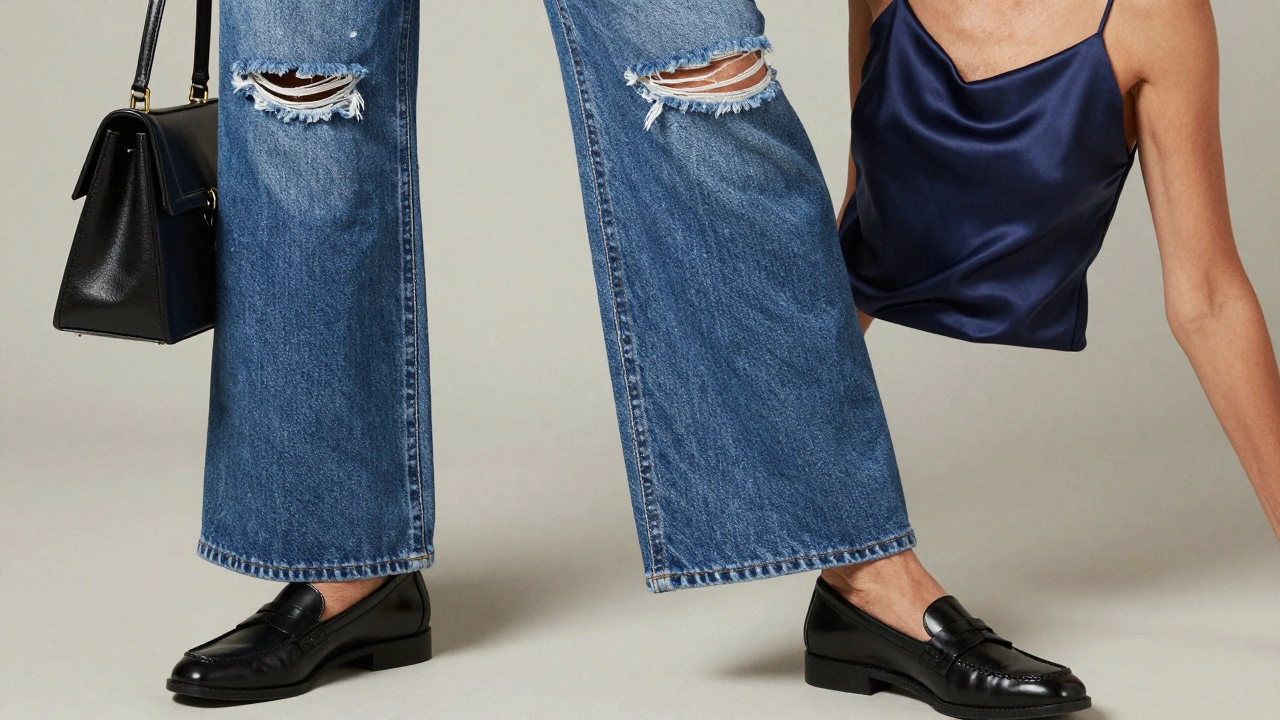
- Wide Leg: Trendy in 2026, wide-leg jeans with subtle distressing look chic and elongate the legs, especially when paired with heels or pointed-toe flats.
- Bootcut: A timeless choice that pairs beautifully with ankle boots, offering a balanced silhouette.
Ensure the waistband sits comfortably where your natural waist is. High-rise jeans are often more forgiving and tummy-flattering than mid-rise options. The rise should prevent muffin top while allowing for easy movement. Tailoring is your best friend. If the length is off, get them hemmed. A clean hemline contrasts nicely with the distressed upper part, signaling that the look is intentional.
Styling Strategies for a Polished Look
The secret to wearing ripped jeans after 50 is contrast. You need to balance the casual, rugged nature of the denim with refined elements. This creates a "high-low" mix that feels curated and expensive.
Pair with Structured Blazers: A sharp blazer instantly elevates distressed jeans. Choose a tailored jacket in a neutral color like navy, black, or camel. The structure of the blazer counters the chaos of the rips, creating a sophisticated office-to-evening transition.
Elevate with Silk or Satin Tops: Swap out the graphic tee for a silk blouse or a satin camisole. The luxurious texture of silk contrasts beautifully with rough denim. Tuck the top in to define your waist and let the rips peek out subtly.
Choose Sophisticated Footwear: Sneakers can work, but they lean very casual. To age up the look, try leather loafers, pointed-toe pumps, or sleek ankle boots. Avoid chunky platform sneakers unless you are fully committed to a streetwear aesthetic. Heels elongate the leg, which helps if the rips are higher up on the thigh.
Accessories Matter: Add gold jewelry, a structured handbag, or a silk scarf. These accessories signal maturity and attention to detail. They tell the viewer, "I chose this look," rather than "I just threw this on."
| Element | Do | Don't |
|---|---|---|
| Top | Silk blouse, structured blazer, fitted turtleneck | Oversized hoodies, crop tops, graphic band tees |
| Shoes | Loafers, pointed flats, ankle boots, low heels | Chunky sneakers, flip-flops, scuffed trainers |
| Distress Level | Subtle fraying, small knee holes | Large thigh gaps, shredded hems, excessive fading |
| Fit | Straight, wide-leg, tailored bootcut | Excessively baggy, ill-fitting waistbands |
Confidence Is the Ultimate Accessory
Ultimately, fashion is a form of self-expression. If you love ripped jeans and they make you feel cool, comfortable, and confident, wear them. The most attractive quality in any outfit is the wearer’s assurance. When you carry yourself with poise, people focus on your energy, not the holes in your knees. However, be mindful of the occasion. Ripped jeans are perfect for brunch, casual Fridays, shopping trips, or evening drinks. They are less appropriate for formal events, conservative job interviews, or solemn occasions.
Remember, style evolves. What looked dated in 2010 might be refreshed in 2026 with better tailoring and smarter pairing. Don’t let arbitrary age limits dictate your wardrobe. Instead, use guidelines to help you curate a look that feels authentic to who you are today. Experiment in private first. Try different combinations in front of the mirror until you find what makes you smile. Fashion should serve you, not restrict you.

Common Pitfalls to Avoid
Even with the right mindset, some mistakes can undermine the look. First, avoid matching multiple trendy items. If you’re wearing ripped jeans, keep the rest of the outfit relatively classic. Pairing ripped jeans with a sequined top and neon shoes is overwhelming. Stick to one focal point. Second, watch the condition of the jeans. Frayed edges that unravel further every time you move them can look messy. If the rips are getting too big, consider sewing them slightly closed or using fabric glue to stabilize the threads. Third, don’t ignore color coordination. Dark wash denim with subtle distressing is more versatile and slimming than light wash with heavy bleaching. Darker colors tend to recede visually, creating a smoother silhouette.
Another pitfall is neglecting grooming. Since rips expose skin, ensure your legs are prepped if you’re showing skin. Exfoliation and moisturizing can make a difference in how polished the exposed areas look. If you prefer not to bare your legs, opaque tights can be a stylish alternative. Black or sheer black tights under ripped jeans add warmth and sophistication, extending the wearability of denim into cooler months.
Embracing Your Personal Style
Your style journey doesn’t end at 50; it deepens. You know what works for your body, your lifestyle, and your personality. Use that knowledge to adapt trends to your life. Ripped jeans are just one tool in your arsenal. They offer a chance to inject playfulness and modernity into your routine. Whether you choose a subtle fray or a bold tear, own it. Dress for the life you live, not the age you are. After all, looking good feels good, and feeling good radiates outward, influencing how others perceive you. So go ahead, grab those jeans, pair them with your favorite blazer, and step out with confidence.
Can I wear ripped jeans to work?
It depends on your workplace dress code. In creative industries or casual offices, yes, provided the rips are subtle and you pair them with a blazer or smart top. In corporate or conservative environments, it is safer to stick to solid, un-distressed denim or trousers. Always observe what senior colleagues wear.
What shoes go best with ripped jeans for women over 50?
Pointed-toe flats, leather loafers, and sleek ankle boots are excellent choices. They add polish and elongate the leg. Avoid bulky sneakers unless you are aiming for a very specific sporty-chic look. Heels can also work well to elevate the outfit for evening events.
Are ripped jeans flattering for all body types?
Most body types can wear ripped jeans, but placement matters. If you have larger thighs, avoid large rips on the upper thigh as they can widen the area. Knee-centered rips are generally more universally flattering as they create a vertical line. Straight or wide-leg cuts tend to balance proportions better than skinny jeans.
How do I stop ripped jeans from unraveling further?
You can use clear nail polish or fabric glue along the edges of the rips to seal the threads. Alternatively, a tailor can stitch the area lightly to maintain the distressed look while preventing further damage. Regularly check the integrity of the fabric, especially after washing.
Is it okay to wear ripped jeans with tights?
Absolutely. Opaque black or sheer black tights under ripped jeans are a stylish way to cover exposed skin while maintaining the edgy vibe. This combination is particularly great for autumn and winter, adding warmth and a layer of sophistication to the outfit.