

Suit Value Calculator
How Often Will You Wear This Suit?
Enter how many times you'll wear your suit annually. The calculator shows cost-per-wear and long-term value comparison.
Results
Cost per wear:
$400 suit / wears/year
Long-term value:
$400 suit lasts 5 years vs $150 suits replacing annually
Annual cost comparison:
Key Considerations:
- Half-canvas construction for durability
- Proper shoulder placement (no pulling)
- 80%+ wool blend fabric
- Correct sleeve length (shirt cuff visible)
- Pants break at shoe top (no bunching)
You walk into a store, see a suit that fits perfectly, looks sharp, and costs $400. Your first thought? Suit price. Is this too much? Or are you getting ripped off? The answer isn’t simple. It depends on what you’re looking for, how often you’ll wear it, and where it’s made.
What You’re Really Paying For
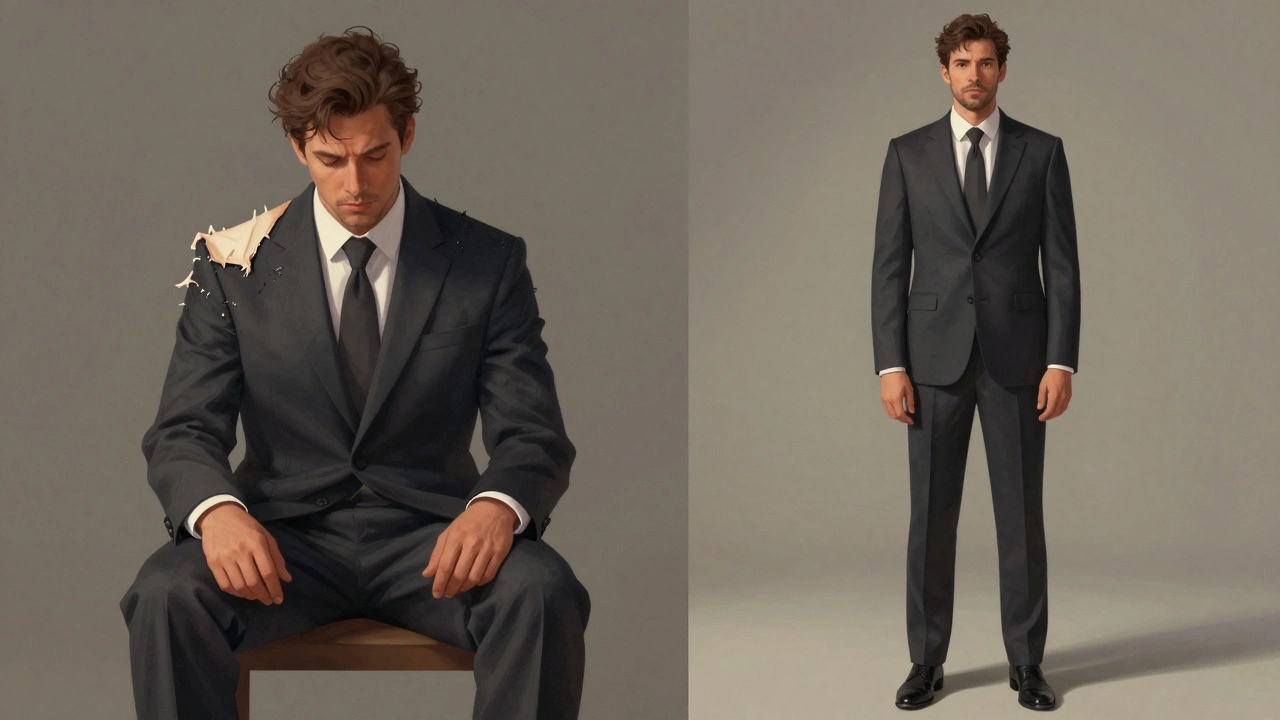
A $400 suit isn’t just fabric and buttons. It’s construction. Most off-the-rack suits under $200 are glued together - the chest piece, the lapel roll, even the lining. These parts don’t move with your body. They sag after a few wears. You’ll notice it when you sit down or raise your arms. The shoulders look crooked. The jacket pulls. It looks cheap because it is.
A $400 suit, especially from brands like J.Crew, Brooks Brothers, or even online direct-to-consumer options like Indochino or SuitSupply, uses half-canvas construction. That means the chest area is stitched, not glued. It molds to your torso over time. It breathes. It lasts. You can wear it 50 times and it still looks like new. That’s not a luxury - it’s smart spending.
How Often Will You Wear It?
If you only need a suit for one wedding or a single job interview, then $400 feels steep. But if you wear it monthly - for work, meetings, networking events, or family photos - the math changes fast.
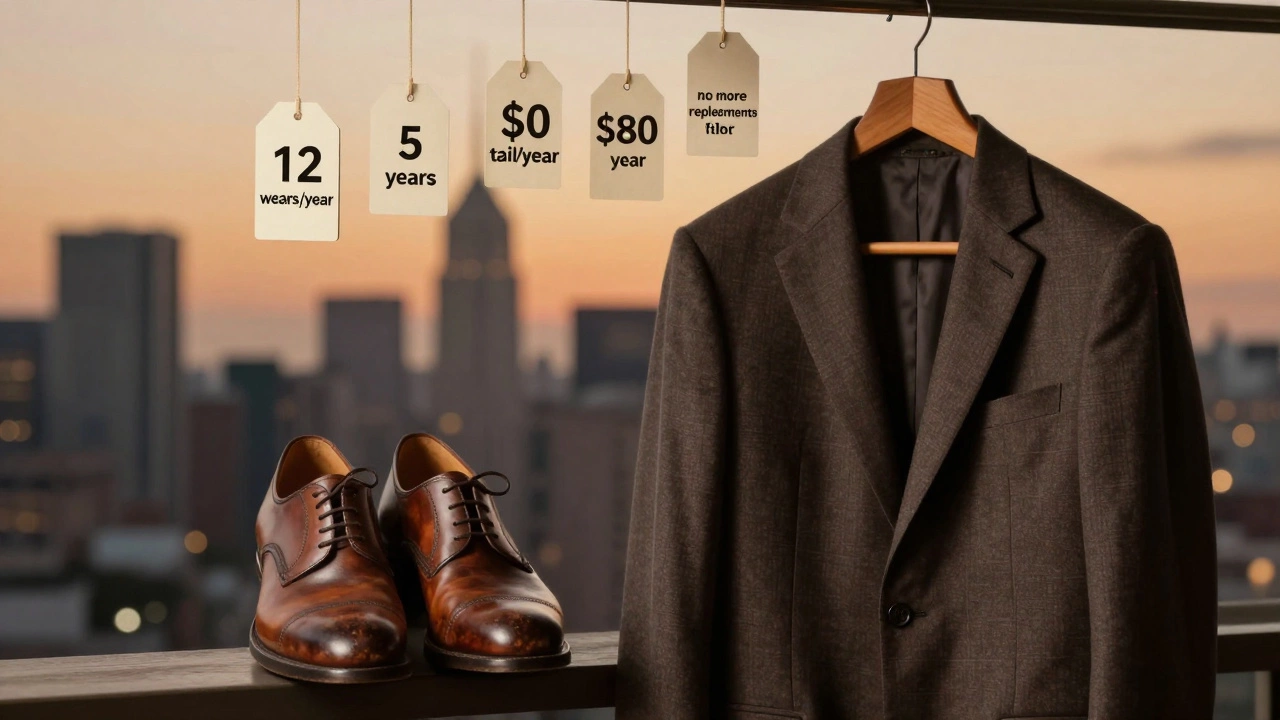
Let’s say you wear it 12 times a year. That’s $33 per wear. Compare that to a $150 suit you replace every year because it pills, fades, or loses shape. That’s $150 per year, or $12.50 per wear - but you’re constantly buying new ones. After three years, you’ve spent $450 and still don’t have a suit that fits well or lasts.
Spending $400 once and wearing it for five years? That’s $80 a year. You’re not just saving money. You’re saving time, stress, and the frustration of looking unprofessional.
Fit Matters More Than Brand
A $600 off-the-rack suit that doesn’t fit is worse than a $300 suit that’s tailored. The best suit you can buy is one that’s adjusted to your body. That’s why many people who spend $400 on a suit also spend $75-$150 on tailoring. It’s not an extra cost - it’s part of the deal.
Think about it: a $400 suit with short sleeves and baggy shoulders becomes a $575 suit after tailoring. But now it looks like it was made for you. That’s the difference between blending in and standing out. A well-fitted suit makes you look taller, leaner, and more confident - even if you’re just sitting in a meeting.
Don’t buy a suit because it has a fancy label. Buy it because the shoulders sit right, the jacket ends at your thumb’s base, and the pants break just above your shoe. If it doesn’t fit, return it. No matter the price.
Where to Find Real Value
You don’t need to shop at Savile Row to get quality. Here’s where real $400 suits live in 2026:
- J.Crew - Their Signature Wool suits are half-canvas, come in 15+ colors, and often go on sale for $350. They’ve improved fit dramatically since 2023.
- Brooks Brothers - Their Black Fleece line offers Italian wool suits for $399. These are the same suits they sold for $800 five years ago - now discounted for clearance.
- Indochino - Custom suits start at $399. You pick the fabric, lining, buttons. They ship in 2-3 weeks. The fit is better than most off-the-rack suits at twice the price.
- SuitSupply - Their New York flagship suits are made in Portugal with 100% wool. You can get a full suit for $399 during seasonal sales.
- Amazon Essentials - Surprisingly, their wool-blend suits (not polyester) now cost $180 and hold up decently if you tailor them. Not ideal for daily wear, but fine for occasional use.
Check out end-of-season sales in January and July. That’s when retailers clear last year’s inventory. You can often find $700 suits for $350.
What to Avoid
Steer clear of suits labeled “100% polyester” or “wrinkle-free.” These are made for cruise ships and hotel gift shops. They don’t breathe. They trap heat. They look shiny under lights. And they never drape right.
Also avoid suits with plastic buttons. Real horn or corozo nut buttons cost more, but they last. Plastic buttons crack after a few dry cleanings. You’ll notice when the button falls off during a presentation - and no one will blame the suit. They’ll blame you.
And don’t buy a suit just because it’s on sale. If you don’t love how it looks on you, walking away saves more money than buying something you’ll hate.
Is 0 Worth It? The Verdict
If you need a suit for work, interviews, or events more than twice a year - yes, $400 is not too much. It’s the sweet spot between affordability and quality.
If you’re a student, freelancer, or rarely wear formal clothes, spend $150-$250. But get it tailored. That’s your budget rule.
If you’re in sales, law, finance, or any job where you’re judged by your appearance - $400 is a minimum investment. Your confidence, your credibility, and your career all benefit from looking put together. A suit that fits and lasts doesn’t just cost money. It earns respect.
The real question isn’t whether $400 is too much. It’s whether you’re willing to pay $150 every year for the rest of your life just to avoid looking sloppy once in a while.
What to Look for Before You Buy
Before you hand over your card, check these five things:
- Shoulders - The seam should sit exactly where your arm meets your shoulder. No pulling. No gaps.
- Lapels - They should lie flat against your chest. If they puff out, the suit is padded wrong.
- Sleeve length - Your shirt cuff should show 1/4 to 1/2 inch beyond the jacket sleeve.
- Pants break - The front of the pant should touch the top of your shoe. No creases. No bunching.
- Fabric - 100% wool or wool-blend (80%+ wool). If it says “polyester” or “viscose,” walk away.
If all five check out, the suit is worth the price - even if it’s $450.