
$200 Suit Value Calculator
Your Budget & Needs
Enter your details to see how much a $200 suit actually costs.
Cost Breakdown
Quality Check:
Enter your details and click calculate to see the real cost.
You walk into a store or browse online, and you see a sharp-looking suit tagged at $200. It looks the part. The lapels are neat, the color is classic, and it promises to make you look professional instantly. But then the doubt creeps in: Is this actually a good deal, or are you about to buy a costume that will fall apart after two wears?
The short answer is yes, $200 can be a great price point for a suit, but only if you know exactly what you are getting for your money. In the world of menswear, $200 sits right on the border between "cheap fast fashion" and "entry-level value." If you pick the wrong brand, you’ll end up with stiff fabric and weird proportions. If you pick the right one, you get a wearable garment that serves you well for years.
What Does a $200 Suit Actually Cost to Make?
To understand if the price is fair, you have to look behind the curtain at how these suits are built. There is no magic here; it’s just economics. When you pay $200, the manufacturer has to cover materials, labor, shipping, marketing, and their own profit margin, plus the retailer’s cut.
This means the actual cost of production for a $200 retail suit is likely between $40 and $60. That doesn’t mean the suit is junk, but it does mean compromises are being made. You aren’t paying for Italian wool or hand-stitched details. You are paying for efficiency.
At this price, most suits use synthetic blends rather than pure natural fibers. You might see labels saying "100% Polyester" or a blend like "55% Polyester, 45% Viscose." While polyester gets a bad rap, modern micro-polyesters are actually quite durable and wrinkle-resistant. The trade-off is breathability. Pure wool lets your skin breathe; synthetics trap heat. So, while the $200 suit might look fine in a cool office, it could feel like wearing a plastic bag during a summer wedding.
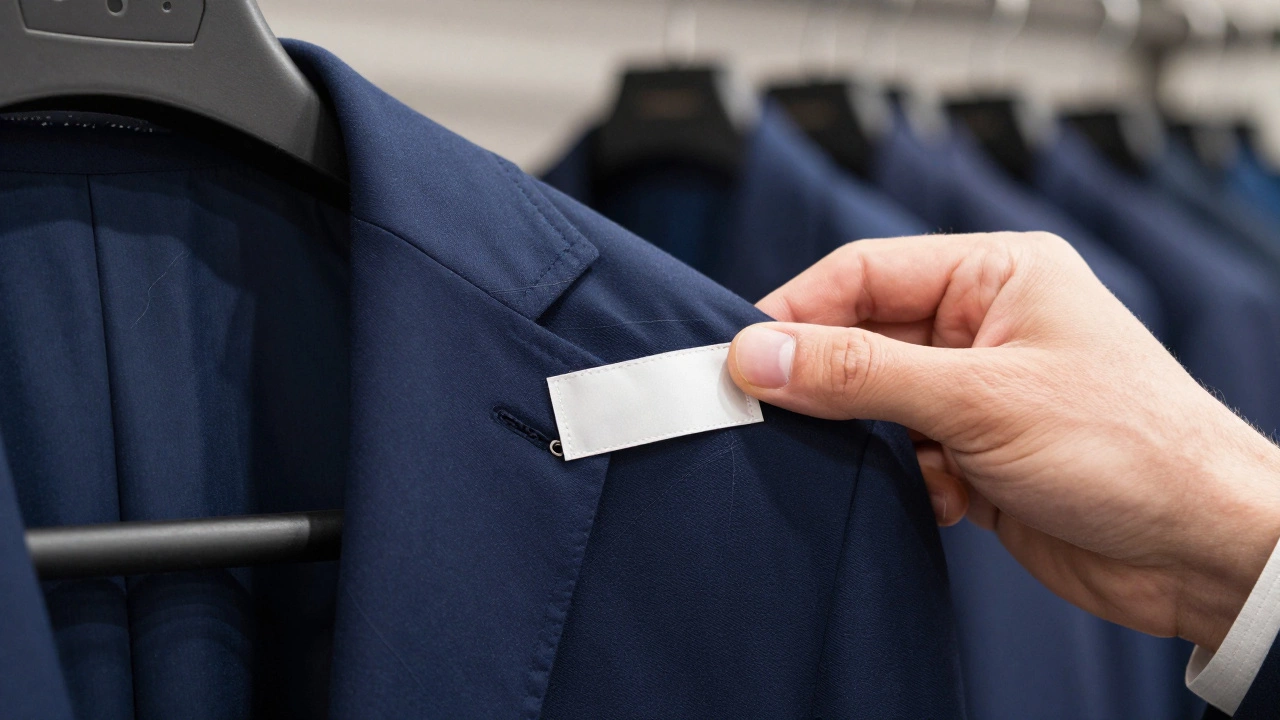
Construction method is another big factor. Most $200 suits are fully fused. This means a layer of glue and mesh is ironed onto the inside of the jacket to give it shape. Higher-end suits use canvas interlining, which is stitched in and moves naturally with your body. Fused suits are cheaper to mass-produce, but over time, the glue can bubble or peel, especially if you dry clean them too often. Knowing this helps you manage expectations: a $200 suit is a tool for specific occasions, not a lifetime heirloom.
Where to Find Value at the $200 Mark
Not all $200 suits are created equal. Some brands charge $200 for a mediocre product, while others offer surprising quality for the same cash. The key is knowing where to look. Department stores, online retailers, and off-price outlets each have different plays.
Macy's is a major department store chain known for frequent sales and a wide range of mid-tier menswear brands. They often carry brands like Charles Tyrwhitt is a British shirt and suit maker that offers tailored fits at accessible prices. or Calvin Klein is an American fashion house offering minimalist designs and reliable basics. These brands usually run promotions where a $300 suit drops to $200. Buying during a sale is the smartest move here because you are getting better construction and fabric for the same low price.
Online-only brands have disrupted the market by cutting out physical store overhead. Brands like Suitsupply is a Dutch retailer specializing in high-quality menswear at competitive prices. rarely drop to $200, but competitors like J.Crew Factory is the outlet branch of J.Crew, offering discounted versions of their core apparel lines. or Tommy Hilfiger is an American lifestyle brand known for preppy styles and consistent sizing. often hit that sweet spot. Their advantage is consistency. You know exactly what fit you are getting, whether it's slim, regular, or athletic.
Don't overlook thrift stores or consignment shops. A suit that originally retailed for $800 might sell for $50-$100 used. At $200, you could potentially buy two gently used higher-quality suits instead of one new cheap one. This is often the best way to get wool content and better tailoring without breaking the bank.
| Brand/Retailer Type | Typical Fabric | Fit Consistency | Best For |
|---|---|---|---|
| Department Store Brands (e.g., Calvin Klein) | Polyester/Viscose Blends | Good (Standard Sizing) | Office wear, interviews |
| Online Fast Fashion (e.g., ASOS) | High Polyester Content | Variable (Check Reviews) | One-time events, trendy cuts |
| Outlet Stores (e.g., J.Crew Factory) | Wool Blends | Very Good | Daily rotation, weddings |
| Thrift/Consignment | Pure Wool (Often) | Depends on Item | Value seekers, unique finds |
Fabric Matters More Than You Think
If you are going to spend $200, you need to check the label before you buy. The fabric determines how the suit looks, feels, and lasts. Here is what you should look for:
- Pure Polyester: Avoid this if possible. It shines under lights (making you look sweaty) and doesn't drape well. It looks cheap from five feet away.
- Polyester-Viscose Blend: This is the standard for $200 suits. Viscose (made from wood pulp) adds some drape and softness to the stiff polyester. It’s a decent compromise for occasional wear.
- Wool Blends: If you find a suit with even 30-50% wool at $200, grab it. Wool resists wrinkles, breathes better, and ages gracefully. It might pill slightly more than synthetics, but it looks infinitely more expensive.
- Cotton or Linen: Great for summer, but they wrinkle easily. A $200 cotton suit is fine for a casual outdoor wedding, but don't expect it to stay crisp through a long day of meetings.
A pro tip: Hold the fabric up to the light. Natural fibers like wool have tiny imperfections and texture. Synthetic fabrics often look perfectly uniform and slightly plastic-like. Also, crumple the fabric in your hand. Wool springs back; cheap polyester stays wrinkled.
The Hidden Cost: Alterations
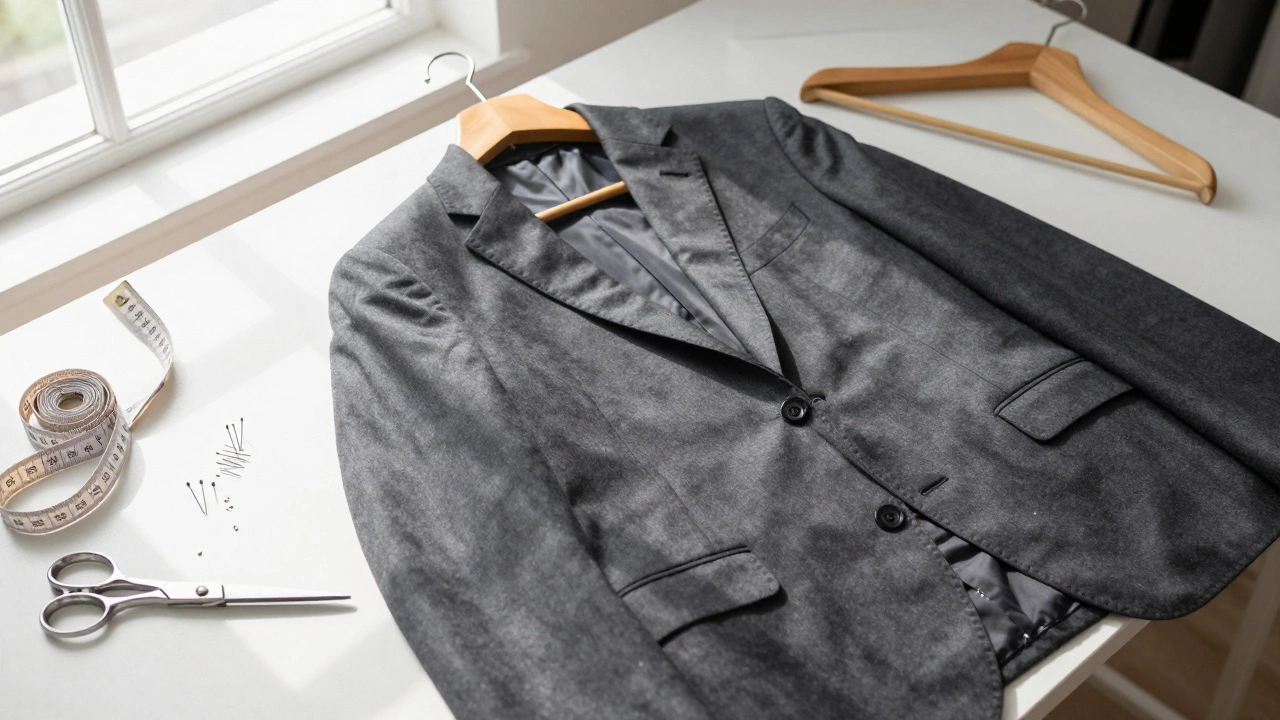
Here is the secret that many men miss: Off-the-rack suits rarely fit perfectly. Even a $2,000 suit needs adjustments. At the $200 level, skipping alterations is the biggest mistake you can make. A cheap suit that fits poorly looks worse than an expensive suit that fits well.
When you budget $200 for a suit, you should really budget $250-$300 total. Use that extra $50-$100 for a local tailor. What should you alter?
- The Pants Hem: This is the easiest and cheapest fix. Getting the trousers broken correctly (no break or slight break) instantly makes you look taller and sharper.
- The Sleeve Length: Jacket sleeves should show about 1/4 to 1/2 inch of your shirt cuff. If the sleeves are too long, you look sloppy. Tailors can shorten them from the shoulder (expensive) or the cuff (cheaper, but limits options). Check this before buying!
- The Waist Taper: Most off-the-rack jackets are boxy. Taking in the sides of the jacket creates a V-shape that flatters almost any body type. This simple tweak makes a $200 suit look custom-made.
Without these tweaks, you are just wearing a rectangle. With them, you look put-together. Don't skip this step.

When Is 0 Not Enough?
While $200 is workable for many scenarios, there are times when you should save up for more. If you are attending a black-tie event, a $200 tuxedo will likely look thin and ill-fitting. The satin lapels may peel, and the trousers may lack side adjusters, requiring belts that ruin the line.
If you work in client-facing roles like law, finance, or real estate, your suit is your uniform. You might wear it twice a week. In this case, a $200 suit might survive six months before looking tired. Investing in a $400-$600 wool suit from a brand like H&M Premium is H&M's higher-end clothing line featuring better fabrics and construction. or Zara Man is The menswear division of Zara, known for trend-focused designs and varying quality. could save you money in the long run because it lasts longer and maintains its appearance better.
Also, consider your body type. If you are very muscular or have a large belly, off-the-rack suits-even expensive ones-struggle to fit. You might need a Made-to-Measure service, which starts around $500+. At $200, you are limited to standard sizes, which might pinch at the shoulders or billow at the waist.
How to Make a $200 Suit Look Expensive
You don't need to spend a fortune to look sharp. Style is often more important than price. Here is how to elevate a budget suit:
- Stick to Classic Colors: Navy and charcoal gray are versatile and forgiving. Black suits often look like funeral attire or waiter uniforms unless styled perfectly. Navy hides stains better and looks richer than cheap black wool.
- Choose the Right Shirt: Pair your suit with a crisp, white cotton dress shirt. Iron it. Wrinkles in the shirt draw attention away from the suit's flaws. A bright blue or light pink shirt also works well for daytime events.
- Accessorize Wisely: A simple leather belt that matches your shoes is non-negotiable. Skip flashy ties. A solid navy silk tie or a subtle knit tie adds texture without drawing attention to the suit's synthetic fabric.
- Grooming Counts: Clean shoes, trimmed nails, and neat hair matter more than the thread count of your jacket. People notice the whole package.
Finally, care for your suit properly. Hang it on a wide wooden hanger, not a wire one. Air it out after wearing instead of dry cleaning every time. Dry cleaning chemicals degrade fabric over time. Spot clean when possible. This extends the life of your $200 investment significantly.
Can I find a wool suit for $200?
It is difficult to find a 100% wool suit for $200 at full price, but it is possible during sales at department stores like Macy's or Nordstrom Rack. You might also find wool-blend suits (e.g., 70% wool, 30% polyester) at this price point from brands like J.Crew Factory or Tommy Hilfiger. Thrift stores are another excellent source for higher-quality wool suits at this budget.
Are Amazon suits worth buying?
Amazon offers suits under $100, but the quality is often inconsistent. For $200, you can usually do better at dedicated retailers. However, brands like Amazon Essentials is Amazon's private label for basic apparel, focusing on affordability and simplicity. provide decent value if you read reviews carefully. The main risk with Amazon is fit variability and return hassle. Try before you buy whenever possible.
How long does a $200 suit last?
With proper care, a $200 suit can last 2-3 years if worn occasionally (once a month or less). If worn weekly, it may start showing signs of wear-such as shiny elbows, fading knees, or bubbling lining-within 12-18 months. Synthetic fabrics hold up better to frequent wear but may look dated faster due to shine and pilling.
Should I buy a suit online or in-store?
For a first-time buyer or if you have a unique body shape, in-store is better. You can check the fabric quality, try on multiple sizes, and ensure the shoulders fit correctly (which cannot be altered). Online shopping is convenient and often cheaper, but rely heavily on customer reviews regarding fit and fabric feel. Always check the return policy before purchasing online.
Is it better to buy a suit set or separates?
At the $200 price point, buying a matched suit set is usually more cost-effective. Separates tend to be priced individually, pushing the total above $200. However, if you find a great jacket on sale and pants separately, mixing them can offer flexibility. Just ensure the colors and fabrics match closely to avoid looking mismatched.