
Leather Shoe Quality Estimator
Select Features Found in Your Shoes
Check each feature that applies to the shoes you're evaluating:
Quality Estimate
Select features and click calculate to see results
Estimated Lifespan
--
Score Breakdown
- • Select at least one feature above
Walk into any department store or browse online, and you’ll see leather shoes priced anywhere from $50 to $1,000. The tags often just say "genuine leather," which sounds premium but means very little. You might spend your hard-earned cash on a pair that looks great in the box but cracks after six months. Or worse, they hurt your feet from day one because the structure is cheap.
I’ve spent years testing footwear, breaking down soles, and learning what actually makes a shoe last. It’s not about the brand logo; it’s about the materials and how they’re put together. Knowing the difference between high-quality craftsmanship and mass-produced filler saves you money in the long run. You buy once, wear for years, instead of buying twice every year.
Quick Summary: What to Look For
- Leather Type: Look for full-grain leather, which keeps the natural surface and ages beautifully. Avoid "corrected grain" or "bonded leather."
- Construction: Goodyear welted or Blake stitched soles are repairable. Glued soles usually mean the shoe is disposable.
- Stitching: Tight, even stitches with no loose threads indicate manual or high-end machine work. Loose stitching fails under pressure.
- Sole Material: Natural rubber or leather soles offer better grip and durability than thin plastic-like synthetic layers.
- Weight & Feel: High-quality shoes feel substantial but flexible. They shouldn’t feel flimsy or overly rigid in wrong places.
The Truth About "Genuine Leather" Labels
The first thing most people check is the label. If it says "leather," you assume it’s good. But the leather industry has specific grades, and marketing teams love to blur the lines. Understanding these terms is the single biggest step in spotting quality.
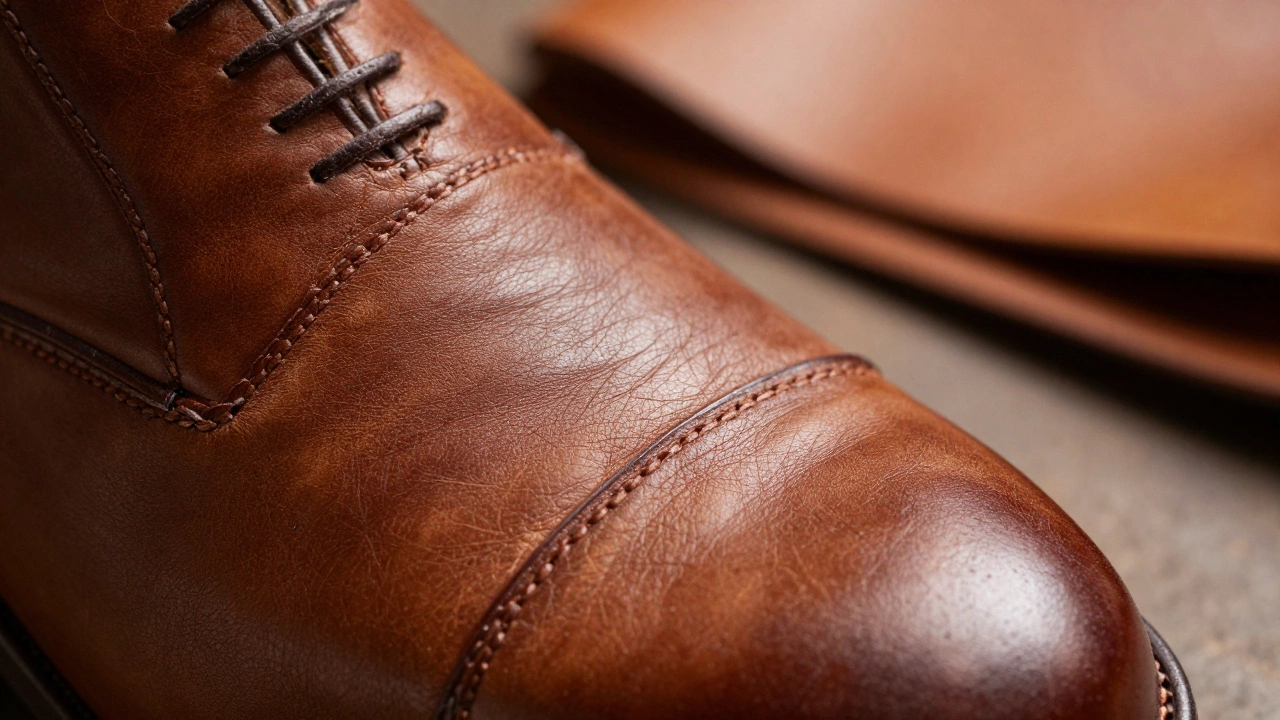
Full-grain leather is the highest quality leather available. It comes from the top layer of the hide and retains the natural grain, including imperfections like pores and scars. Because it isn’t sanded or buffed, it develops a rich patina over time. This is the leather used by heritage brands like Alden, Crockett & Jones, and Allen Edmonds for their best lines. It breathes well, resists moisture, and lasts decades.
Next down is Top-grain leather, which has been sanded to remove imperfections. It’s softer and more uniform in appearance, making it popular for fashion-forward styles. While still durable, it lacks the structural integrity of full-grain and won’t age as gracefully. It’s a solid mid-tier option but not the pinnacle of quality.
Then there’s Corrected-grain leather, which is heavily processed. Manufacturers sand away all natural marks and emboss an artificial pattern onto the surface. They then apply a thick coating of polyurethane. This leather looks perfect out of the box but peels and cracks as the coating wears off. It’s common in budget-friendly dress shoes.
Avoid Bonded leather entirely. It is made from shredded leather scraps glued together with foam. It’s essentially cardboard wrapped in leather dust. It falls apart quickly and offers zero comfort or durability.
| Grade | Durability | Aging (Patina) | Typical Use |
|---|---|---|---|
| Full-Grain | Excellent (10+ years) | Develops rich character | Heritage boots, formal oxfords |
| Top-Grain | Good (3-5 years) | Mild aging | Fashion sneakers, casual loafers |
| Corrected-Grain | Poor (1-2 years) | Peels/cracks | Budget office shoes |
| Bonded | Very Poor (<1 year) | Disintegrates | Fast fashion accessories |
Construction Methods That Matter
Even the best leather will fail if the shoe is built poorly. Construction refers to how the upper leather is attached to the sole. This determines whether you can resole the shoe when it wears out or if you have to toss the whole thing.
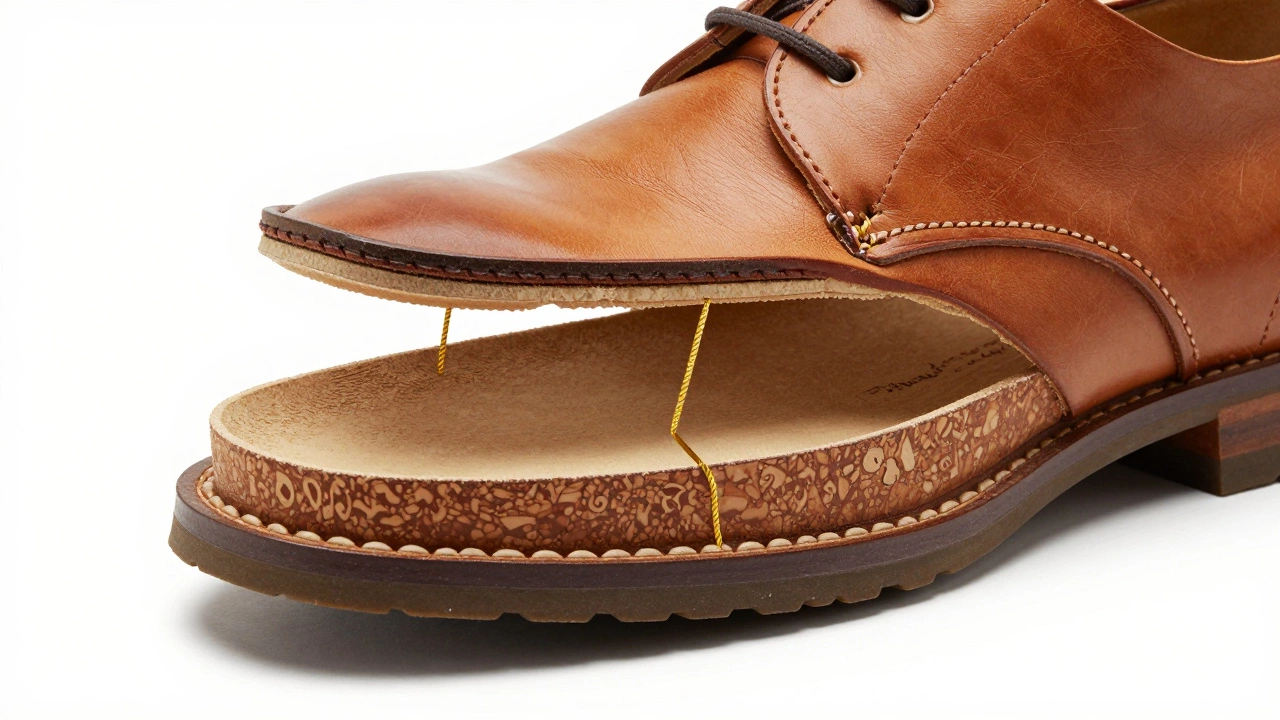
Goodyear welting is a method where a strip of leather (the welt) is stitched to the upper and the insole. The outsole is then stitched to the welt. This creates a cavity filled with cork, which molds to your foot over time. The key benefit? When the sole wears down, a cobbler can stitch on a new one without damaging the upper. These shoes often cost more upfront but save thousands over a lifetime.
Blake stitching is a cleaner, lighter alternative. The needle passes directly through the insole to attach the upper to the sole. It results in a sleeker profile, ideal for formal dress shoes. However, it’s less waterproof and harder to resole than Goodyear welted shoes. Still, it’s a mark of quality craftsmanship.
Cemented construction is the standard for mass-market shoes. The upper is glued directly to the sole. It’s fast and cheap to produce. The downside? Once the glue fails or the sole wears thin, the shoe is trash. You cannot easily separate the parts for repair. Most shoes under $150 use this method.
If you want longevity, look for welted or stitched constructions. Check the inside of the shoe. If you see a visible strip of leather running around the perimeter near the sole, it’s likely welted. If the interior feels smooth and seamless against the sole, it’s probably cemented.
Examining Stitching and Finishing
Quality shows in the details. Take a close look at the stitching. High-quality shoes feature tight, consistent stitches. There should be no loose threads, skipped stitches, or uneven spacing. In hand-stitched shoes, slight variations are normal and actually indicate artisanal work, but the tension should remain even.
Check the edges of the sole and the heel. On premium shoes, the edges are painted or burnished. This isn’t just for looks; it seals the leather layers, preventing water from seeping in and causing delamination. Rough, unfinished edges suggest corners were cut during manufacturing.
Look at the lining. A fully lined shoe with calfskin or breathable fabric provides structure and comfort. Cheap shoes often have partial linings or none at all, leading to sweat buildup and odor. The lining should fit snugly without wrinkles or gaps.
Sole Materials and Comfort
The sole touches the ground, so its material dictates performance. Leather soles look elegant and breathe well, but they’re slippery on wet surfaces and wear down faster on rough terrain. They’re best for indoor or dry weather use.
Natural rubber soles offer superior grip and cushioning. Brands like Vibram make high-density rubber compounds that resist oil and abrasion. Many modern high-quality shoes combine a leather bottom for aesthetics with a rubber insert for traction. This hybrid approach gives you the best of both worlds.
Avoid thin, shiny plastic-like soles. They crack in cold weather and slide on anything slightly damp. If the sole feels lightweight and hollow, it’s likely low-density foam designed to reduce shipping costs, not enhance comfort.
Fit, Structure, and Long-Term Value
High-quality shoes support your foot architecture. They have a defined shank (arch support) and a sturdy counter (heel cup). Squeeze the back of the shoe. It should hold its shape firmly. If it collapses easily, the shoe lacks structural integrity and will cause blisters.
Break-in period is another clue. Good leather shoes feel snug but not painful initially. They soften and mold to your foot over weeks. Cheap shoes either feel immediately comfortable (because they’re floppy) or painfully stiff (because the materials are too rigid and unyielding).
Consider the total cost of ownership. A $300 pair of Goodyear welted shoes that lasts 10 years costs $30 per year. A $80 pair of cemented shoes that lasts 1 year costs $80 per year. Quality pays for itself.
Is expensive leather always higher quality?
Not necessarily. Brand markup, marketing, and designer labels inflate prices. Always check the construction method and leather grade. A lesser-known brand using full-grain leather and Goodyear welting is often better value than a luxury brand using corrected grain and cemented soles.
Can I tell the quality of leather shoes by smell?
Yes. High-quality leather has a distinct, earthy, organic scent. Cheap shoes often smell like chemicals, glue, or plastic due to synthetic coatings and adhesives. If it smells overpowering or toxic, walk away.
What is the difference between oxford and derby shoes regarding quality?
The style doesn't dictate quality, but construction does. Both oxfords (closed lacing) and derbies (open lacing) can be high-quality if made with full-grain leather and welted construction. Derbies are generally more forgiving for wider feet, while oxfords offer a sleeker, more formal look.
How do I maintain high-quality leather shoes?
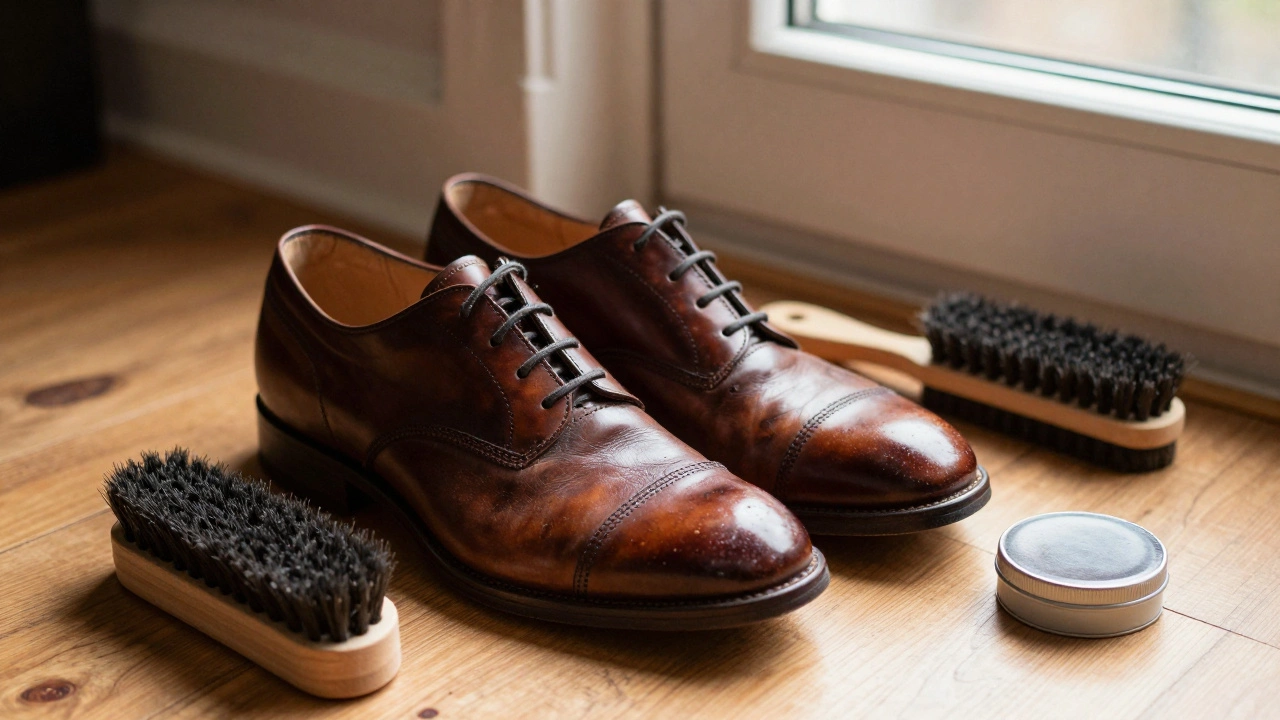
Use cedar shoe trees to absorb moisture and maintain shape. Clean with a damp cloth and condition every 3-6 months with leather balm. Rotate pairs to allow them to dry out completely between wears. Resole before the damage reaches the upper leather.
Are Italian-made shoes always better than British or American ones?
No. Italy, Britain, and the USA each have strong traditions. Italian shoes often prioritize sleekness and lighter construction. British shoes focus on durability and weather resistance. American shoes tend to be robust and comfortable. Quality depends on the specific manufacturer, not just the country.