
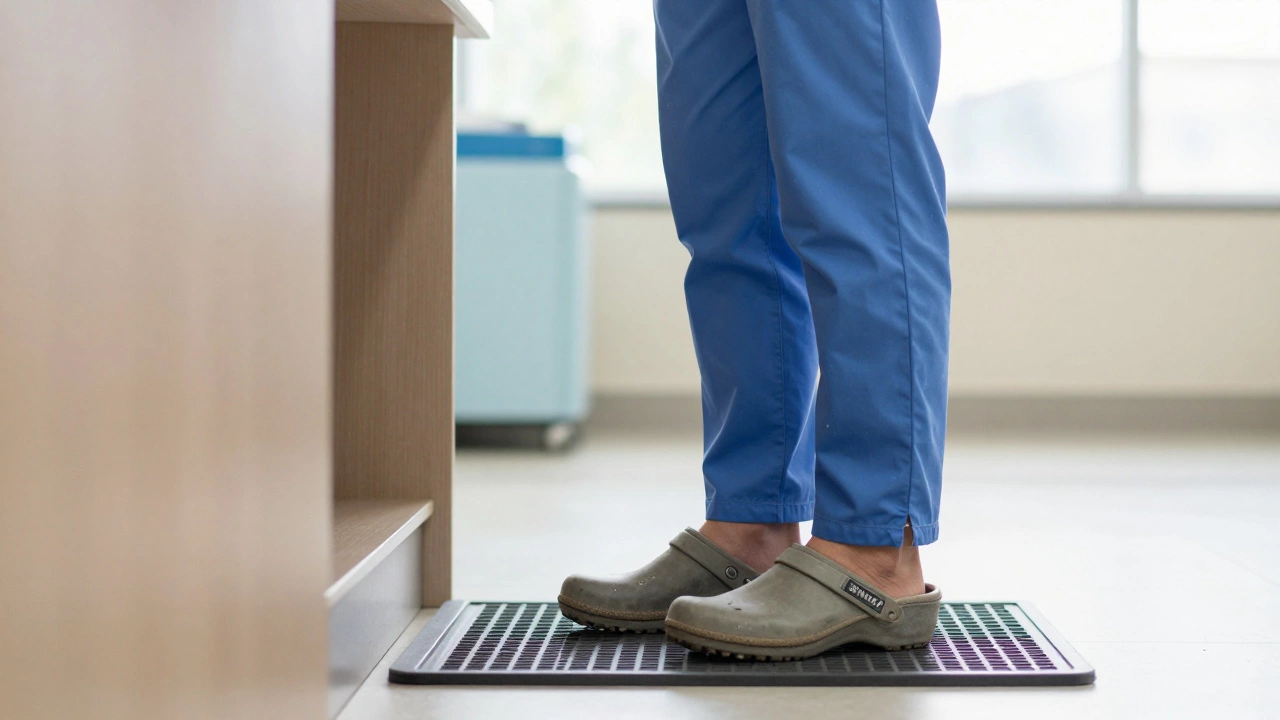
Standing for ten hours straight isn’t just tiring-it’s brutal on your body. If you’ve ever left a retail job, hospital shift, or warehouse gig with swollen ankles, burning arches, and legs that feel like lead, you know this isn’t normal fatigue. It’s physical punishment. And the truth? Most people think it’s just part of the job. But it’s not. With the right shoes, habits, and small adjustments, you can walk out of a 10-hour shift feeling like you still have energy left.
Why Your Feet Are Screaming After 10 Hours
Your feet are designed to move, not to be glued to concrete for hours. Every step you take sends shockwaves through your joints. Without proper support, those impacts build up. By hour six, your plantar fascia-the band of tissue under your foot-starts to tighten. By hour eight, your calves cramp. By hour ten, you’re leaning on counters just to stay upright.
Studies from the American Podiatric Medical Association show that workers who stand over eight hours daily are three times more likely to develop chronic foot pain than those who sit or move regularly. The problem isn’t your toughness-it’s your gear. Most people wear shoes that look professional but are built for walking to the mailbox, not for 10-hour shifts.
The One Thing That Makes All the Difference: Work Shoes
Not all shoes are created equal. A good pair of work shoes isn’t just about cushioning-it’s about architecture. Look for three key features:
- EVA or polyurethane midsoles-these absorb shock better than rubber alone. Brands like Dansko, Crocs Professional, and Skechers Work use this material because it doesn’t flatten out after six hours.
- Arch support that matches your foot type-flat feet need firm support, high arches need cushioning. Many work shoes now come with removable insoles so you can swap them for custom orthotics if needed.
- Slip-resistant outsoles-this isn’t just for kitchens. A slick floor in a warehouse or hospital hallway can turn a simple step into a fall. Look for shoes rated for OSHA slip resistance.
Real people swear by the Dansko Professional Clog. Why? It has a rocker bottom sole that helps your foot roll naturally with each step, reducing strain. Nurses, chefs, and warehouse workers all say the same thing: once they switched, they stopped dreading the end of their shift.
What to Avoid in Work Shoes
Some shoes look like they’re made for standing-but they’re traps. Here’s what to skip:
- Flat ballet flats-they offer zero support. Even if they’re labeled "comfortable," they’re just soft rubber with no structure.
- High heels or wedge heels-yes, even the "low" ones. They shift your weight forward, crushing your toes and straining your calves.
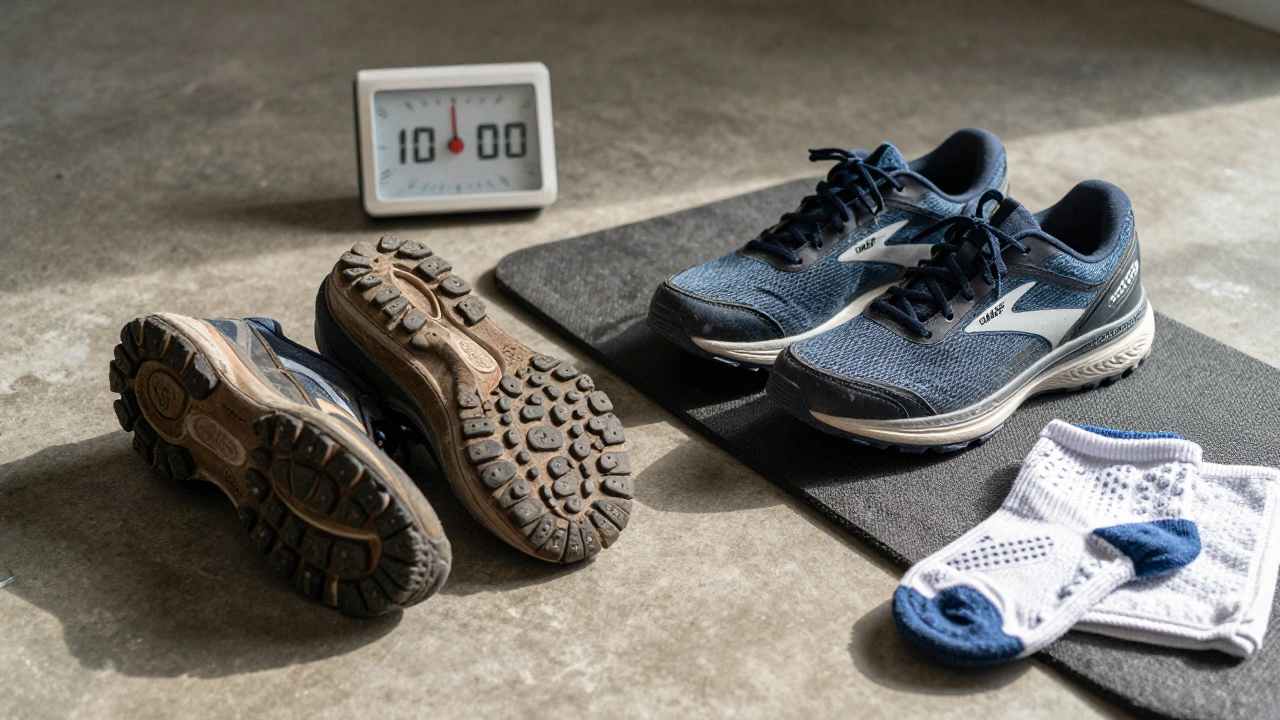
- Old sneakers-if they’ve been worn more than 6 months, the cushioning is gone. You can’t feel it until your feet start aching, but the foam has collapsed.
- Shoes without a heel counter-that’s the rigid part around the back of your heel. If it flops, your foot moves inside the shoe. That causes blisters and instability.
One warehouse worker told me he bought a pair of $60 work boots on sale. He wore them for three days and had to go to urgent care for plantar fasciitis. He didn’t realize the sole was made of cheap EVA that turned to mush after two hours. He switched to a pair of Skechers Work Sure Track-$90, but they’ve lasted 18 months with zero pain.
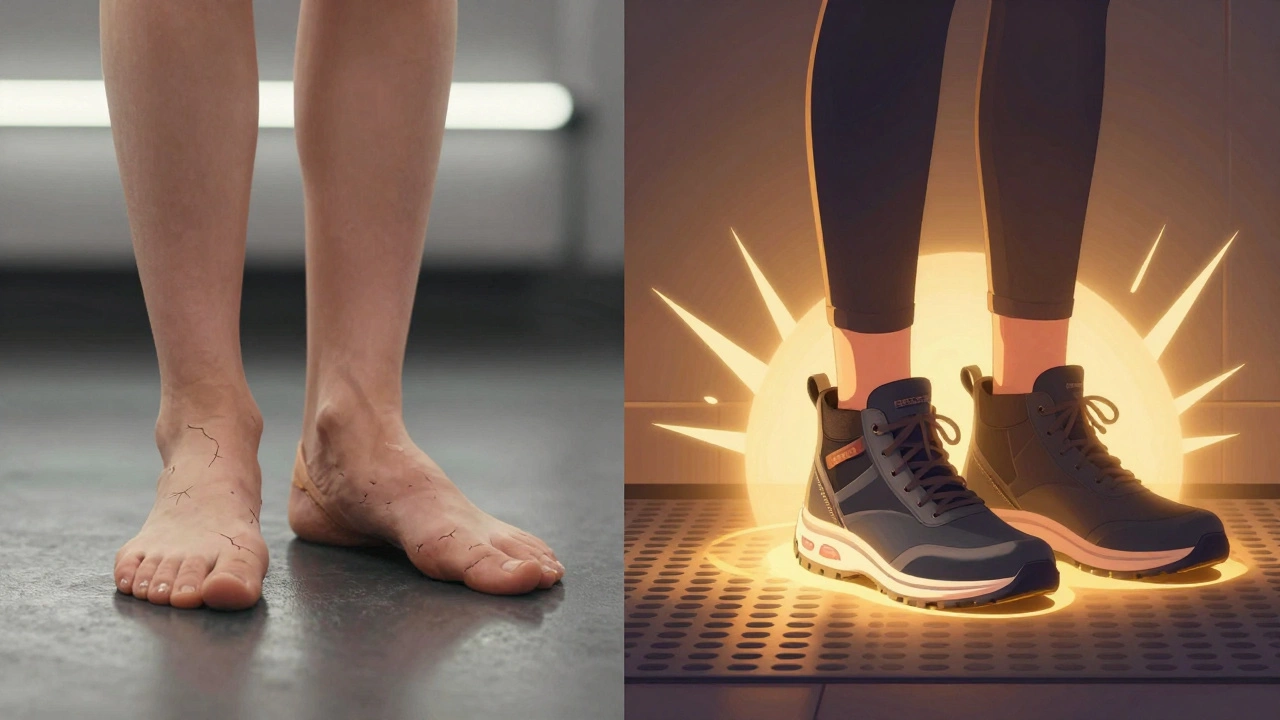
More Than Shoes: What You Can Do Right Now
Shoes are the foundation, but they’re not the whole solution. Here’s what actually works:
- Use anti-fatigue mats-if your workplace lets you, place one in front of your station. Even a thin mat cuts impact by 40%. Hospitals and factories that provide them report 30% fewer foot complaints.
- Shift your weight-don’t lock your knees. Rock from heel to toe every few minutes. It keeps blood flowing and stops muscles from locking up.
- Wear moisture-wicking socks-cotton holds sweat. Moisture leads to blisters. Merino wool or synthetic blends like Drymax or Thorlos keep feet dry and reduce friction.
- Stretch before and after-five minutes of calf stretches and toe curls makes a huge difference. Sit down, loop a towel around your foot, and gently pull your toes toward you. Hold for 20 seconds. Repeat three times.
- Hydrate-dehydrated muscles cramp faster. Drink water even if you’re not thirsty. Your body doesn’t signal thirst until you’re already low.
When to Upgrade Your Shoes
Work shoes don’t last forever. Here’s how to tell it’s time:
- You can press your thumb into the sole and it doesn’t spring back.
- The tread is worn flat in one area-usually the ball of the foot or heel.
- Your feet ache more than usual, even after resting.
- You notice your posture changing-you’re leaning forward or shifting weight to one side.
Most quality work shoes last 6-12 months with daily use. If you’re on your feet 10 hours a day, five days a week, replace them every six months. It’s cheaper than physical therapy.
Real Stories, Real Results
Alicia, a 42-year-old ER nurse, used to leave work crying from foot pain. She tried every brand, spent over $1,000 on shoes, and still ended up with heel spurs. Then she got fitted at a specialty podiatry clinic. They told her she had flat feet and needed motion control. She bought a pair of Brooks Addiction Walker-$140. She wore them for 18 months. No more pain. No more injections. She now recommends them to every new nurse.
James, a grocery stocker, switched from sneakers to Clarks Unstructured after his doctor told him his arches were collapsing. He started using a $25 orthotic insert. Within two weeks, his back pain vanished too. Turns out, bad feet mess with your whole alignment.
Final Tip: Don’t Wait Until It Hurts
The biggest mistake people make? Waiting until their feet are screaming before they do something. By then, damage is already done. Start now. Try one change this week: buy a pair of supportive socks. Or stand on a mat for 10 minutes during your break. Or replace your current shoes with one pair designed for all-day standing.
You don’t have to suffer to earn your paycheck. Your body isn’t a machine that runs on willpower. It’s a system that needs the right tools. And when it comes to surviving a 10-hour shift on your feet, those tools start with your shoes.
What are the best work shoes for standing all day?
The best work shoes for standing all day have cushioned midsoles made of EVA or polyurethane, strong arch support, slip-resistant outsoles, and a rigid heel counter. Top choices include Dansko Professional Clogs, Skechers Work Sure Track, Brooks Addiction Walker, and Clarks Unstructured. These are worn by nurses, warehouse workers, and retail staff who stand 10+ hours daily.
Can I use running shoes for a 10-hour shift?
Running shoes are designed for forward motion, not static standing. They often lack the lateral support and heel stability needed for all-day standing. Plus, their cushioning breaks down faster under constant pressure. If you must use them, replace them every 3-4 months. But for long shifts, dedicated work shoes are far better.
Do I need custom orthotics?
Not everyone does. Many quality work shoes come with removable insoles that can be replaced with over-the-counter orthotics for $20-$50. If you have flat feet, high arches, or existing foot pain, custom orthotics from a podiatrist can help-but they’re not required for most people. Try OTC inserts first.
How often should I replace my work shoes?
If you’re on your feet 10 hours a day, five days a week, replace your work shoes every 6 months. Signs they’re worn out: flattened soles, lack of bounce, increased foot pain, or visible wear on the tread. Waiting too long can lead to knee, hip, or back problems.
Are expensive work shoes worth it?
Yes, if you’re standing all day. A $120 pair that lasts 6 months costs $20 per month. A $40 pair that wears out in 3 months costs $13.33 per month-but you’ll pay in pain, missed work, or medical bills. Quality work shoes reduce injury risk and improve comfort. The savings are in your health.