
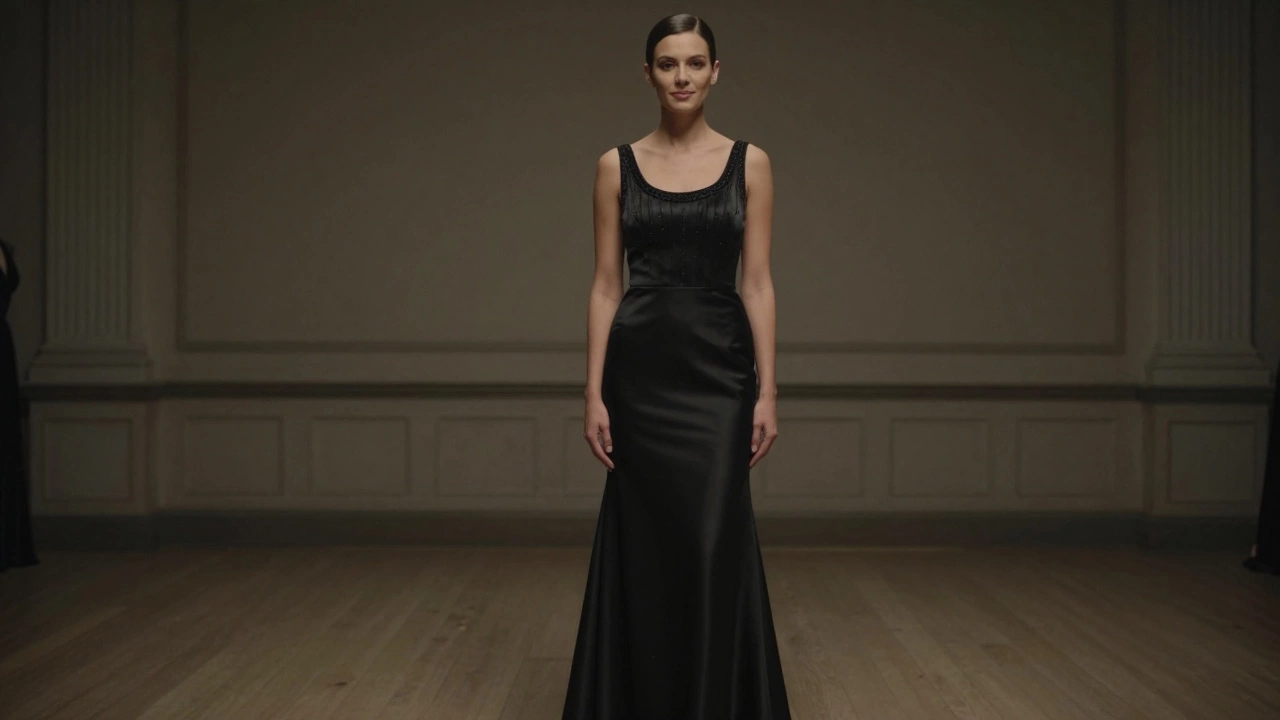
Evening Gown Silhouette Calculator
Find Your Flattering Silhouette
Answer these quick questions to identify your body type and get personalized evening gown recommendations.
Wearing an evening gown should feel like stepping into your best self-not like you’re fighting the fabric. Too many people assume looking slimmer in a dress means starving, squeezing into shapewear, or hiding behind layers. The truth? It’s about smart cuts, strategic details, and knowing what your body actually needs. You don’t need to change your shape. You just need to work with it.
Know Your Silhouette First
Not all evening gowns flatter every body. The best ones don’t hide-they highlight. Start by identifying your natural shape. Are you apple-shaped (wider midsection, slimmer legs)? Pear-shaped (hips wider than shoulders)? Hourglass (balanced bust and hips with a defined waist)? Rectangle (straight up and down with little waist definition)?
Once you know this, you can pick styles that balance proportions. For example, if you carry weight around your middle, an A-line gown that flares from just below the bust creates a clean line down to the floor. It doesn’t cling-it flows. That’s the magic. A mermaid cut might look glamorous in magazines, but if it hugs every curve from hip to ankle, it can amplify what you’re trying to minimize.
Choose the Right Neckline
The neckline does more than show off your collarbones-it draws the eye upward and creates the illusion of length. V-necks are the most reliable for slimming. They draw the eye vertically, making your torso appear longer and narrower. Deep V’s are especially effective because they extend the line of your neck and shoulders, tricking the brain into seeing a leaner silhouette.
High necklines like turtlenecks or boat necks can make your upper body look bulkier, especially if you have broader shoulders or a fuller chest. Off-the-shoulder styles work well if you have a defined waist, but if your midsection is your concern, avoid anything that ends right at the widest part of your torso. That’s a visual stop sign.
Dark Colors and Vertical Lines Are Your Friends
Black isn’t just classic-it’s a visual trick. Dark colors absorb light, which reduces visual volume. A deep navy, charcoal, or even emerald green can have the same effect. Avoid bright, light colors like white, cream, or pastels unless they’re used as accents. They reflect light and draw attention, which can make areas look larger.
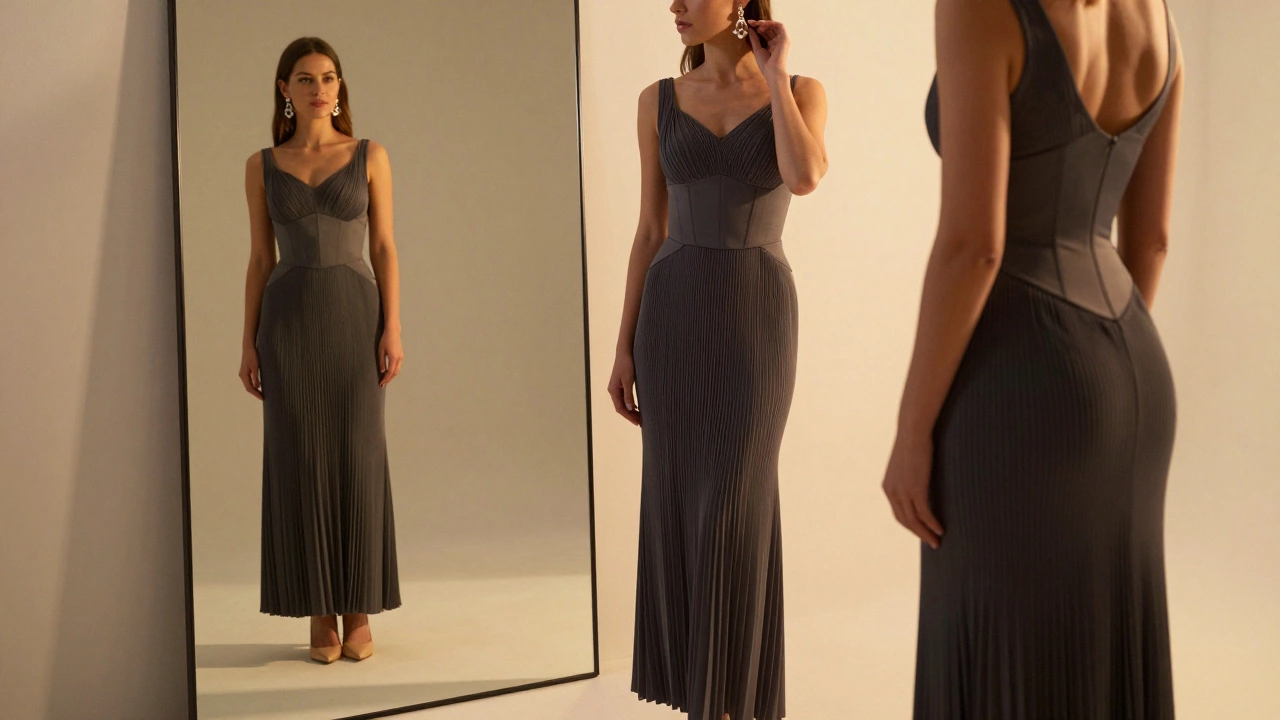
Vertical seams, pleats, or beading that runs from shoulder to hem create a continuous line. That line tells your eye to go up and down, not side to side. Look for gowns with center-back zippers, vertical draping, or subtle vertical sequin patterns. Avoid horizontal stripes, ruffles at the hips, or wide belts that cut across your midsection. They break the line and add visual width.
Structure Without Squeezing
Shapewear has its place, but it’s not a fix-all. The best gowns have built-in structure. Look for dresses with boning along the sides or under the bust. This isn’t about squeezing-it’s about smoothing and lifting. Boning holds fabric in place so it doesn’t cling or ripple. It doesn’t flatten your stomach-it supports your shape so the dress hangs cleanly.
Some dresses have internal corsetry or waist-cinching panels. These aren’t meant to make you smaller. They’re meant to define your waist. Even if you don’t have a natural waist, a dress that creates the illusion of one gives your body a more balanced proportion. Think of it like tailoring: it doesn’t change your body, it changes how the dress sits on it.

Fabric Matters More Than You Think
Not all fabrics behave the same. Heavy silk, satin, and structured taffeta hold their shape and drape elegantly. They don’t cling. They flow. Lightweight chiffon, jersey, or stretch lace? These can cling like second skin. If you’re wearing a clingy fabric, it will show every bump, roll, or contour. That’s not your fault-it’s the fabric’s.
Look for gowns with a slight stiffness or inner lining. A dress with a satin outer layer and a cotton or silk lining underneath will hold its form better. Avoid anything that looks like it might wrinkle or sag after an hour of dancing. That’s when the illusion falls apart.
Accessorize to Draw Attention Away
What you wear around the dress matters just as much as the dress itself. Statement earrings, a bold cuff bracelet, or a delicate choker can pull the eye up to your face. That’s the goal: redirect attention from your midsection to your features.
Long necklaces that fall below the bust also help. A pendant on a 24-inch chain draws the eye downward in a straight line, creating length. Avoid chunky belts or waistbands that sit right where you want to minimize. Instead, let the dress’s natural line speak for itself.
Shoes matter too. Heels that match your skin tone elongate your legs. Barely-there sandals or closed-toe pumps in the same shade as your skin make your legs look longer, which makes your whole body look leaner. Avoid bulky heels or shoes with too much contrast-they chop your line.
Fit Is Everything-Tailoring Isn’t Optional
No matter how perfect the dress looks on the rack, if it doesn’t fit your body exactly, it won’t work. Off-the-rack gowns are made for an average body. Yours isn’t average-and that’s okay. But it means you need to tailor it.
Get the shoulders right. If they’re too wide, the dress will look boxy. If the waist is too loose, it will gap or ripple. If the hem hits at the wrong spot, it can cut your legs off visually. A good tailor can take in side seams, adjust the bust, shorten straps, or add a subtle train. These small changes turn a good dress into a great one.
Don’t wait until the night before. Give yourself at least two fittings. The first to mark what needs changing, the second to confirm it fits like it was made for you.
Posture Is Your Secret Weapon
Stand tall. Shoulders back. Chin up. Good posture doesn’t just make you look confident-it makes you look slimmer. When you slouch, your stomach pushes forward, your back rounds, and your hips tilt. All of that adds visual bulk.
Practice standing with your spine aligned. Imagine a string pulling the top of your head toward the ceiling. Your ribs should be stacked over your hips, not jutting out. This doesn’t mean sucking in. It means owning your space. A dress that fits well will look even better when you carry yourself like you belong in it.
What Not to Do
Don’t wear a dress that’s too tight. Tight doesn’t slim-it distorts. It creates bulges where fabric stretches over curves. That’s worse than a little extra room.
Don’t overdo accessories. Too many sparkles, too many layers, too many textures? That’s visual noise. It distracts from the clean line you’re trying to create.
Don’t ignore the back. A dress that looks perfect from the front but gapes or bunches in the back ruins the whole look. Always check your reflection from all angles before you leave the house.
Final Thought: It’s About Confidence, Not Perfection
You don’t need to look like a model to look stunning in an evening gown. You need to feel like yourself-elevated, comfortable, and in control. The right dress doesn’t hide your body. It celebrates it. And when you feel good in what you’re wearing, that glow shows up in your eyes, your smile, your walk. That’s the real slimming effect.
Can shapewear help me look thinner in an evening gown?
Shapewear can help, but only if it’s the right kind. Look for seamless, lightweight options that smooth without squeezing. Avoid full-body shapers-they can create bulges under the dress. Instead, choose high-waisted briefs or a waist-cinching panel that matches your gown’s structure. The goal is to reduce bulk, not flatten your body.
What’s the best color for an evening gown to look slimmer?
Deep, rich colors like black, navy, charcoal, burgundy, and emerald green are the most flattering. They absorb light and reduce visual volume. Avoid white, cream, metallics, and bright pastels unless they’re used as small accents. These colors reflect light and draw attention, which can make areas appear larger.
Should I avoid ruffles and embellishments?
Not all embellishments are bad, but placement matters. Avoid ruffles, bows, or heavy beading around the midsection. They add volume and break the vertical line. Instead, choose details that sit higher-on the shoulders, neckline, or sleeves-or lower, near the hem. Vertical beading or subtle sequin lines that run from top to bottom actually slim the figure.
How do I know if a dress is too tight?
If you can’t take a full breath, if the fabric pulls across your stomach or hips, or if you see bulges forming where seams stretch, it’s too tight. A dress should feel snug, not constricting. If it leaves red marks after you take it off, it’s doing more harm than good.
Do high heels really make me look thinner?
Yes, but only if they’re the right kind. Heels that match your skin tone elongate your legs and create a continuous line from your foot to your thigh. Nude pumps or strappy sandals in your skin shade work best. Avoid chunky heels, bright colors, or shoes that cut off your leg visually. The goal is to extend your silhouette, not chop it.