
Summer Dress Style Quiz
What's your skin's undertone?
What body type are you targeting?
What's most important for your lifestyle?
Your Perfect Summer Dress Style
Summer heat doesn’t mean you have to choose between comfort and looking put-together. The secret isn’t buying more clothes-it’s knowing what works and what doesn’t. Too many people think chic summer style means tight fabrics, overwhelming prints, or outfits that make you sweat through lunch. That’s not chic. That’s uncomfortable. Real summer chic is about simplicity, smart choices, and letting your skin breathe.
Start with the right fabric
Not all cotton is created equal. A thin, low-thread-count cotton tee might feel soft, but it turns see-through in the sun and wrinkles the second you sit down. Look for summer dresses made from high-quality linen, organic cotton, or TENCEL™. These materials don’t cling. They don’t trap heat. And they age beautifully-linen gets softer with every wash, not stiffer. Brands like Cuyana, Eileen Fisher, and even Uniqlo’s linen collection have proven this works. If you touch a dress and it feels stiff or plasticky, walk away. Real summer fabrics move with you, not against you.Fit matters more than size
A dress that’s too tight looks sloppy. One that’s too loose looks like you gave up. The sweet spot? A silhouette that follows your body without hugging it. A-line, shift, and wrap dresses are your best friends. They flatter most body types without needing tailoring. Avoid dresses with elastic waistbands unless they’re part of a structured design-those tend to roll or dig in after an hour. Try this test: if you can’t take a full breath or sit down without adjusting the hem, it’s not the right fit. Summer should feel effortless, not like you’re in a costume.Color isn’t just about trends-it’s about your skin
White isn’t always the answer. If you have warm undertones, pure white can make you look washed out. Instead, try oatmeal, cream, or soft beige. Cool undertones? Go for slate gray, dusty blue, or pale lavender. Bright colors work too-but only if they match your natural coloring. A coral dress on someone with olive skin can glow. On someone with fair, pink-toned skin? It can look like a neon sign. Stick to colors that make your skin look brighter, not duller. And skip black in summer unless it’s a lightweight, breathable weave. Even then, it’s a heat magnet.Keep prints simple
Florals aren’t bad. But oversized, high-contrast florals on a heavy fabric? That’s costume territory. Look for small, muted prints-think tiny ditsy blooms, subtle stripes, or abstract watercolor washes. A dress with a print that looks like it was painted by hand feels more expensive than one with a mass-produced graphic. If you’re unsure, go solid. A well-cut solid dress with a single interesting detail-a ruffle, a side slit, a unique neckline-looks more intentional than a busy print.
Accessories are your secret weapon
You don’t need a full jewelry set. One or two pieces do the job. A thin gold chain, a single hoop earring, or a woven leather bracelet adds polish without weight. Sunglasses? Not just for UV protection-choose a shape that complements your face. Round faces look sharp with cat-eye frames. Square faces soften with oval or round lenses. A structured tote bag in natural fiber (like straw or canvas) carries your essentials without looking cluttered. Skip the plastic fanny packs unless you’re hiking. A small crossbody in leather or linen feels more elevated.Footwear that doesn’t ruin your day
Sandals aren’t optional-they’re essential. But not just any sandals. Avoid thick, chunky soles that look like hiking gear. Thin straps, low heels, or even flat leather slides work best. Look for adjustable straps so your feet don’t slip. Brands like Birkenstock, Everlane, and Allbirds have summer styles that don’t look like they came from a discount rack. If you’re walking on hot pavement, skip metal buckles-they get scorching. Leather soles stay cooler than rubber. And please, no socks with sandals. That’s not a look. It’s a mistake.Layering isn’t just for winter
Yes, you can layer in summer. A lightweight linen shirt tied at the waist over a slip dress adds dimension without heat. A cropped denim jacket (thin, not stiff) thrown over a tank dress works for evening breezes. A sheer, flowy kimono in a neutral tone adds coverage without bulk. These layers aren’t for warmth-they’re for style. They turn a basic dress into a complete outfit. The key? Keep the layers light and airy. If you’re sweating under your layer, it’s too heavy.Know when to skip the dress
Sometimes, a dress isn’t the answer. If you’re going to be outside all day-gardening, at a festival, chasing kids-a coordinated set of shorts and a loose top might be smarter. Or a midi skirt with a tucked-in tee. A dress might look perfect on the hanger, but if it’s hard to move in or doesn’t have pockets, it’s not practical. Chic doesn’t mean pretty. It means functional and beautiful at the same time.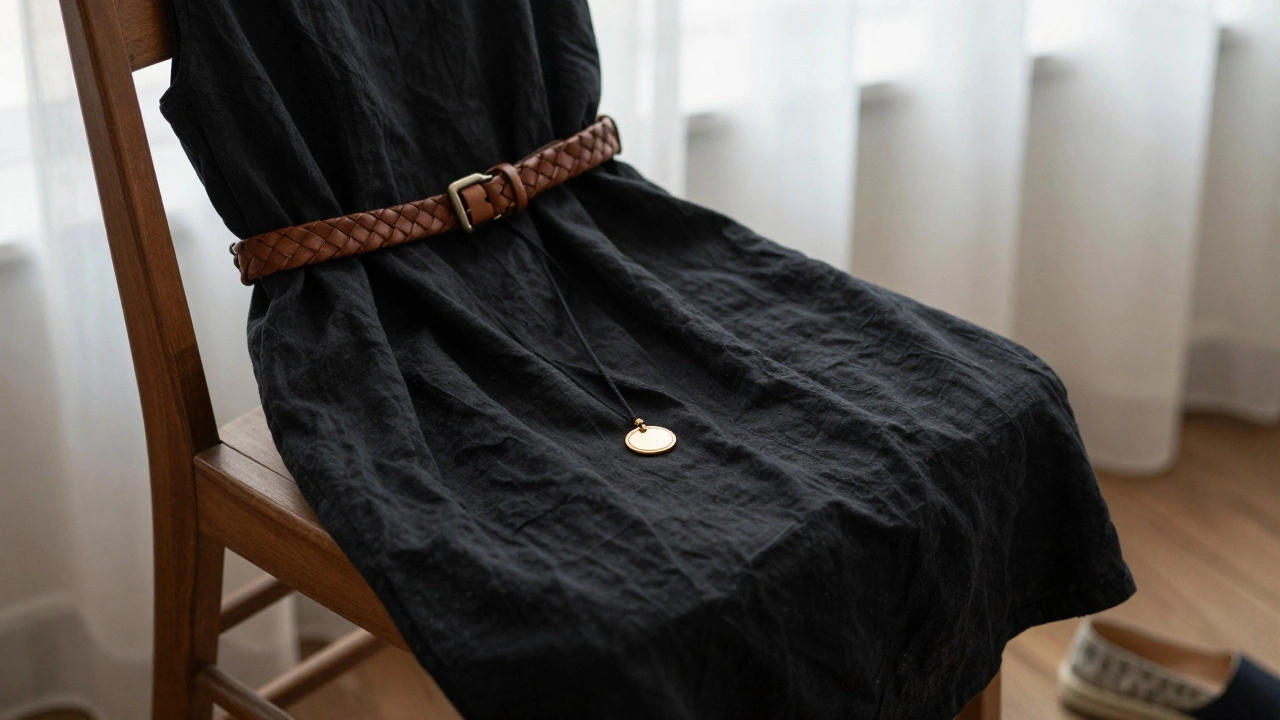
Wash and care that lasts
A $200 dress that looks worn after three washes isn’t a bargain. Follow care labels. Linen can go in the machine on cold, gentle cycle-but don’t tumble dry. Air dry it flat. Cotton dresses should be washed inside out to protect color. Ironing? Skip it. Wrinkles in linen are part of the charm. If you must smooth them, use a steamer. Stains? Spot clean with mild soap and water. Don’t soak. Harsh detergents break down natural fibers faster than sun exposure.What to avoid
- Dresses with too many ruffles or gathers-they add bulk and trap heat - Synthetic blends like polyester or rayon-they don’t breathe - Overly short hemlines unless you’re at the beach - Bright, neon colors unless they suit your skin tone - High heels on uneven ground - Anything labeled "trendy" that you’ve only seen on TikTok These aren’t rules. They’re observations from real people who’ve worn summer dresses for decades without overheating or looking like they got dressed in the dark.Real people, real outfits
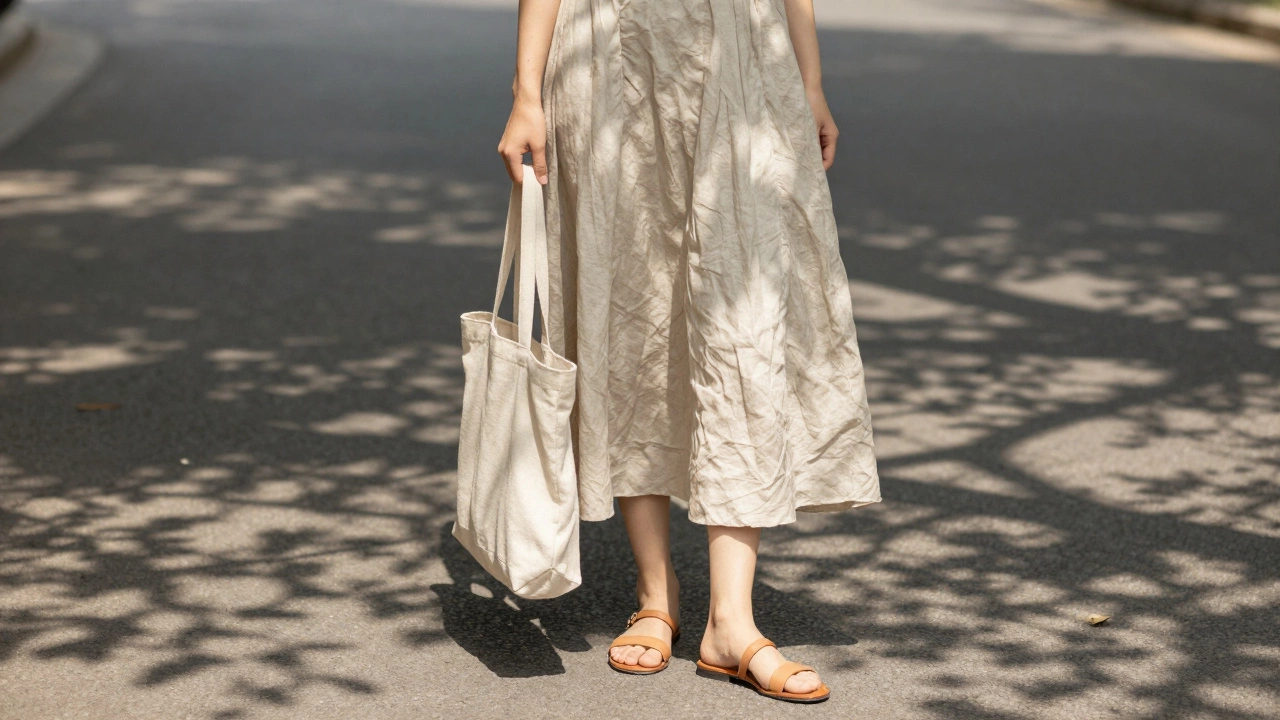
A teacher in Portland wears a linen shift dress in oatmeal with leather slides and a single gold pendant. She carries a canvas tote and never wears sunscreen on her arms because she’s got a light cardigan she ties around her waist. A nurse in Austin picks a wrap dress in muted sage with a hidden pocket for her phone. She pairs it with white canvas sneakers and a wide-brimmed hat. A freelance designer in Barcelona wears a black linen midi dress with a woven belt and espadrilles. She doesn’t wear makeup past foundation. Her outfit says, "I’m here, I’m comfortable, and I didn’t try too hard." That’s the vibe.Final thought: Chic is confidence, not clothes
You don’t need a new wardrobe every season. You need to know what fits your life. A summer dress that lets you move, breathe, and feel like yourself is worth more than ten that look good in photos but make you miserable in real life. Choose quality over quantity. Choose comfort over chaos. And remember-the most chic thing you can wear is the one you forget you’re wearing.What’s the best fabric for summer dresses?
Linen, organic cotton, and TENCEL™ are the top choices. They’re breathable, soft, and don’t trap heat. Avoid polyester, rayon, and synthetic blends-they make you sweat more and don’t last as long.
Can I wear white in summer?
Yes, but not just any white. Pure white can wash out warm skin tones. Try cream, oatmeal, or off-white instead. Make sure the fabric is thick enough not to be see-through. A lined dress or one made from structured linen works best.
How do I pick a summer dress that flatters my body?
A-line, shift, and wrap dresses work for most body types. Look for dresses that follow your natural shape without squeezing. If you have a larger bust, choose dresses with built-in support or adjustable straps. If you’re petite, avoid floor-length styles unless they’re slit. Midi length (just below the knee) is the most universally flattering.
Do I need to buy new summer dresses every year?
No. A well-made dress in a neutral color lasts for years. Focus on quality over quantity. One good linen dress, one good cotton wrap, and a versatile slip can carry you through multiple summers. Buy less, wear more.
What shoes go best with summer dresses?
Leather slides, flat sandals with thin straps, and low-heeled espadrilles are ideal. Avoid chunky soles, high heels on uneven ground, and anything with metal buckles that get hot. White canvas sneakers work surprisingly well with casual dresses.
Should I wear sunscreen under my dress?
Yes-if the fabric is thin or light-colored. Linen and cotton can be see-through in sunlight. Apply sunscreen to exposed skin before putting on your dress. A lightweight, non-greasy formula works best. Don’t forget your neck, shoulders, and the backs of your legs.