
Foot Recovery & Relief Planner
Symptom Checker & Recommendations
Select the primary sensation you feel after a long shift:
Evening Recovery Checklist
To start, we need to understand Plantar Fasciitis, which is the inflammation of a thick band of tissue that runs across the bottom of your foot and connects your heel bone to your toes. This is the most common culprit for that sharp, stabbing pain you feel during your first few steps in the morning. When you stand all day, the plantar fascia stretches and develops micro-tears. If you don't give it time to heal, those tears become chronic, making every shift a struggle.
Quick Fixes for Immediate Relief
When you finally sit down after a long shift, your priority is to reduce inflammation and bring blood flow back to the compressed tissues. Don't just kick off your shoes and lie down; a few active recovery steps can prevent tomorrow's pain from being worse.
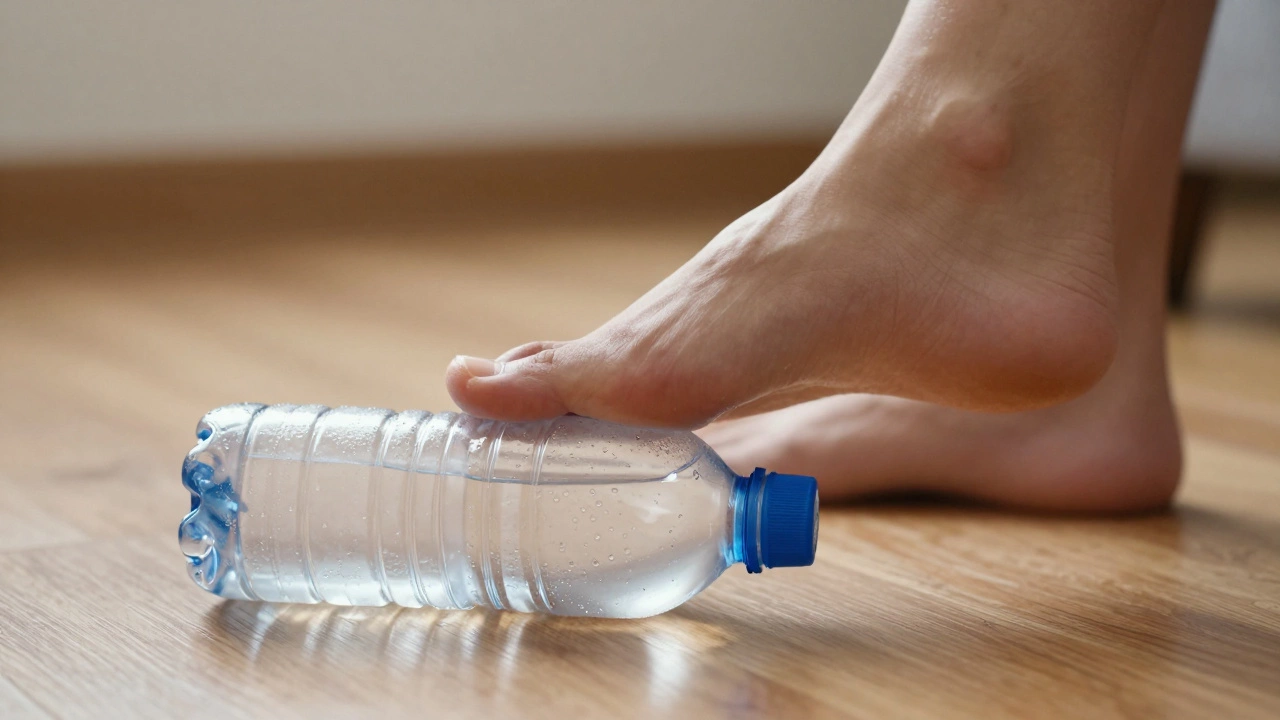
- The Frozen Bottle Roll: Fill a plastic water bottle with water and freeze it. Sit in a chair and roll your foot over the bottle for 10 minutes. This combines cryotherapy (cold treatment) with a deep tissue massage to break up tension in the fascia.
- Legs-Up-the-Wall: Lie on your back with your legs resting vertically against a wall. This uses gravity to help drain fluid (edema) that accumulates in your ankles and feet due to prolonged standing.
- Contrast Baths: Switch between soaking your feet in warm water for three minutes and cold water for one minute. This "pumps" the blood vessels, flushing out metabolic waste like lactic acid.
Choosing the Right Work Shoes
Your shoes are the most important tool in your professional kit. If you're wearing flat sneakers or old boots, you're essentially asking your muscles to do all the work that a shoe should be doing. To stop foot pain, you need a combination of cushioning, arch support, and stability.
Look for shoes with a wide toe box. Your feet naturally swell throughout the day-sometimes up to half a size-and if your shoes are too tight, you'll experience pinched nerves and blisters. A shoe with a dedicated Orthotic or a removable insole allows you to customize the support based on whether you have flat feet or high arches.
| Feature | What to Look For | Why it Matters |
|---|---|---|
| Midsole Material | EVA or Polyurethane | Absorbs shock and reduces joint impact |
| Heel-to-Toe Drop | 8mm to 12mm | Relieves pressure on the Achilles tendon |
| Upper Material | Breathable Mesh or Leather | Prevents overheating and reduces swelling |
| Arch Support | Contoured/Semi-rigid | Prevents the arch from collapsing (pronation) |
The Role of Compression Gear
If your feet feel "heavy" or throbbing by 3 PM, it's likely because blood is pooling in your lower extremities. This is where Compression Socks come in. These are specialized garments designed to apply graduated pressure-tightest at the ankle and loosening as they move up the leg.
By squeezing the veins, these socks push blood back up toward your heart more efficiently. This doesn't just help with the throb in your feet; it reduces the overall swelling in your calves and ankles, which makes your shoes fit better throughout the day. For most workers, a compression level of 15-20 mmHg is sufficient to keep legs feeling fresh without being too restrictive.
Stretching Your Way to Recovery
Stretching isn't just for athletes. If you stand still for long periods, your calf muscles tighten, which pulls on your heel and increases the tension on the bottom of your foot. A tight calf is almost always the root cause of heel pain.
- The Wall Stretch: Stand facing a wall with one foot forward and one back. Keep your back heel on the floor and lean forward. Hold for 30 seconds. This targets the Gastrocnemius (the large calf muscle).
- Towel Curls: Sit in a chair with a towel flat on the floor. Use your toes to scrunch the towel toward you. This strengthens the small intrinsic muscles of the foot, providing better natural support.
- Toe Splay: Try to spread your toes as wide as possible. Most of us wear shoes that squeeze the toes together, which weakens the foot's natural balance and stability.
Preventing Long-Term Damage
The biggest mistake people make is wearing the same pair of shoes every single day. Even high-quality foam in a midsole needs time to "decompress." When you wear the same shoes for 12 hours, the foam compresses and stays that way for a while. If you wear them again the next morning, you're stepping on flat foam instead of supportive cushioning.
Rotating between two different pairs of supportive shoes gives the materials time to bounce back, which can actually extend the life of your footwear and keep your feet feeling supported. Additionally, replace your insoles every 3 to 6 months. Once the internal support of an insole collapses, no amount of stretching will fix the resulting pain.
Can I use drugstore insoles instead of professional orthotics?
Yes, for mild pain. Store-bought insoles provide decent cushioning. However, if you have severe overpronation (feet rolling inward) or high arches that cause pain, custom orthotics are better because they correct your specific alignment rather than just providing a soft layer of gel.
Why do my feet hurt more when I first wake up?
This is a classic sign of plantar fasciitis. While you sleep, your foot stays in a pointed position, and the fascia tightens. When you take your first step, you suddenly stretch that tight tissue, which can cause micro-tears and a sharp pain in the heel.
Should I wear flats or a slight heel for all-day standing?
Totally flat shoes (like some sneakers or ballet flats) can actually be worse because they put maximum strain on the heel and arch. A slight lift-about an inch or a moderate heel-to-toe drop-shifts the weight slightly forward, reducing the pressure on the plantar fascia.
Do compression socks actually work for foot pain?
They don't fix the structural pain in the arch, but they stop the "heavy" feeling caused by edema. By preventing fluid buildup in the ankles and feet, they reduce the pressure on the skin and nerves, which makes the overall experience of standing much more comfortable.
How often should I change my work shoes?
Depending on the quality, most work shoes lose their supportive properties after 500 to 800 miles of walking or roughly 6 to 12 months of daily 12-hour use. If you notice the midsole feels "dead" or you're getting new pains, it's time to replace them.
Next Steps for Your Recovery
If you've tried the bottle rolls, upgraded your shoes, and used compression socks but the pain still persists, it's time to see a podiatrist. Persistent pain can be a sign of a stress fracture or a nerve issue like Morton's neuroma that requires medical intervention.
For those just starting their journey to pain-free shifts, start by implementing one change a week. Begin with the evening recovery routine, then invest in a new pair of shoes, and finally add compression gear. This allows you to see what actually works for your specific body type and job requirements.