
Hoodie Fit Estimator
Find Your Perfect Hoodie Fit
Answer a few simple questions about your body measurements to get personalized hoodie fit recommendations based on the article's expert guidelines.
Your Personalized Fit Recommendations
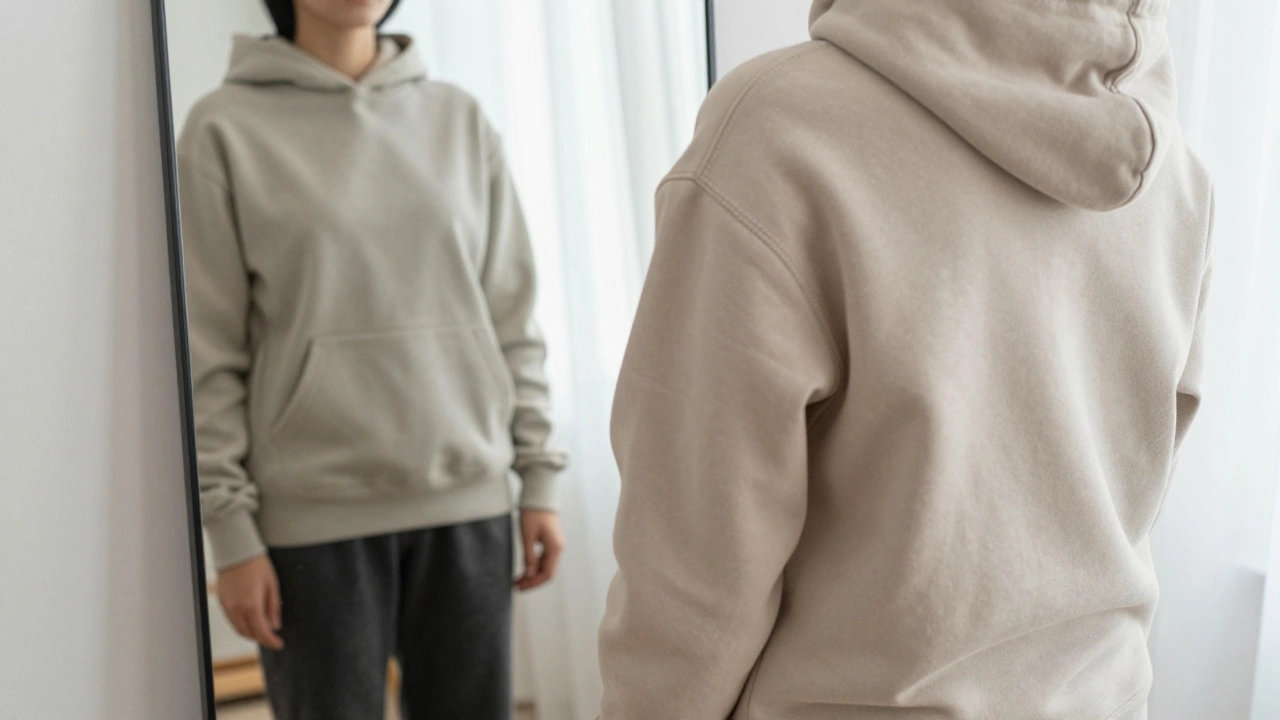
Too tight. Too loose. Too short. Too long. If you’ve ever bought a hoodie and thought, Why does this feel so wrong?, you’re not alone. Hoodies are one of the most worn clothing items out there - but getting the fit right isn’t as simple as picking your usual size. A hoodie that fits well doesn’t just look better - it moves better, feels better, and lasts longer. Here’s exactly how a hoodie should fit you, based on real wear, real bodies, and real use.
Should a hoodie be tight or loose?
The answer isn’t one-size-fits-all. It depends on how you plan to wear it. For everyday casual use, a hoodie should have a relaxed but not baggy fit. Think of it like a second skin that still lets you breathe. If you can’t raise your arms without the hem riding up, it’s too tight. If your arms look swallowed by fabric and the hood hangs past your shoulders like a cape, it’s too loose.
Most people go up a size thinking they want "oversized," but oversized doesn’t mean shapeless. A well-fitted oversized hoodie still has structure - the shoulders sit right where yours do, the sleeves end just above the wrist, and the body skims your hips without bunching. Brands like Uniqlo, Everlane, and Patagonia design their hoodies with this balance in mind. Their sizing charts show chest measurements that match real body types, not just arbitrary S/M/L labels.
Should a hoodie fit your shoulders?
Your shoulders are the anchor point. If the shoulder seams fall off your actual shoulder bones - either too far forward or too far back - the whole hoodie will look sloppy. That’s why trying hoodies on in person matters. When you put one on, stand up straight and let your arms hang naturally. The seam should land right at the edge of your shoulder, where your arm meets your torso. If it’s an inch or more past that point, the hoodie is too big. If it digs into your deltoids, it’s too small.
This isn’t just about looks. Poor shoulder fit causes strain. A hoodie that pulls across your back when you reach for something creates tension in your upper back and neck. Over time, that leads to discomfort. A properly fitted hoodie lets you move without restriction - whether you’re lifting groceries, typing at a desk, or throwing a ball with your kid.
What about the sleeves?
Sleeve length is often overlooked. The ideal sleeve ends just above the wrist bone, where your hand meets your forearm. This gives you enough coverage without bunching when you move. Too long? The cuffs drag on your desk or get caught in your car door. Too short? Your wrists get cold, and you look like you’re wearing a cropped hoodie by accident.
Most hoodies have a standard sleeve length between 23 and 26 inches from the shoulder seam. If you’re under 5’6", go for the shorter end. If you’re over 6’0", look for tall sizes. Brands like Nike and Adidas offer extended sleeve lengths specifically for taller frames. Don’t assume your regular size will work - sleeve length varies wildly between brands.
How long should a hoodie be?
The length should hit between your hip bone and the top of your thigh - not your waist, not your butt. A hoodie that ends at your waist looks like a crop top with a hood. One that goes past your hips looks like a bathrobe. The sweet spot? About 1 to 2 inches below your natural waistline.
Why does this matter? Because it affects how the hoodie pairs with your pants. If it’s too short, it rides up when you sit, exposing your midriff. If it’s too long, it bunches around your hips and creates bulk under your belt. Try it on with the jeans or joggers you normally wear. The hem should stay flat against your body when seated. If it lifts, it’s too short. If it wrinkles and folds, it’s too long.

What about the hood?
A hood should frame your face, not swallow it. The opening should be wide enough to let your face show clearly - not so tight it cuts into your cheeks or so loose it flops around. When you pull the drawstrings, they should sit comfortably behind your head, not dig into your neck.
Try this test: put on the hoodie, then look up. If the hood slips off your head or falls forward, it’s too big. If you can’t tilt your head back without the hood pulling tight against your scalp, it’s too small. The ideal hood has enough volume to cover your ears and the back of your neck, but doesn’t add bulk to your silhouette. Hoodies with structured hoods - like those from The North Face or Lululemon - hold their shape better than flimsy, unlined ones.
What’s the right fabric weight?
Fabric matters more than you think. A hoodie made from 100% cotton might feel soft, but if it’s too thin, it’ll stretch out after a few washes. A heavy fleece might feel cozy, but it’ll trap heat and make you sweat.
The best hoodies use a blend - usually 80% cotton and 20% polyester. This combo keeps the softness of cotton and adds durability. Weight is measured in ounces per square yard. A good everyday hoodie weighs between 9 and 11 oz. Lighter than 8 oz? It’ll feel flimsy. Heavier than 12 oz? It’ll feel like wearing a blanket. For colder climates, go for 12-14 oz. For spring or fall, stick to 9-10 oz.
How does your body type affect fit?
Not everyone fits the same mold. Here’s how to adjust based on your build:
- Slender frame: Avoid oversized styles. Go for regular or slim fit. A hoodie that’s too loose will drown your frame. Look for tapered sides and narrower sleeves.
- Broad shoulders: Choose hoodies with set-in sleeves (not raglan). Raglan sleeves add bulk to the upper body. A structured shoulder seam helps balance your proportions.
- Tall and lean: Look for tall sizes. Standard hoodies will be too short in the torso and sleeves. Brands like Tommy Hilfiger and Gap offer tall fits with extra length.
- Curvier or fuller build: Choose a relaxed fit with stretch. Avoid boxy cuts that add width. Look for hoodies with side panels or subtle darts that follow your shape without squeezing.
How to test a hoodie before buying
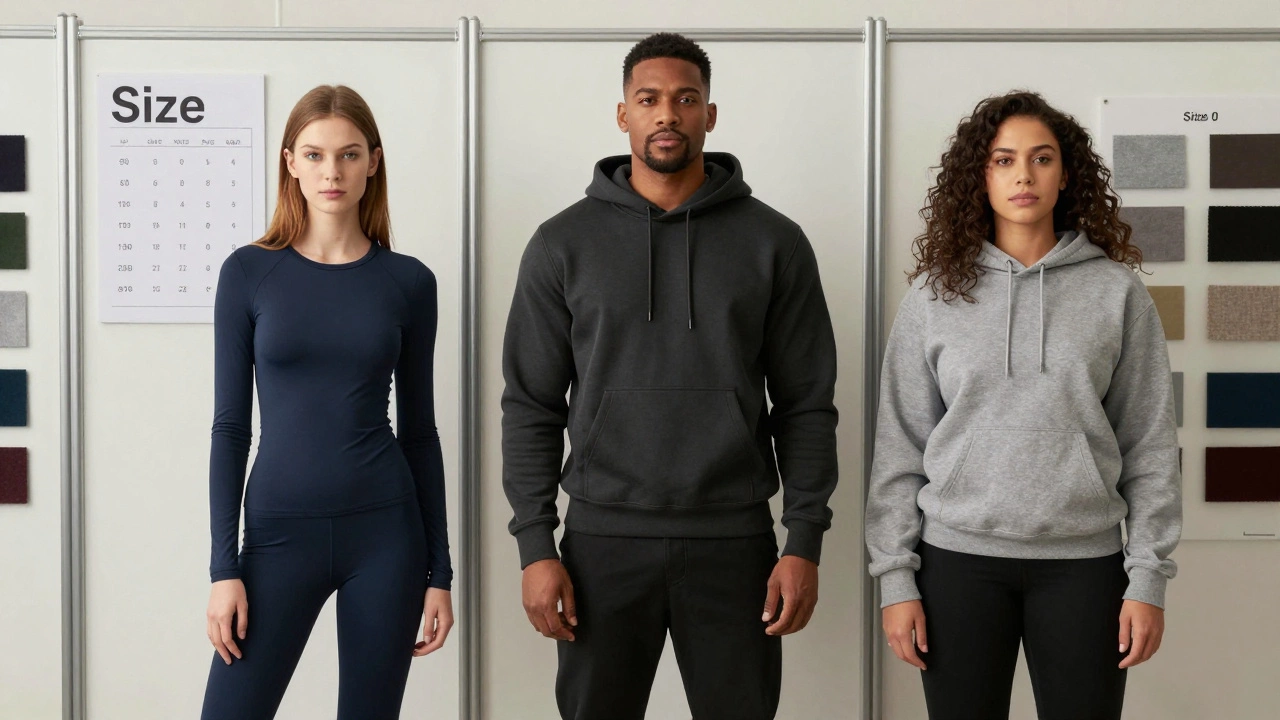
Here’s a quick checklist you can use anytime you try on a hoodie:
- Can you raise your arms fully without the hem riding up?
- Do the shoulder seams sit exactly on top of your shoulder bones?
- Do the sleeves end just above your wrist bone?
- Does the hem hit between your hip and upper thigh?
- Can you pull the hood over your head without it feeling tight or slipping off?
- Does the fabric feel substantial, not thin or flimsy?
- Does it feel comfortable after 10 minutes of movement - sitting, bending, stretching?
If you answer "yes" to all of these, you’ve found a good fit. If even one feels off, keep looking.
What to avoid
There are three common hoodie mistakes everyone makes:
- Buying based on what’s trending: Oversized hoodies aren’t for everyone. If you’re not tall or athletic, an extra-large hoodie won’t make you look cool - it’ll make you look lost.
- Ignoring the wash: Cotton shrinks. A hoodie that fits perfectly in the store might be too tight after the first wash. Always check the care label. Look for pre-shrunk cotton or blended fabrics.
- Wearing it as outerwear in cold weather: A hoodie isn’t a jacket. If you need wind protection or insulation, layer it under a coat. Hoodies are meant for layering, not braving winter storms.
Final thought: Fit is personal
There’s no universal "perfect" hoodie fit. But there is a perfect fit for you. It’s the one that lets you move without thinking about it. The one that doesn’t ride up when you sit, doesn’t sag when you walk, and doesn’t make you feel like you’re wearing a costume. Pay attention to how it feels, not just how it looks. Your body will thank you.