
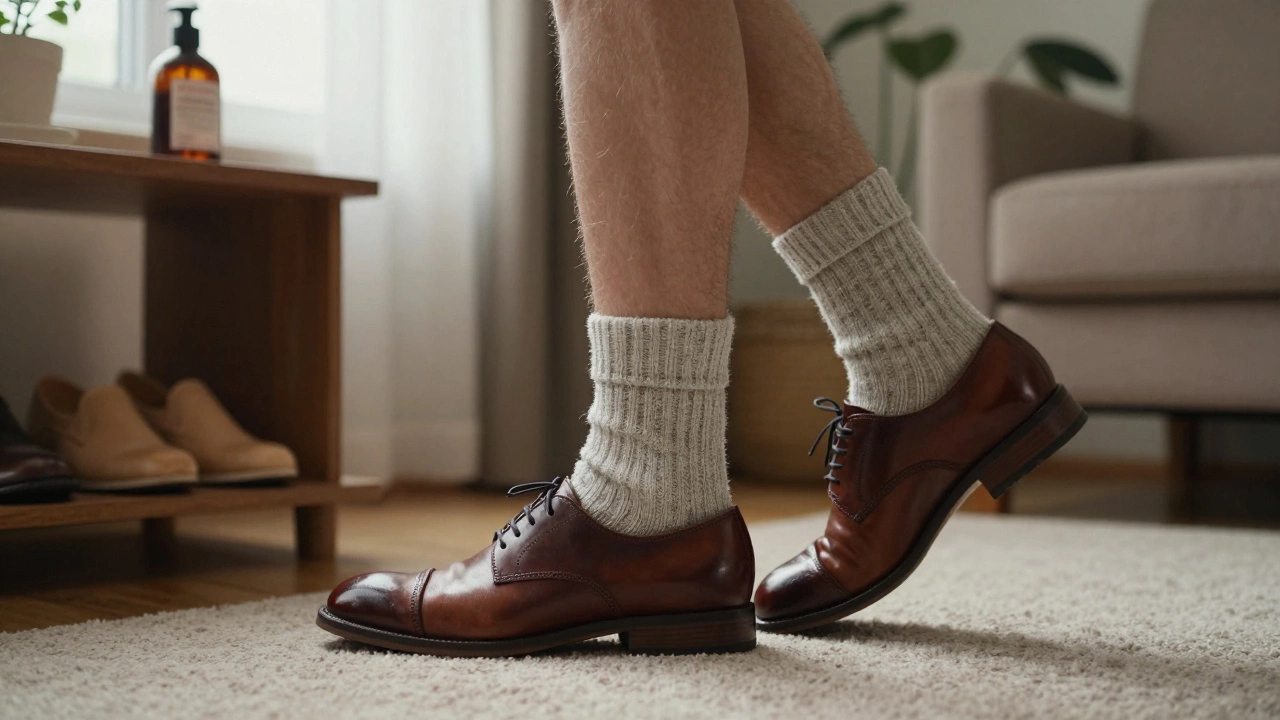
Everyone knows the feeling: you buy a new pair of leather shoes, they look sharp, they feel expensive, and then you put them on-and they hurt. Not just a little pinch, but a full-blown blister waiting to happen. You wonder: how long does it take to break in a pair of leather shoes? The answer isn’t simple. It depends on the shoe, your feet, and how you treat them. But here’s the truth: most leather shoes take between 1 to 4 weeks to feel truly comfortable. Not days. Not hours. Weeks.
Why Leather Shoes Feel Uncomfortable at First
Leather isn’t plastic. It’s a natural material that starts stiff, especially in high-quality shoes. That stiffness isn’t a flaw-it’s a feature. Premium leather holds its shape, supports your arch, and lasts for years. But that means it doesn’t instantly mold to your foot. Think of it like a baseball glove. You don’t buy a new glove and catch a fly ball without breaking it in first. Same logic applies.
When you first wear new leather shoes, the upper leather is rigid. The insole hasn’t compressed. The heel counter hasn’t softened. Your toes hit the front. Your heels rub. Your arches feel unsupported. That’s normal. It’s not a defect. It’s the material doing its job-waiting for your body to shape it.
What Factors Change the Break-In Time?
Not all leather shoes break in the same way. Here’s what makes a difference:
- Shoe style: Dress shoes with thin soles and stiff uppers take longer-often 3 to 4 weeks. Boots, especially work or hiking boots, can take 4 to 6 weeks because they’re built for durability.
- Leather type: Calfskin is softer and breaks in faster. Full-grain or oil-tanned leather is tougher and takes longer. Suede? It molds quicker but needs more care.
- Foot shape: If you have wide feet, high arches, or bunions, the break-in period stretches. Your foot doesn’t fit the mold, so the shoe has to adjust more.
- Wear schedule: Wearing them for 1 hour a day? You’ll be waiting. Wearing them 3-4 hours daily? You’ll be comfortable in under 2 weeks.
A friend of mine bought a pair of Allen Edmonds loafers in October. She wore them only to work on Fridays. By January, they still pinched. Then she started wearing them every day. Two weeks later? She couldn’t find her old sneakers.
How to Speed Up the Process (Without Damaging Your Feet)
You don’t have to suffer. There are smart ways to help leather shoes adapt faster.
- Start slow. Wear them for 30-60 minutes around the house. Walk on carpet. Don’t go for a long walk or hike right away. Let the leather stretch gently.
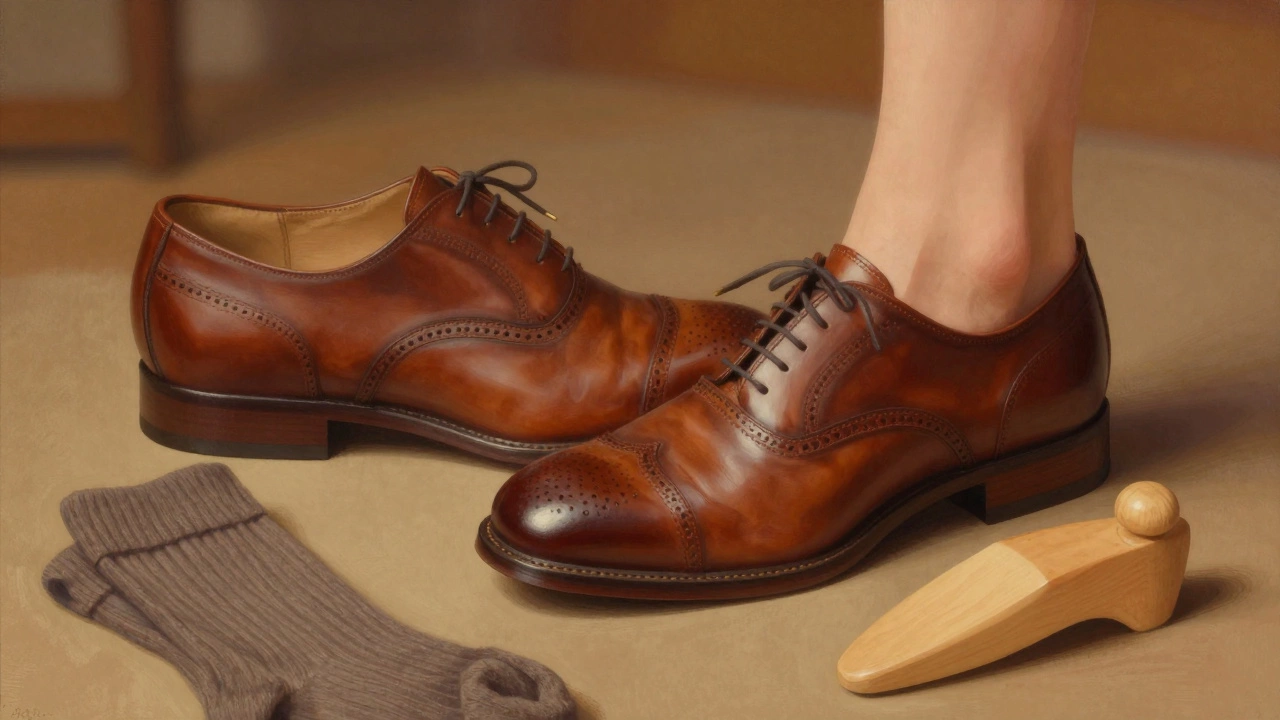
- Use shoe trees. Wooden shoe trees keep the shape while letting moisture escape. They help the leather relax evenly. Don’t skip this. Cheap plastic ones don’t do the same job.
- Apply leather conditioner. Use a light coat of neutral conditioner after the first week. It softens the fibers. Don’t overdo it-too much makes leather greasy.
- Wear thick socks. Put on two pairs of wool socks, lace up the shoes, and walk around for 20 minutes. The pressure helps stretch the leather where it needs to.
- Use a shoe stretcher. If you have a problem area-like a tight toe box-use a manual stretcher with adjustable pressure. It’s a one-time fix that saves weeks of discomfort.
One thing to avoid: the microwave trick. Or the hair dryer trick. Or soaking them in water. These methods ruin the leather’s structure. They might feel soft now, but they’ll crack in six months.
Signs Your Shoes Are Breaking In (And When to Stop)
Here’s what to look for as your shoes change:
- Less pain: The sharp rubs turn into mild pressure. Blisters stop forming.
- More flexibility: The sole bends easier when you walk. The upper moves with your foot.
- Better fit: You notice your foot isn’t sliding, but it’s not squeezed either.
If after 4 weeks you’re still in pain? Something’s wrong. Maybe the shoe doesn’t fit your foot shape. Maybe it’s a bad last. Maybe you picked a style that just doesn’t suit you. That’s okay. Not every pair is meant to be worn. Don’t force it.
What Happens If You Don’t Break Them In?
Skipping the break-in period isn’t just uncomfortable-it’s risky. You might get:
- Blistered heels
- Ingrown toenails from constant pressure
- Plantar fasciitis from poor arch support
- Permanent creases or splits in the leather
One man in York bought a pair of handmade brogues, wore them for a 10-mile walk on his first day, and ended up in the podiatrist’s office. He didn’t break them in. He broke his foot.
Long-Term Care After Break-In
Once they’re comfortable, they’re not done. Leather shoes need ongoing care. Every 3-4 weeks, clean them with a damp cloth. Every 2 months, apply conditioner. Store them with shoe trees. Rotate them-don’t wear the same pair every day. Leather needs to rest, dry out, and recover.
Good leather shoes last 5-10 years. Bad ones last 6 months. The difference? How you treat them during break-in and beyond.
Real-World Timeline: What to Expect
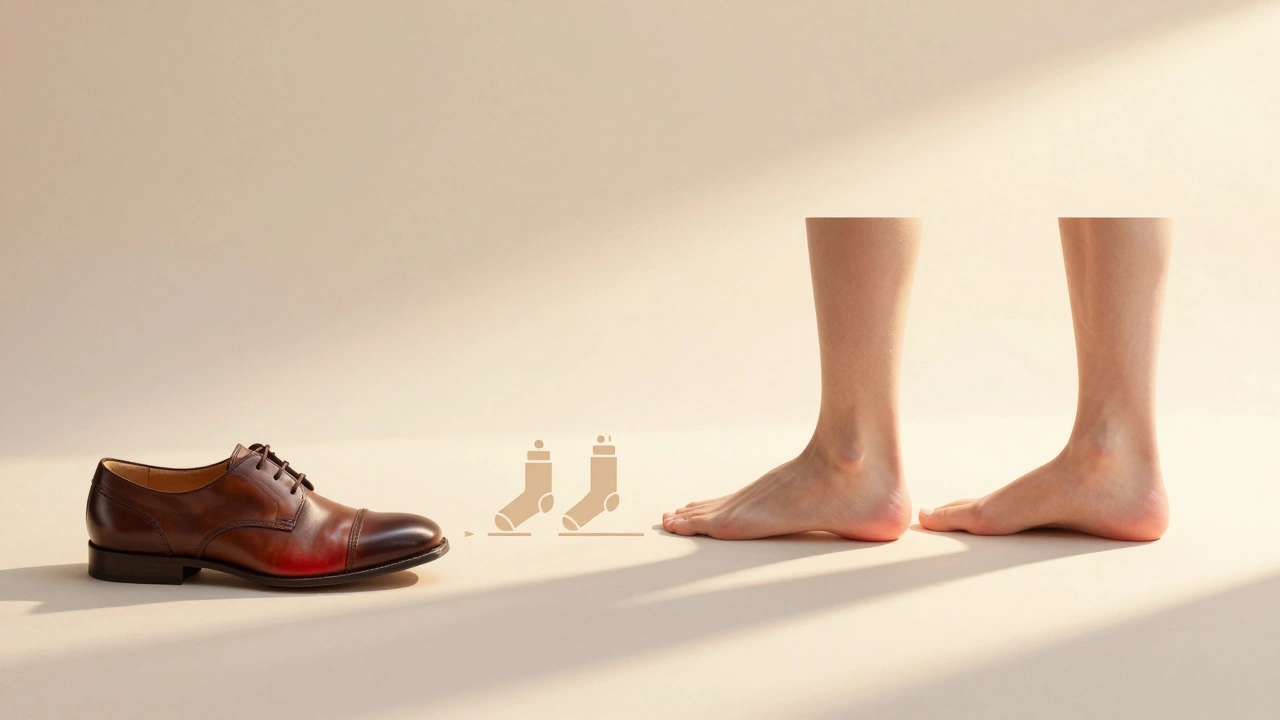
Here’s a practical breakdown based on real use:
| Time | What Happens | What to Do |
|---|---|---|
| Day 1-3 | Stiff, tight, uncomfortable | Wear 30-60 minutes at home |
| Day 4-7 | Mild pressure, some rubbing | Use thick socks, apply conditioner |
| Week 2 | Less pain, more flexibility | Start wearing outdoors, 2-3 hours a day |
| Week 3 | Comfortable for daily wear | Use shoe trees, rotate with other shoes |
| Week 4 | Perfect fit, no discomfort | Enjoy. Maintain with regular care |
Some people say it takes 6 weeks. Others say 10 days. The truth? Most people get there in 3 weeks if they’re consistent.
When to Give Up on a Pair
Not every pair will love you back. If after 4 weeks:
- You still get blisters
- Your toes feel crushed
- The arch support feels wrong
- You dread putting them on
It’s not you. It’s the shoe. Maybe the brand doesn’t fit your foot shape. Maybe it’s a poor cut. Maybe you bought them based on looks, not fit. That’s okay. Leather shoes are an investment-but not every investment pays off. Walk away. Try another pair.
There’s a reason people say, "Buy shoes that feel good on day one." It’s not a myth. It’s wisdom. But if you’ve already bought them? Give them time. Be patient. Your feet will thank you.
Do leather shoes get more comfortable over time?
Yes, but only if they’re made from quality leather and fit your foot shape. The fibers soften, the insole compresses, and the upper stretches to match your foot’s contours. Poorly made shoes may never feel comfortable, no matter how long you wear them.
Can you break in leather shoes in a week?
It’s possible, but rare. You’d need to wear them 4-6 hours a day, use thick socks, apply conditioner, and use a shoe stretcher. Most people need at least 2 weeks. Rushing it can cause damage to the leather or your feet.
Is it normal for new leather shoes to rub your heels?
Yes, especially in the first few days. The heel counter is stiff and hasn’t molded to your foot yet. Use heel pads, wear thick socks, or rub a bit of petroleum jelly on the area. It usually stops after 5-7 days of regular wear.
Should I wear my new leather shoes every day to break them in faster?
Not every day. Leather needs to dry out. Wear them for 3-4 hours a day, 4-5 days a week. Let them rest overnight with shoe trees. This prevents cracking and speeds up the process.
Do I need to use shoe trees for leather shoes?
Yes, especially during break-in. Wooden shoe trees help the leather retain its shape while it softens. They also absorb moisture and prevent odor. Plastic ones don’t work as well. If you care about your shoes, invest in proper ones.
Final Thought
Leather shoes aren’t just footwear-they’re a partnership. You give them time. They give you comfort, style, and years of wear. Don’t rush it. Don’t force it. Just wear them, care for them, and let them become yours. That’s the real magic of good leather.