
Boot Sizing Estimator
Enter your usual sneaker or dress shoe size below to get a recommended boot size adjustment. Remember to always try boots on in the evening with the socks you plan to wear.
Recommendation
Standard Size
--
Recommended Boot Size
--
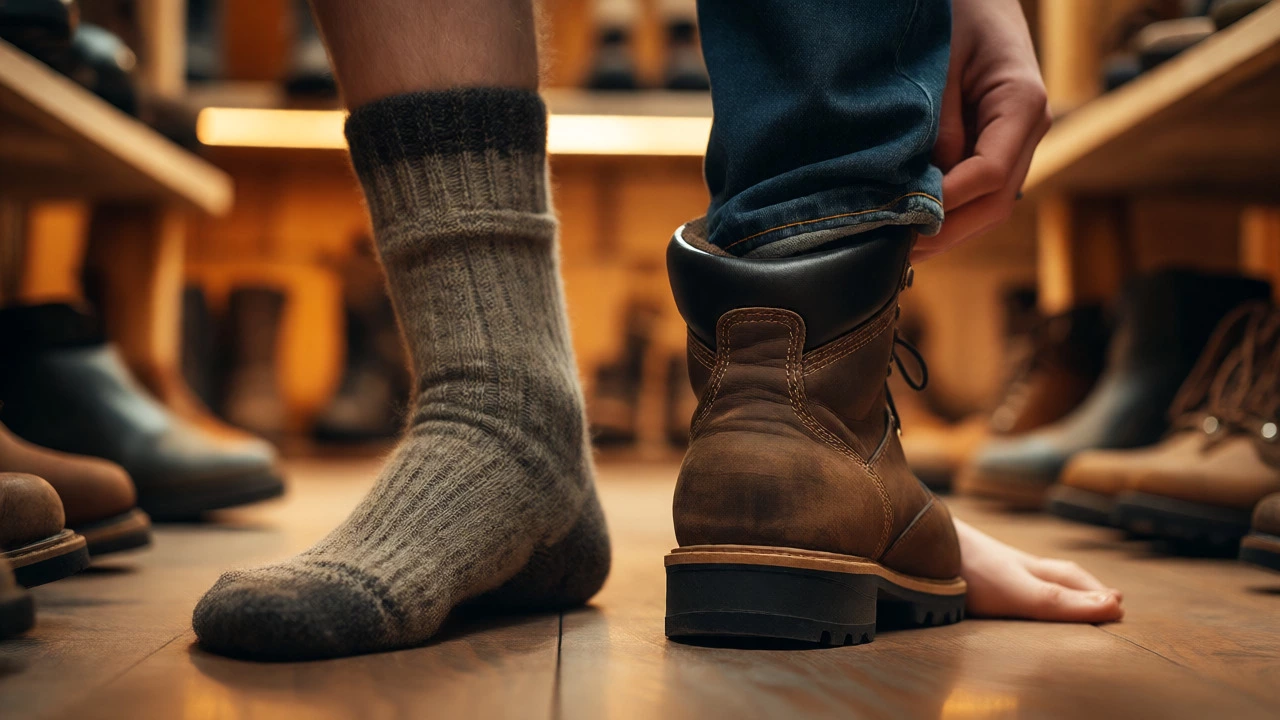
You know that sinking feeling. You just bought a pair of boots that looked perfect on the shelf, but when you try them on at home, your toes are jammed against the front and your heel slips out with every step. It’s frustrating, expensive, and honestly, a bit confusing. So, do people size up in boots? The short answer is: it depends entirely on what kind of boots they are and how thick your socks will be. But there is a method to the madness.
If you’re standing in a fitting room right now, wondering if you should grab the next half-size up or stick with your usual sneaker size, this guide breaks down exactly what’s happening inside that leather casing. We’ll look at why some boots feel tiny while others feel like boats, and how to get that "just right" feel without guessing.
The Myth of One-Size-Fits-All Sizing
First off, let’s clear up a huge misconception: shoe sizing is not universal across footwear types. Your sneakers might be a US 8, but that doesn’t mean your cowboy boots will be an 8 too. In fact, for many traditional styles, sizing down is the norm, not sizing up. This happens because different manufacturers use different lasts-the wooden or plastic molds that shape the shoe. A last designed for a running shoe has more toe box volume than one designed for a sleek Chelsea boot.
When people ask if they need to size up, they are often comparing apples to oranges. They take their comfortable athletic shoe size and assume it applies to stiff, structured footwear. That’s where the pain starts. Athletic shoes are built with foam and mesh that stretch and compress. Leather boots, especially new ones, have zero give initially. If you buy a leather boot in your sneaker size, it might feel tight because the material hasn’t broken in yet. Does that mean you should size up? Not necessarily. It means you need to understand the break-in period.
Why You Might Need to Size Up
There are specific scenarios where going up a half-size or even a full size is the smart move. The biggest factor here is sock thickness. If you are buying winter boots intended for sub-zero temperatures, you aren’t wearing thin cotton ankle socks. You’re likely wearing wool or thermal blends that add significant bulk. If you buy a boot that fits perfectly with thin socks, it will cut off circulation once you layer up for the snow.
Another common reason to size up is foot swelling. Our feet naturally expand throughout the day due to gravity and activity. By late afternoon, your feet can be nearly half a size larger than they were first thing in the morning. If you try on boots early in the day and they feel snug, they might become painful by dinner time. Experts recommend trying on boots in the evening for this exact reason. If your foot feels cramped at 6 PM, you definitely need more room.
Then there’s the issue of bunions or high arches. Standard sizing assumes a relatively flat, narrow foot profile. If you have a bunion, the standard width (often labeled as 'B' or 'D') might pinch the joint regardless of length. While width adjustments are better solved by finding a wider brand, sometimes a slightly longer boot allows the foot to sit further back, relieving pressure on the sides. However, be careful-too much length causes heel slip, which leads to blisters.
When You Should Actually Size Down
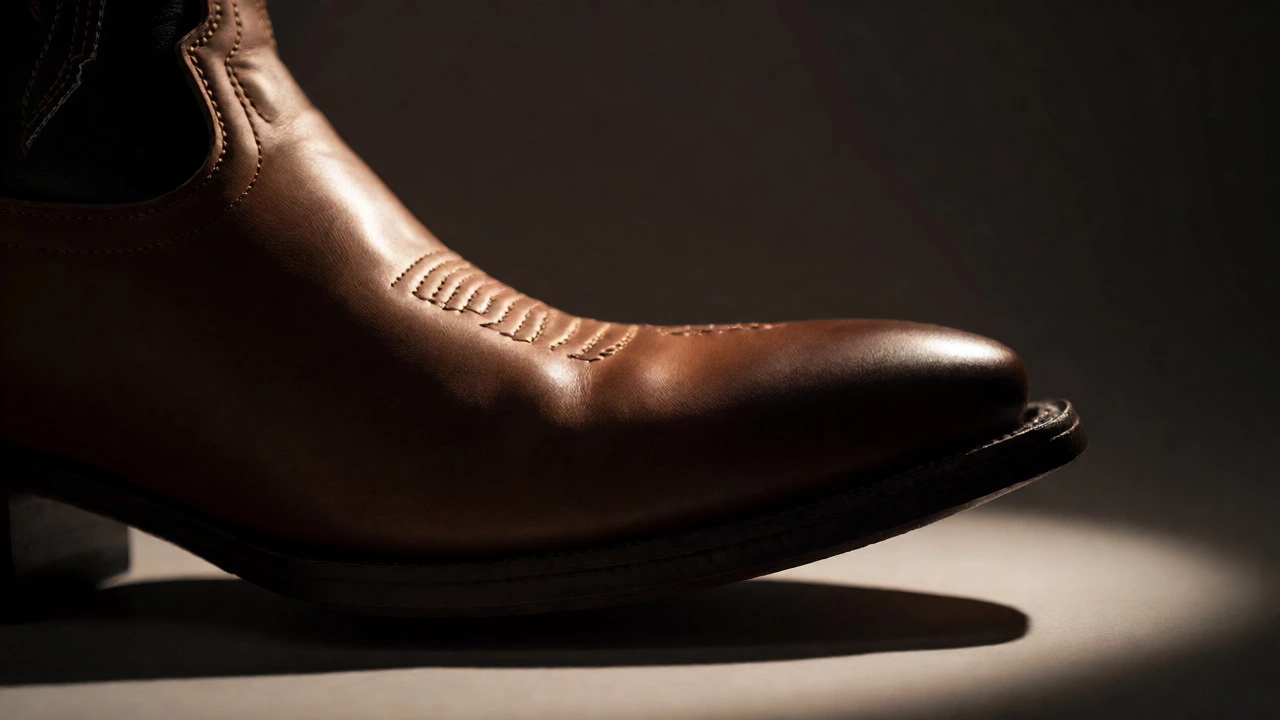
Here is the counter-intuitive part: for certain styles, you should actually go smaller. Take cowboy boots, for example. Traditional Western boots are constructed differently. They lack a tongue and rely on a tight fit around the instep to stay on your foot. If you wear your regular sneaker size in a pair of Lucchese or Ariat cowboy boots, you will likely find yourself walking on your heels because the boot slides off. Most cowboys wear a half-size smaller than their dress shoes. Why? Because the leather stretches significantly over time, molding to the foot. Starting too big guarantees a sloppy fit forever.
| Boot Style | Typical Adjustment | Reasoning |
|---|---|---|
| Cowboy/Western | Half-size down | Leather stretches; tight instep required for support. |
| Hiking/Tactical | Half-size up | Accommodates thick socks and foot swelling during hikes. |
| Chelsea/Suede | True to size | Elastic panels provide flexibility; minimal stretch needed. |
| Rain/Wellingtons | Half-size up | Non-stretch rubber requires space for air circulation and socks. |
| Dress Leather | True to size | Built on formal lasts that match standard shoe sizes closely. |
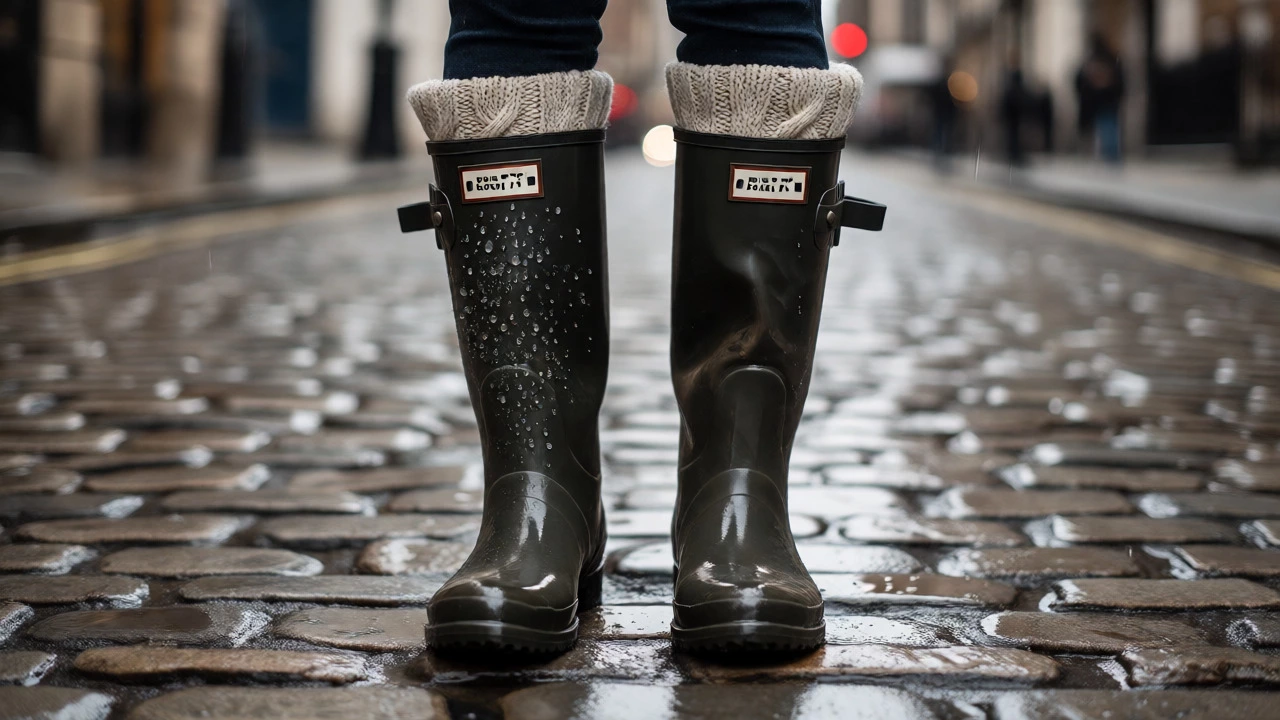
Rubber rain boots are another category where sizing up is crucial. Unlike leather, rubber does not stretch. Ever. If you buy a Hunter boot in your normal size, it will remain that size until it cracks. Since you usually wear thicker socks with rain gear, and because rubber traps heat (causing feet to swell), a little extra room prevents that sweaty, pinched sensation. Look for brands that offer specific width options, as standard rubber boots are often narrower than fabric ones.
The Break-In Period: Stretch vs. Pain
A lot of confusion comes from not distinguishing between "tight" and "painful." New leather boots should feel snug but not crushing. There is a difference between firm contact and sharp pressure points. High-quality full-grain leather will stretch about a quarter to a half size over the first few weeks of wear. This process is called breaking in. During this time, the fibers relax and conform to the unique contours of your foot.
If you size up immediately because the boot feels tight, you risk ending up with a shoe that is too loose once the leather gives way. A boot that is too long causes your foot to slide forward, banging your toes into the front on downhill walks. This leads to black toenails and bruising. The golden rule: Buy for the length you need, and allow the width to stretch. Never buy for the width you want if it compromises length.
How do you speed up the break-in? Wear them around the house for short periods. Use a leather conditioner to soften stiff areas. Some people use the freezer trick-filling bags with water inside the boot and freezing them so the expanding ice pushes the leather out. It works, but it’s risky if you overdo it. Patience is usually the best tool.
Width Matters More Than Length
Most people focus exclusively on length, checking if their toes touch the end. But boot width is often the real culprit behind discomfort. Standard women’s boots are typically a 'B' width, while men’s are 'D'. If you have wide feet, staying in your length size but choosing a wider model is far better than sizing up in length. A boot that is too long looks clunky and functions poorly, causing you to grip with your toes to keep it on, which tires your feet out quickly.
Look for brands that explicitly state width availability. Companies like Danner, Red Wing, and Ecco often provide multiple width options. If you can’t find a wide option, consider if the material has any elasticity. Suede and nubuck stretch more easily than polished calfskin. If you have wide feet and only have access to standard widths, suede might be your friend, allowing for a true-to-size fit that still feels comfortable after a few wears.
How to Test the Fit Properly
So, you’re in the store. What do you actually check? Don’t just stand there wiggling your toes. Do this:
- Wear the right socks: Bring the socks you plan to wear with the boots. If it’s a winter boot, bring wool socks. If it’s a summer sandal-boot hybrid, bring thin liners.
- Stand up: Your feet spread when you bear weight. Always assess fit while standing.
- Check the heel lock: Walk around. Your heel should stay firmly in place. If it lifts more than 1/8th of an inch, the boot is too big or the wrong shape for your foot.
- The finger test: With your foot fully inserted, try to slide your index finger between your heel and the back of the boot. It should be a snug squeeze. If it slides in easily, it’s too big. If you can’t get it in at all, it’s too small.
- Toe room: Press down on the top of the toe box. You should feel slight resistance from your longest toe, but no pain. There should be about a thumb's width of space between your longest toe and the end of the boot.
Remember, asymmetry is normal. Most people have one foot slightly larger than the other. Always fit the boot to your larger foot. The other foot can be padded with an insole if necessary, but you can’t shrink a boot that’s too small for your big toe.
Frequently Asked Questions
Do I need to size up in winter boots?
Generally, yes. Winter boots are designed to accommodate thicker thermal socks and account for foot swelling in cold weather. Going up a half-size is a safe bet for most insulated styles, especially if you plan to wear heavy wool socks. However, always try them on with those specific socks before deciding.
Should I size down in cowboy boots?
Yes, traditionally you should size down a half-size from your standard dress shoe size. Cowboy boots are made of stiff leather that stretches significantly over time. Starting with a snug fit ensures they mold to your foot properly. If they are too big initially, they will never fit correctly because the leather won't shrink back.
What if my boots are too big?
You can fix minor looseness with thicker insoles or heel grips. Heel grips stick to the inside back of the boot and reduce vertical movement. If the boot is excessively large, consider swapping it. Wearing boots that are too big alters your gait and can cause knee or hip pain over time.
Do leather boots stretch over time?
Yes, genuine leather stretches primarily in width and girth, not length. Expect about a quarter to a half-size worth of expansion in the upper area after several wears. Synthetic materials and rubber do not stretch meaningfully, so fit must be perfect at the point of purchase for those materials.
How do I know if boots are too tight?
Signs include numbness, tingling, or red marks that persist after removing the boot. You should feel snug, like a firm handshake, but not pinching. If your toes are crammed together or pressed against the front wall, the boot is too small. Pain that doesn't subside after a few minutes of wear is a bad sign.