
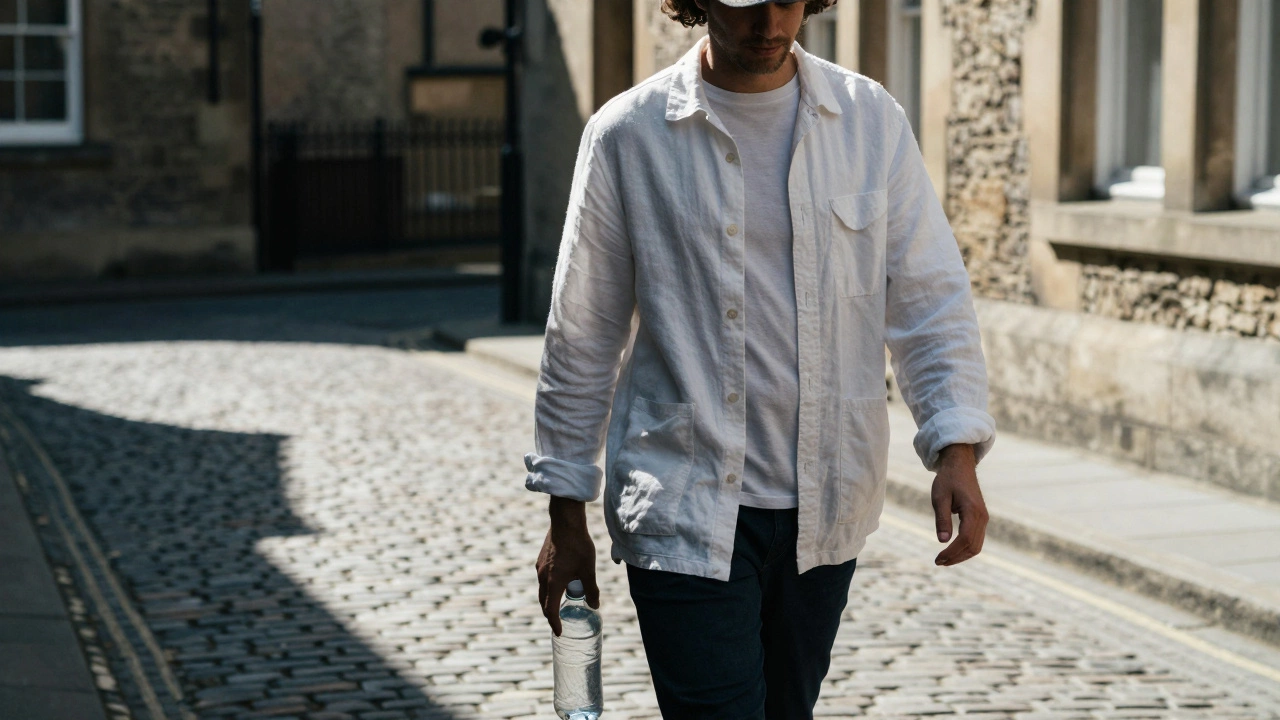
Summer Jacket Coolness Calculator
Find Your Perfect Summer Jacket
Based on physics: Light colors reflect sunlight while dark colors absorb heat. This calculator estimates how cool your jacket will be in summer conditions.
Your Jacket Coolness
When the sun hits hard and the air feels thick, your jacket shouldn’t make things worse. Many people assume jackets are for winter, but a lightweight outer layer is often necessary even in summer-for sun protection, sudden rain, or chilly evenings. The real question isn’t whether to wear one, but which color will keep you coolest.
Dark colors absorb heat. Light colors reflect it.
This isn’t just common sense-it’s physics. Dark fabrics like black, navy, or charcoal absorb up to 90% of visible light, turning it into heat. Light colors like white, cream, or pastel blue reflect most of that light. A study from the University of California, Davis found that a black cotton jacket can be 15-20°F hotter than a white one under direct sunlight. That’s not just uncomfortable-it can raise your core body temperature faster than you realize.
Think about walking down a city street in July. Someone in a black denim jacket is sweating before they even reach the corner store. Someone in a light beige linen jacket? They’re still cool enough to enjoy the breeze. It’s not magic. It’s simple light reflection.
Material matters more than you think
Color alone won’t save you if the fabric traps heat. A thick, synthetic black jacket in white might still feel like a sauna. The real winners are natural, breathable fibers: cotton, linen, hemp, and lightweight merino wool. These materials let air move through them and pull moisture away from your skin.
Linen, for example, has a loose weave that lets heat escape. It’s also naturally moisture-wicking-something you’ll notice if you’ve ever worn a linen shirt on a humid day. Cotton, especially in a loose twill or poplin weave, does the same. Even a thin cotton jacket can outperform a thin polyester one, no matter the color.
Avoid anything labeled "performance fabric" unless it’s explicitly designed for heat dissipation. Many so-called "breathable" synthetics are just thinner versions of plastic. They don’t breathe-they sweat.
Best colors for summer jackets
White is the clear winner. It reflects the most sunlight and feels noticeably cooler on the skin. But it’s not the only option. Here’s what works best, ranked:
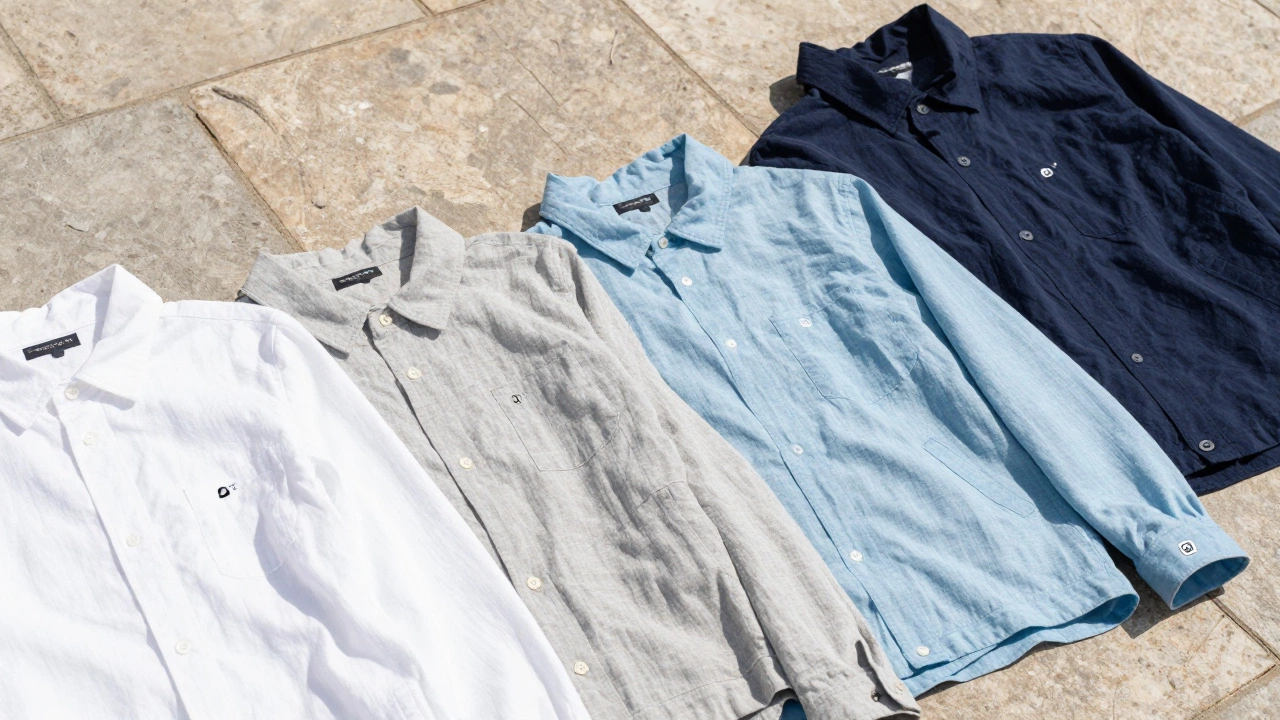
- White - Reflects 80-90% of sunlight. Best for high-heat, dry climates.
- Light gray - Reflects 60-70%. Less likely to show dirt than white.
- Pale blue - Reflects 50-60%. Calming visual effect, good for urban environments.
- Beige or khaki - Reflects 40-50%. Practical for everyday wear and blends well with other clothes.
- Light yellow or cream - Reflects 45-55%. Warm tones can feel inviting, but avoid if you’re in a dusty area.
Even light brown or olive green can work if the fabric is thin and loose. But avoid anything darker than medium gray. Once you hit charcoal or dark green, you’re losing the advantage.
Real-world examples
Take a trip to York in July. The streets are cobblestone, the sun bounces off buildings, and there’s little shade. Tourists in dark jackets are visibly wilting. Locals? They’re in light linen jackets over cotton tees, hats on, water bottles in hand.
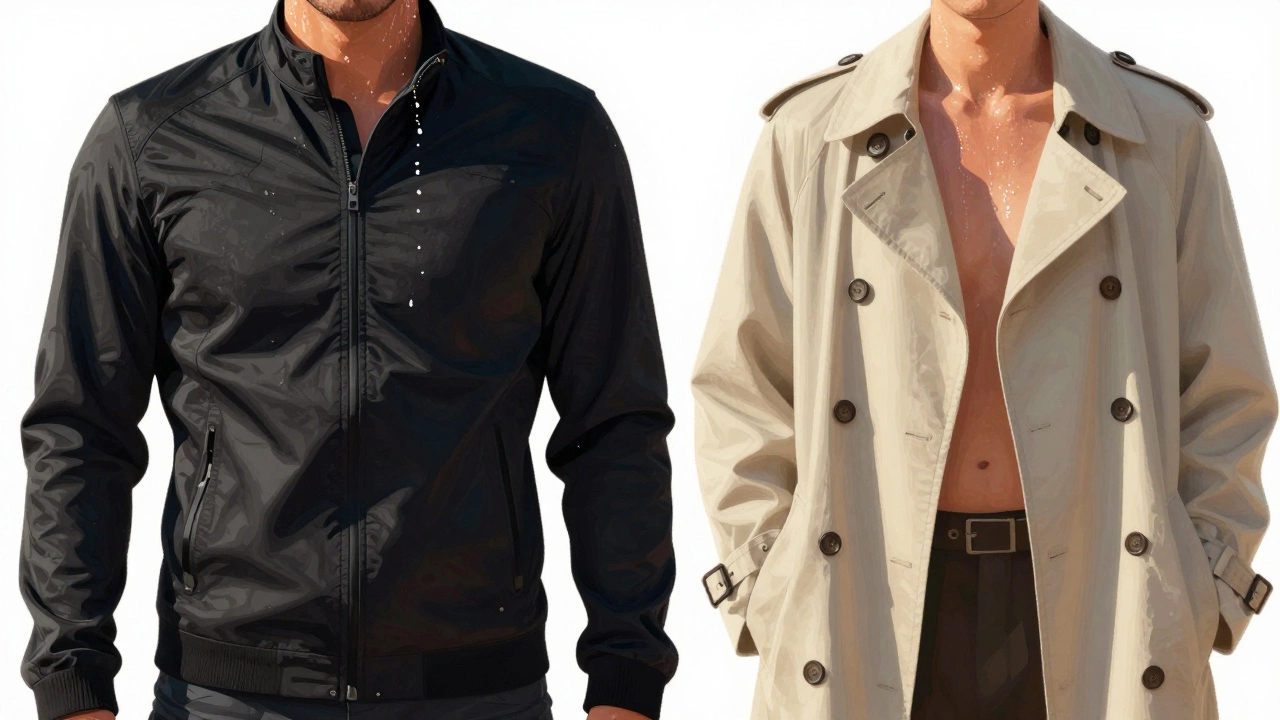
One summer, I watched a man in a black motorcycle jacket try to walk from the train station to the Minster. He stopped three times to wipe his neck. Meanwhile, a woman in a cream-colored cotton trench coat walked past him without breaking a sweat. She didn’t look fancy-just smart.
It’s not about fashion. It’s about survival. Your jacket is your first line of defense against heat buildup.
What about reflective or metallic finishes?
Some jackets come with silver or metallic coatings marketed as "heat-reflective." They look cool, but they’re not always practical. These finishes can peel, crack, or trap moisture underneath. They’re also more expensive and harder to clean.
Real heat reflection comes from simple, light-colored natural fibers-not shiny coatings. A plain white cotton jacket with a loose fit will outperform a $200 metallic jacket in most summer conditions.
Other tips to stay cool
Color and fabric are the big two, but don’t ignore the details:
- Go loose - Tight jackets trap heat against your skin. Choose styles with room for airflow.
- Short sleeves or roll-up cuffs - If you’re carrying a light jacket, make it easy to remove or adjust.
- Unbutton or unzip - Even a light jacket can be worn open. Let air circulate.
- Wear a hat - Reducing head heat means your body doesn’t have to work as hard to cool down.
- Carry water - No jacket can compensate for dehydration.
What to avoid
Steer clear of these common mistakes:
- Black or navy synthetic jackets
- Heavy denim or corduroy, even in light colors
- Waterproof or windproof jackets unless they’re specifically breathable (like Gore-Tex with mesh lining)
- Jackets with thick padding or insulation
- Dark colors with tight weaves
These might look stylish in a magazine, but they’re heat traps in real life. You’ll feel hotter, sweat more, and end up uncomfortable faster.
Bottom line: What to buy
If you need a summer jacket, look for:
- Color: White, light gray, pale blue, or beige
- Fabric: Linen, cotton, or lightweight hemp
- Fit: Loose, open weave, no lining
- Style: Button-front, zip-front, or open vest style
You don’t need to spend a lot. A simple cotton chore jacket in white from a local market can cost under £40 and last through several summers. It’s not about brand-it’s about function.
When the sun is high and the air is still, your jacket should be your ally, not your burden. Choose light, choose natural, choose smart. The heat will still be there-but you won’t have to feel it as much.
Is a white jacket too hot in direct sunlight?
No. White reflects the most sunlight, making it the coolest option. Even in direct sun, a white cotton or linen jacket stays significantly cooler than darker colors. The myth that white gets hot comes from confusing fabric type with color. A thick white polyester jacket might feel warm, but that’s because of the material-not the color.
Can I wear a light-colored jacket in the rain?
Yes, but only if it’s made from water-resistant natural fibers like waxed cotton or treated linen. A plain cotton jacket will soak through quickly. For rainy summers, look for jackets with a light water-repellent finish-not full waterproofing. That way, you stay dry without trapping heat.
Are there any colors I should avoid even if the fabric is light?
Yes. Avoid dark greens, browns, and grays-even if the fabric is cotton. These colors still absorb more heat than light tones. If you want to wear a darker color, make sure the cut is very loose and the fabric is ultra-thin, like a gauzy cotton. But for maximum cooling, stick to white, cream, or pale blue.
Do I need to buy a special "summer jacket" or can I use any light jacket?
You don’t need a "summer jacket" labeled as such. Many regular jackets are fine if they’re made from the right materials. Look for natural fibers, loose weaves, and light colors. A simple cotton shirt-jacket or unlined linen blazer works perfectly. Avoid anything with insulation, padding, or synthetic linings.
Does the jacket’s lining matter?
Absolutely. A lined jacket traps heat between the outer layer and your body. For summer, choose unlined or partially lined jackets. If it has a lining, make sure it’s made of breathable cotton or mesh-not polyester or satin. The less between you and the air, the cooler you’ll stay.