
Home Footwear Health Checker
Find the best footwear strategy for your home environment and physical needs.
Recommendation
Key Tips for Your Situation:
You stand up from your bed in the morning, feet hitting the cold floor. Do you slip into those plush memory-foam slippers immediately, or do you just walk across the room barefoot? It seems like a tiny choice, but it affects your posture, your skin, and even how tired your legs feel by evening. Most people pick one habit and stick with it without thinking twice. But if you have ever felt a sharp pain in your heel or noticed dry, cracked skin on your soles, the answer might be more complicated than "just wear shoes."
The debate between walking barefoot and wearing house slippers isn't about fashion. It is about biomechanics and hygiene. Neither option is universally "better." The right choice depends entirely on your flooring, your foot structure, and whether you have existing conditions like diabetes or plantar fasciitis.
Why Walking Barefoot Feels Good (And When It Hurts)
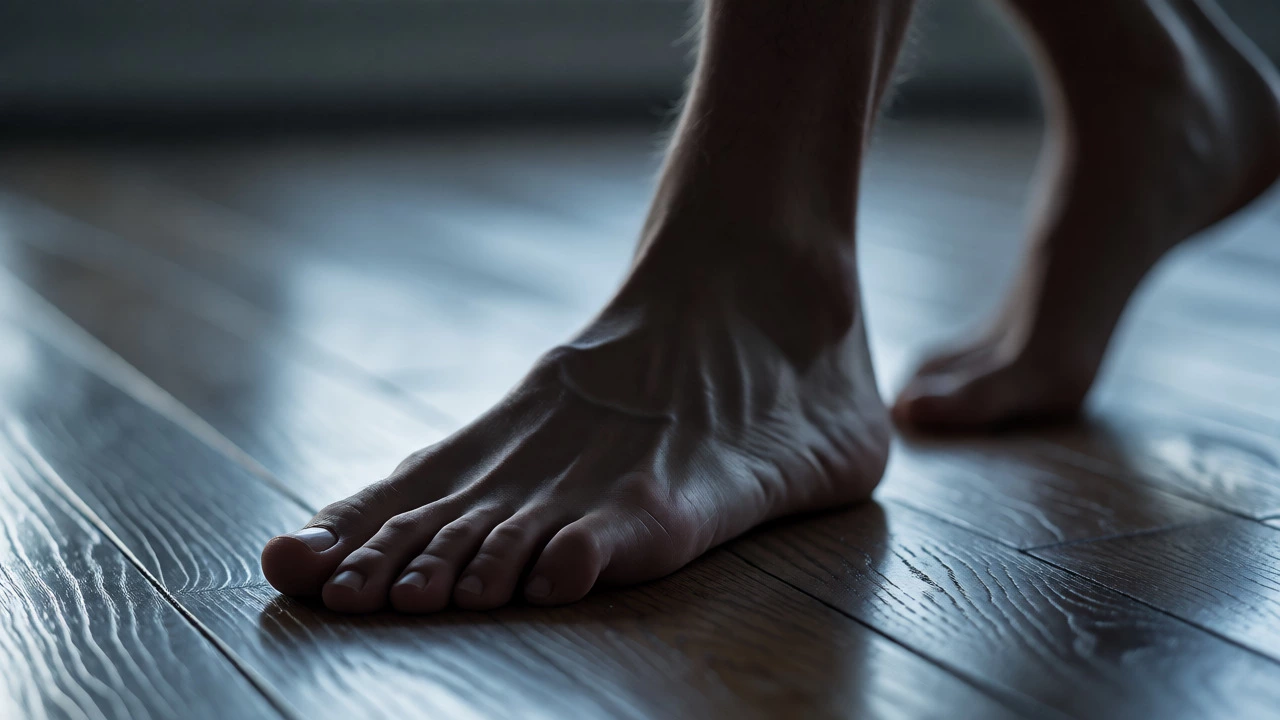
Barefoot walking stimulates the nerves in your soles. This sensory feedback helps your brain understand where your body is in space, a concept known as proprioception. When you walk barefoot on a flat surface, your toes spread out naturally. Your arches engage. Your calf muscles work differently than when they are locked inside a shoe. For many healthy adults, this natural movement strengthens the small intrinsic muscles of the foot over time.
However, modern homes aren't built for bare feet. Hardwood floors, tile, and laminate offer zero shock absorption. If you weigh 70kg, every step sends a jolt of impact straight up through your knees and hips. Without cushioning, this can aggravate joint issues. Furthermore, temperature plays a huge role. Cold floors constrict blood vessels, which can trigger cramps or discomfort for people with poor circulation. If you live in a drafty Victorian terrace in York, barefoot mornings might actually make your joints stiffer, not looser.
The Case for House Slippers: Protection and Warmth
House slippers act as a barrier. They protect your skin from cuts, splinters, and pet dander. More importantly, they provide thermal insulation. Keeping your feet warm encourages blood flow, which is crucial for healing and comfort, especially during winter months. Many orthopedic specialists recommend supportive slippers for anyone who spends hours standing in the kitchen or working at a desk chair with hard wheels that create uneven surfaces.
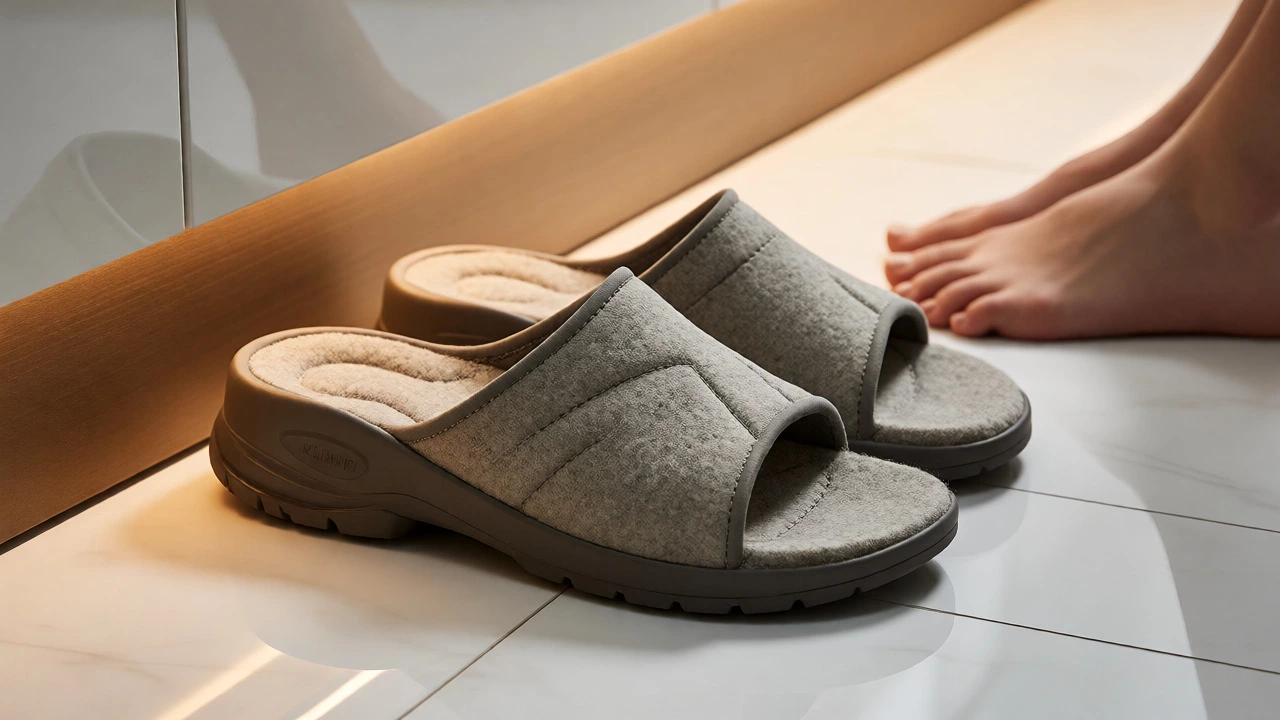
But not all slippers are created equal. Cheap foam slides often lack arch support. They can cause your feet to slide forward, leading to toe gripping-a subtle tension that causes fatigue. If your slippers are too soft, they don't stabilize your ankle. If they are too rigid, they restrict natural movement. The goal is to find a middle ground: a slipper that supports the arch without turning your foot into a cast.
Hygiene Risks You Can’t Ignore
Let's talk about germs. Bathrooms and kitchens are high-moisture zones. Walking barefoot in these areas exposes you to bacteria like Staphylococcus aureus and fungi responsible for athlete's foot. If you have small cuts or cracks in your heels, these pathogens enter easily. For diabetics, this is critical. Reduced sensation in the feet means you might not notice a blister until it becomes an infected ulcer. In this context, slippers are non-negotiable protective gear.
On the flip side, slippers trap sweat. If you wear the same pair for weeks without washing them, they become a breeding ground for odor-causing bacteria. Fungal infections thrive in dark, damp environments. A barefoot approach allows your skin to breathe and dry out completely after a shower. The key here is maintenance. Bare feet need cleaning; slippers need laundering.
Flooring Matters More Than You Think
Your environment dictates the best strategy. Here is a quick breakdown of common home surfaces:
- Hardwood and Laminate: These are unforgiving. Barefoot walking here increases impact stress on heels. Supportive slippers with a rubber sole are usually better unless you are doing specific barefoot exercises.
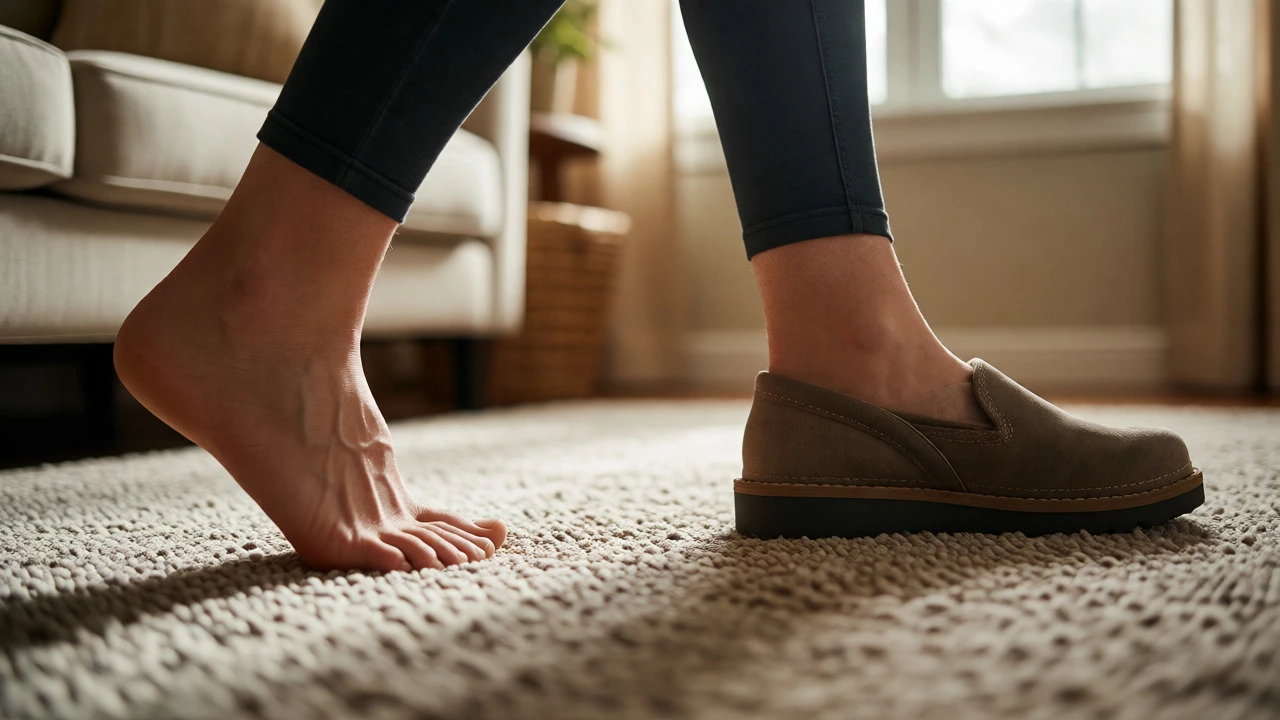
- Carpets and Rugs: These offer some cushioning. Walking barefoot is generally safe and comfortable here. However, deep-pile carpets can hide dust mites and allergens, so vacuum regularly if you have allergies.
- Tile and Stone: Often found in kitchens and bathrooms. These are cold and slippery. Barefoot walking risks slips and falls, especially for older adults. Non-slip slippers are essential for safety.
- Concrete Garages/Basements: Extremely cold and hard. Always wear footwear here to prevent heat loss and joint strain.
Who Should Avoid Going Barefoot?
If you fall into any of these categories, keep the slippers on most of the day:
- People with Diabetes: Peripheral neuropathy reduces feeling. You won't feel a stone or a hot spot until damage is done.
- Those with Plantar Fasciitis: While some stretching helps, walking barefoot on hard floors can tighten the fascia further. Supportive footwear keeps the tissue relaxed.
- Individuals with Flat Feet (Overpronation): Without external support, your ankles may roll inward excessively, causing knee and hip pain.
- Elderly Adults: Balance decreases with age. Slippers reduce trip hazards from loose rugs and improve stability.
How to Choose the Right Slipper
Not all slippers help. Some hurt. When shopping, look for these three features:
| Feature | Why It Matters | What to Look For |
|---|---|---|
| Arch Support | Distributes weight evenly, reducing strain on the plantar fascia. | A contoured footbed, not just flat foam. |
| Sole Rigidity | Prevents twisting injuries and provides stability. | A firm outer sole with slight flexibility. |
| Material Breathability | Reduces sweat and fungal risk. | Natural fibers like cotton, wool, or leather lining. |
| Heel Counter | Holds the back of the foot in place. | A closed-back design is better than open slides for long wear. |
Open-toe slides are fine for short trips to the kitchen, but if you are moving around for hours, choose a slip-on with a secure fit. Avoid backless mules if you have weak ankles, as they force your toes to grip to keep the shoe on.
A Balanced Approach: The Hybrid Method
You don't have to pick one forever. Try alternating based on activity. Walk barefoot on clean carpets for 15-20 minutes in the evening to stretch your toes and relax your feet. Wear supportive slippers when cooking, cleaning, or walking on hard surfaces. This gives you the benefits of both: muscle engagement from barefoot time and protection/cushioning from footwear.
Listen to your body. If your heels ache after being barefoot, switch to slippers. If your feet feel numb or sweaty in slippers, go barefoot for a bit. There is no single rule for everyone, only what works for your physiology and your home environment.
Is walking barefoot good for plantar fasciitis?
It depends on the stage of the condition. Gentle barefoot stretching can help loosen tight calves, but walking barefoot on hard floors often worsens pain by increasing tension on the plantar fascia. Most podiatrists recommend wearing supportive slippers indoors until inflammation subsides.
Can wearing slippers cause bunions?
Poorly fitted slippers can contribute to bunion development. If the toe box is too narrow or the slipper forces your toes to curl to stay on, it alters your gait. Over time, this pressure can push the big toe joint outward. Choose slippers with a wide, rounded toe area.
How often should I wash my house slippers?
Wash machine-washable slippers every two to four weeks. If you sweat heavily or walk outside in them, wash them weekly. For non-washable materials, wipe the interior with disinfectant wipes and let them air out daily to prevent bacterial buildup.
Are memory foam slippers bad for your feet?
Memory foam offers comfort but lacks structural support. It compresses quickly and doesn't rebound fast enough to aid propulsion. For short-term relaxation, they are fine. For all-day wear, they can lead to foot fatigue because your muscles have to work harder to stabilize the unstable surface.
Does going barefoot strengthen feet?
Yes, moderate barefoot activity strengthens the intrinsic muscles of the foot and improves balance. However, sudden changes in activity level can cause injury. Start with short durations on soft surfaces before progressing to harder floors.