

Remember when ripped jeans were the ultimate rebellion? Teenagers everywhere were sneaking into stores to buy pre-distressed denim, and parents were losing their minds over the holes. Now, six years into the 2020s, you walk down any city street and see them everywhere - from office workers in tailored blazers to grandmas at the farmers’ market. So, are ripped jeans outdated? Or did they just grow up?
The Rise and Fall (and Rise Again) of Ripped Denim
Ripped jeans exploded in the early 2010s. By 2015, they were on runways from Chanel to Zara. Designers were hand-sanding knees, slashing thighs, and even adding lace trim to frayed hems. They weren’t just clothing - they were a statement. But by 2020, the trend started to feel tired. Fast fashion had overdone it. You couldn’t open Instagram without seeing the same five styles: one knee tear, two thigh rips, frayed cuffs. People got bored. Some called them a relic.
Then something changed. Not because designers revived them, but because people stopped caring about trends and started caring about comfort and individuality. Ripped jeans didn’t disappear. They evolved.
What Ripped Jeans Look Like in 2026
In 2026, ripped jeans aren’t about shock value. They’re about texture. The holes aren’t random. They’re intentional. A single, clean tear just above the knee. A subtle fray along the hem that catches the light. A few small, uneven snags on the back pocket - not enough to show skin, just enough to look lived-in.
Brands like Levi’s, Everlane, and even high-end labels like Madewell have shifted to artisanal distressing. They use laser tech to create micro-tears that mimic years of wear. No glue. No bleach. Just fabric that looks like it’s been through a dozen laundry cycles and a few good hikes.
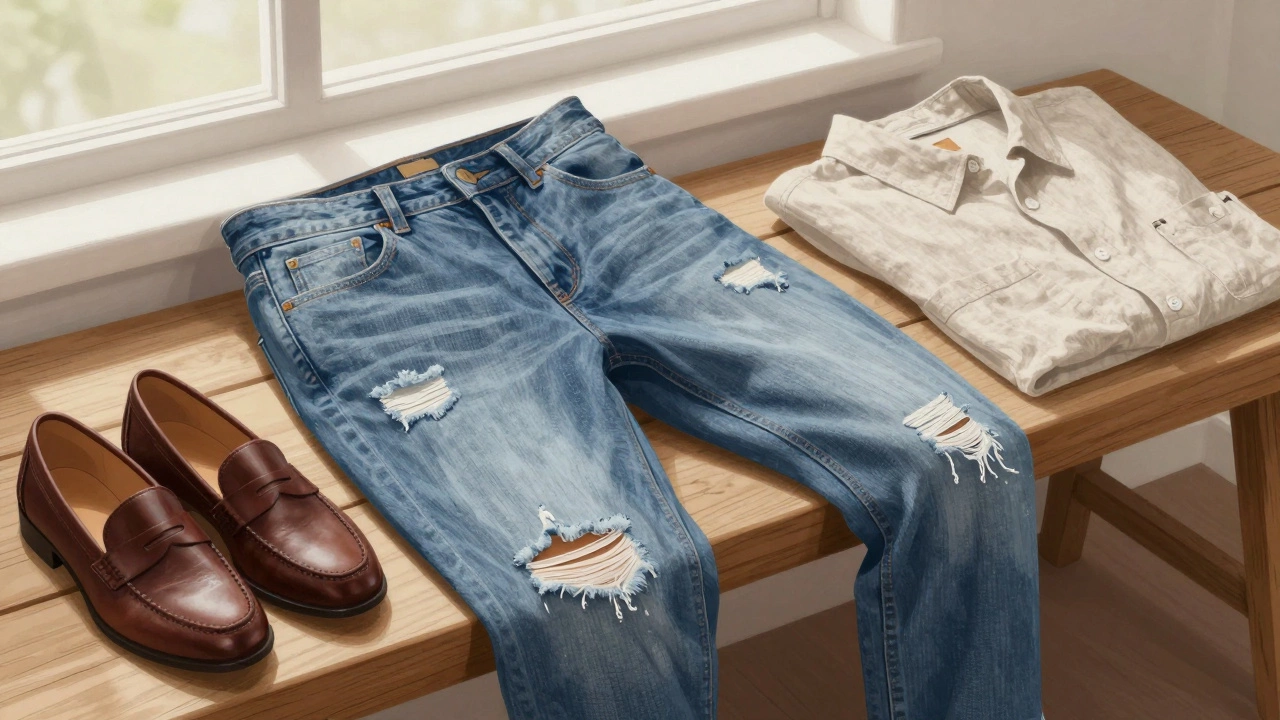
And the styles? They’re not all skinny. Wide-leg, straight, and even slightly baggy ripped jeans are dominating. The key isn’t the cut - it’s the balance. A pair of wide-leg ripped jeans paired with a crisp white shirt and loafers looks more polished than a pair of pristine black jeans with a hoodie.
Who’s Wearing Them Now?
If you think ripped jeans are only for Gen Z, you’re wrong. A 2025 survey by Fashion Revolution found that 68% of people aged 35-55 own at least one pair. Why? Because they’re versatile. They work with blazers, with sweaters, with heels, with sneakers. They’re the only pair of jeans that can go from a coffee run to a gallery opening without changing.
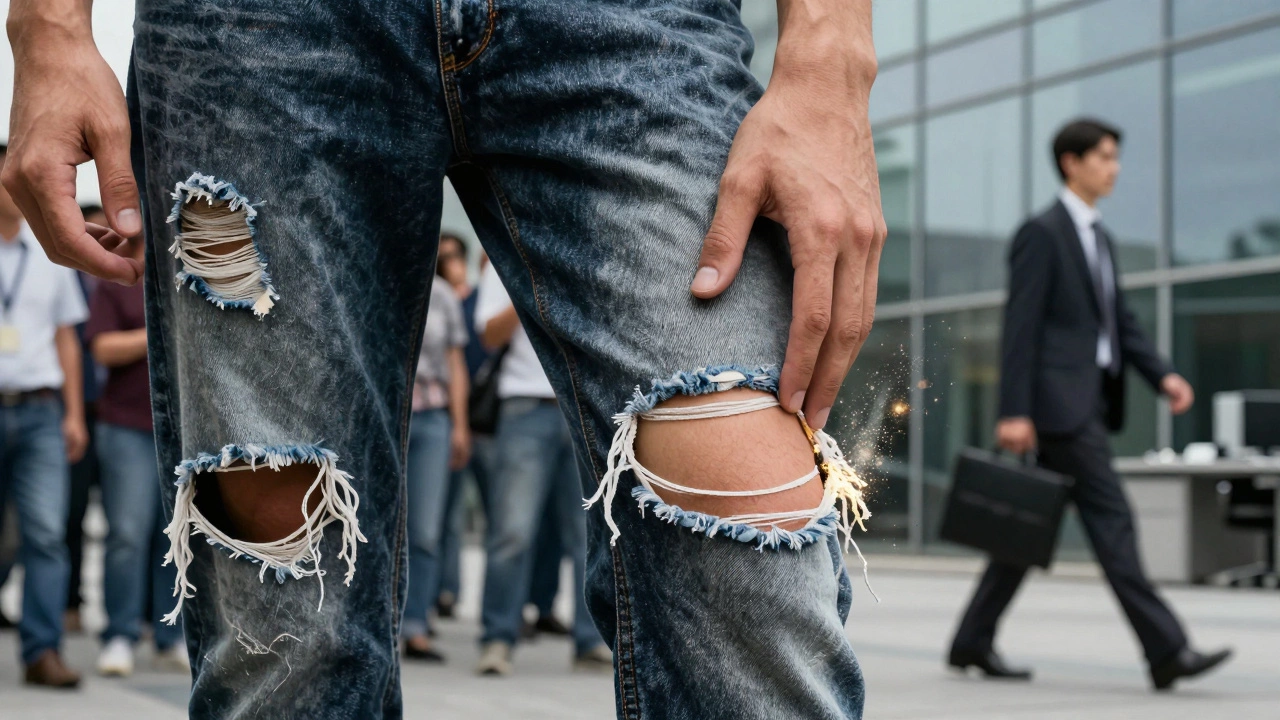
Office workers in New York and Berlin are swapping their straight-leg jeans for ripped ones. Not because they’re trying to be edgy - because they’re trying to look relaxed without looking lazy. The holes signal effortlessness. They say, “I didn’t try too hard, but I tried.”
Even in conservative workplaces, the rules have loosened. A 2024 report from HR Analytics showed that 41% of U.S. companies with “business casual” policies now explicitly allow “minimal, tasteful denim distressing.” That’s a huge shift from five years ago.
Why Ripped Jeans Still Work
Here’s the truth: jeans are the only garment that can be both casual and sophisticated. Ripped jeans are the bridge. They soften formal looks. They add edge to minimalist outfits. They turn a plain white tee into a statement.
They’re also durable. A well-made pair of ripped jeans lasts longer than a pair of pristine jeans - because you don’t treat them like they’re fragile. You don’t worry about spills or wrinkles. You throw them on. You live in them. That’s the whole point.
And let’s talk about sustainability. Brands that distress jeans with lasers use 90% less water than traditional sandblasting. They also produce less waste. Ripped jeans aren’t just a style - they’re a smarter choice.
When Ripped Jeans Don’t Work
They’re not for everyone. If you’re going to a job interview at a law firm, a bank, or a corporate boardroom, skip them. The same goes for formal events - weddings, funerals, or upscale dinners. You don’t need to be perfect, but you do need to match the energy of the room.
Also, avoid overdoing it. Three big holes in the thighs? A shredded hem that looks like it was attacked by a cat? That’s not cool anymore. It looks like you gave up. The goal is subtle imperfection, not destruction.
And if your jeans are falling apart at the seams? That’s not a style - that’s a repair job waiting to happen. Ripped jeans are designed to look worn, not broken.
How to Style Ripped Jeans in 2026
- Pair them with a tucked-in button-down and loafers for a smart-casual look.
- Wear them with a chunky knit sweater and ankle boots for weekend errands.
- Try them with a longline coat and heeled mules - the contrast makes the jeans look intentional.
- Don’t match the color of your top to the denim. White, cream, gray, and black all work better than matching blue.
- Roll the cuffs once. Twice looks forced.
And if you’re not sure? Start small. A single tear on the right knee. That’s enough. You don’t need to go all in.
The Real Reason They’re Still Here
Ripped jeans aren’t popular because they’re trendy. They’re popular because they’re honest. They don’t pretend to be perfect. They don’t hide wear and tear - they celebrate it. In a world that pushes us to look flawless, ripped jeans are a quiet act of resistance.
They’re not outdated. They’re mature. They’ve outlasted the hype. They’ve moved beyond the trend cycle. And that’s why they’re still in your closet - and your life.
Are ripped jeans professional?
It depends on the workplace. In creative fields, startups, and casual offices, yes - especially if the rips are minimal and clean. In traditional industries like finance or law, they’re still risky. When in doubt, choose a pair with just a slight fray at the hem - it reads as polished, not rebellious.
Do ripped jeans make you look younger?
Not necessarily. What matters is how you style them. Oversized, heavily ripped jeans with sneakers can look teenage. But a pair with a single knee tear, tucked into a tailored shirt and loafers, looks confident and timeless - no matter your age.
How do I fix ripped jeans that are too ripped?
Use denim patches on the inside. Brands like Mending Kit and Darn It offer pre-colored patches that blend with common denim shades. Sew them in by hand with matching thread - it looks intentional, not broken. Or take them to a tailor. Many now offer “reverse distressing” - reinforcing tears to make them look controlled.
Are ripped jeans sustainable?
Compared to traditional distressing methods like sandblasting, yes. Modern laser distressing uses almost no water and no chemicals. But sustainability also depends on the brand. Look for certifications like GOTS or B Corp. Ripped jeans made from recycled cotton or organic denim are the best choice.
Should I buy ripped jeans or just cut my own?
Buy them. Pre-distressed jeans from reputable brands are engineered to fray naturally over time. DIY rips often look uneven and wear out faster. Plus, you risk ruining a good pair. If you want customization, start with a pair that has light distressing and add subtle tears yourself - but only after you’ve worn them for a few months.