
Activewear vs Sportswear Quiz
Find Your Perfect Apparel Category
Answer these questions to discover whether you need activewear or sportswear for your activities.
Answer the questions above to see your results.
People often use the words activewear and sportswear like they mean the same thing. You see them side by side in stores, online, and even in ads. But if you dig a little deeper, they’re not interchangeable. One is built for movement. The other is built for competition. And the difference matters-especially if you’re shopping for performance, comfort, or durability.
What is sportswear?
Sportswear is clothing designed for specific sports. Think soccer jerseys, baseball caps, tennis skirts, or golf polos. These pieces follow rules. They’re made to meet league standards. A basketball uniform has to allow for quick cuts, but it also needs to display team logos clearly. A swimwear suit must comply with FINA regulations for drag reduction. Sportswear is about function and identity.
Brands like Nike, Adidas, and Under Armour make sportswear for professional athletes and teams. It’s often high-tech-moisture-wicking fabrics, compression zones, aerodynamic seams. But it’s also tied to performance outcomes. A runner doesn’t just wear a racing singlet for comfort; they wear it because it’s been tested in wind tunnels and approved for competition.
What is activewear?
Activewear is for movement-not competition. It’s the leggings you wear to the gym, the hoodie you throw on after yoga, the shorts you hike in on the weekend. It doesn’t have to meet any official rules. It’s not designed for a scoreboard. It’s designed for your daily life.
Activewear blends comfort with style. Brands like Lululemon, Athleta, and Sweaty Betty focus on soft fabrics, flattering cuts, and colors that work beyond the gym. You can wear activewear to run errands, grab coffee, or meet friends. It’s wearable fashion with performance features. No one’s checking if your yoga pants have the right seam tension. They’re just checking if they look good.
Key differences in design and purpose
The confusion comes from overlap. Both use stretchy, breathable materials. Both often have moisture-wicking tech. But their priorities are different.
Sportswear is built for:
- Regulated performance (rules, standards, certifications)
- High-intensity, repetitive motion (sprinting, swinging, diving)
- Team identity (logos, numbers, colors)
- Short-term use (worn during the game or event)
Activewear is built for:
- All-day comfort (worn for hours, not just 90 minutes)
- Mixed activities (gym, walk, work, errands)
- Personal style (color, fit, aesthetics matter)
- Long-term durability (washed weekly, worn 5+ times a week)
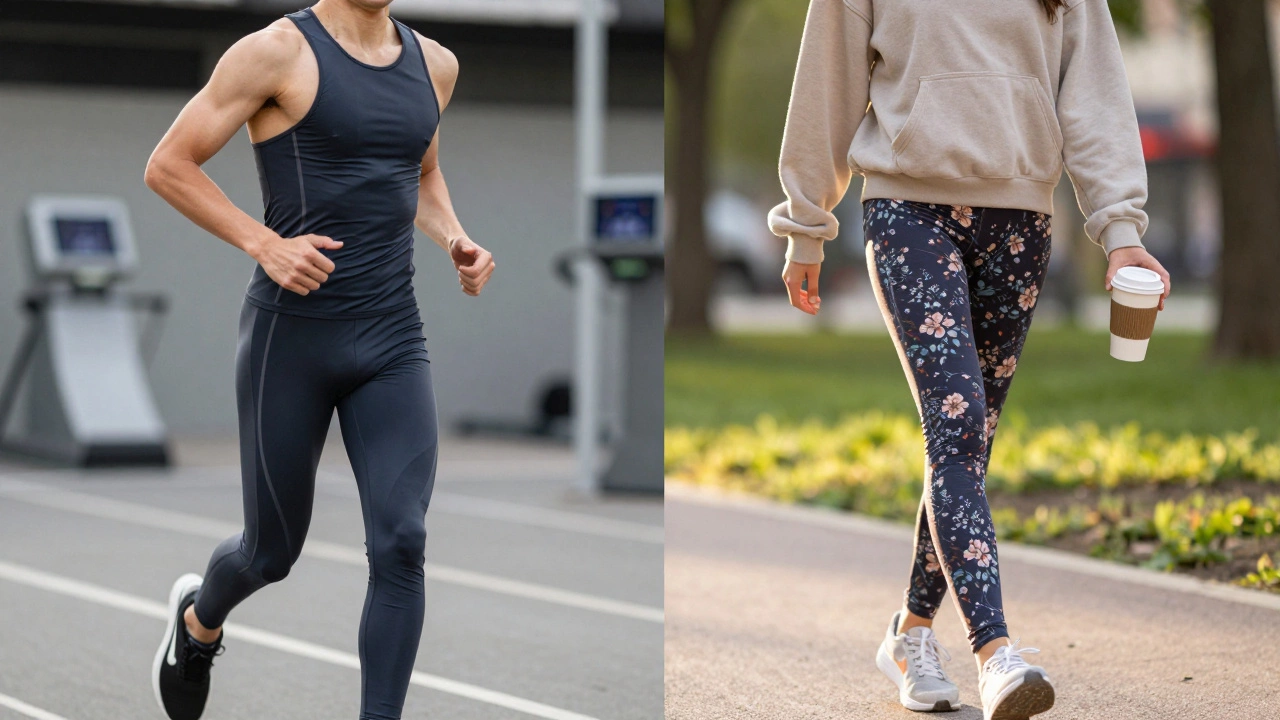
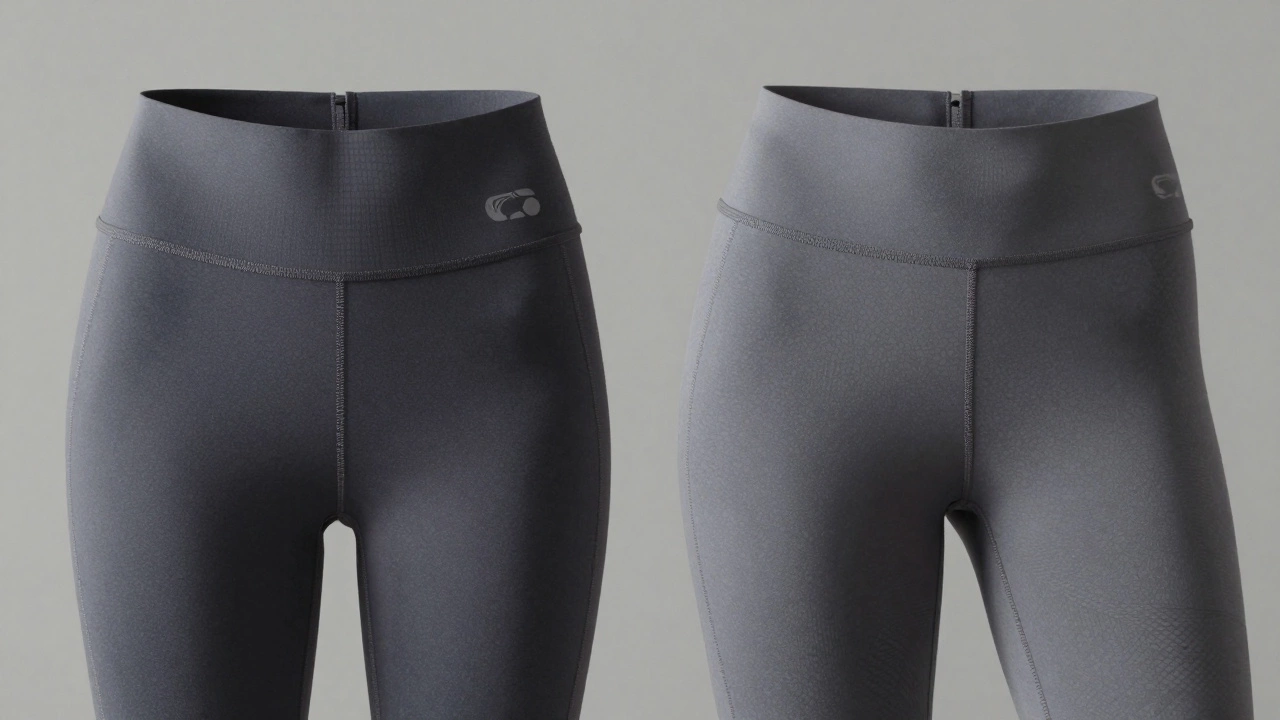
Take leggings. A pair of sportswear leggings for track and field will have flat seams to prevent chafing during sprints, a high-rise waist for stability during jumps, and a tight, compression fit to reduce muscle vibration. A pair of activewear leggings? They might have the same fabric-but the waistband is softer, the fit is looser, and the pattern is floral or geometric because it’s meant to be seen outside the gym.
Material and technology: similar, but not the same
Both categories use polyester, nylon, spandex, and blends. But how they’re engineered differs.
Sportswear often uses:
- Compression-grade fabrics (30%+ spandex for muscle support)
- Seamless knitting for reduced friction
- UV-blocking treatments (for outdoor sports like cycling or tennis)
- Water-repellent coatings (for rowing, sailing, skiing)
Activewear leans into:
- Soft-touch finishes (for skin comfort)
- Thermal regulation (to keep you warm during cool-downs)
- Odor-resistant treatments (for daily use, not just one workout)
- Stretch with recovery (so they don’t bag out after six washes)
That’s why a $120 pair of sportswear running tights might feel too tight or restrictive for all-day wear. And why a $40 pair of activewear leggings might not hold up under the stress of a 10K race.
Who buys what-and why
If you’re a competitive runner, cyclist, or swimmer, you need sportswear. It’s not a preference-it’s a requirement. Your gear affects your performance, safety, and even eligibility in races.
If you’re someone who works out three times a week, walks the dog, and wants to look put-together while doing it, activewear is your daily uniform. You don’t need a race bib. You need a pair of pants that don’t ride up, don’t show sweat marks, and don’t make you feel like you’re wearing a uniform.
There’s also a cultural shift. In 2025, over 68% of adults in the UK reported wearing activewear outside the gym at least once a week, according to a survey by the British Retail Consortium. That’s not just trend-it’s lifestyle. Sportswear hasn’t disappeared, but it’s no longer the default for everyday movement.
When they overlap-and why it confuses people
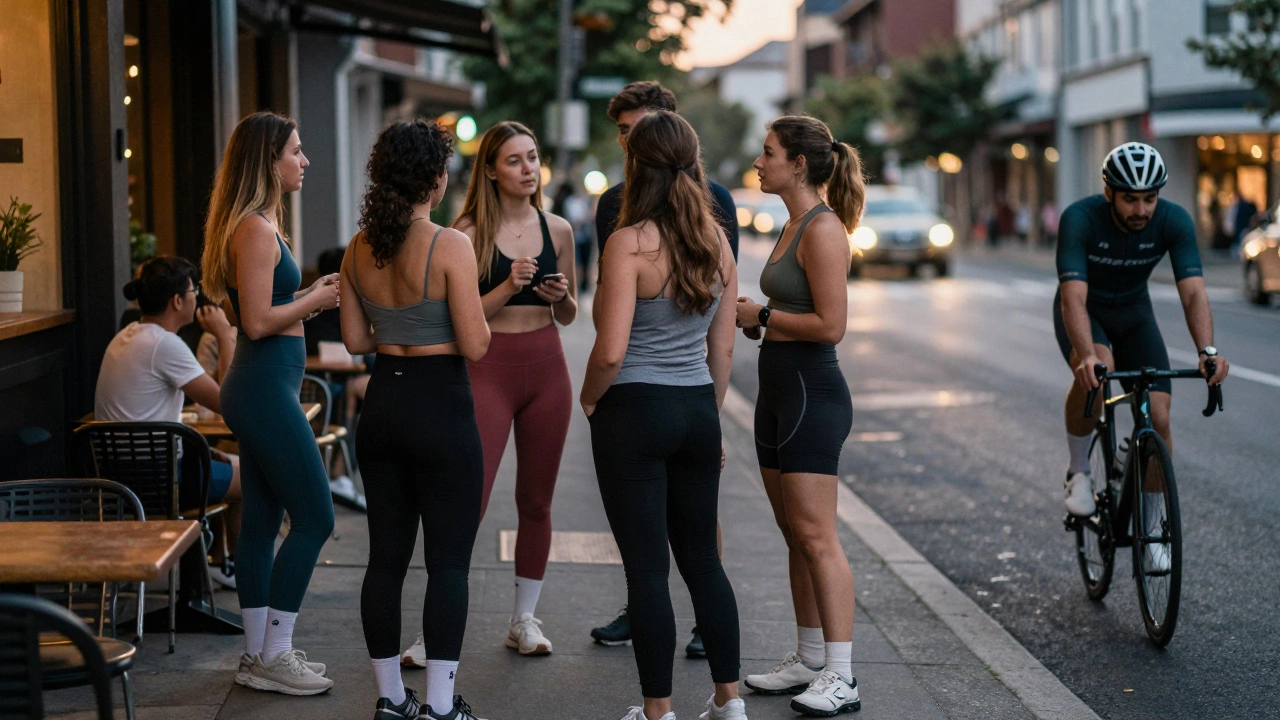
Sometimes, brands blur the lines. Nike’s “Nike Sportswear” line looks like activewear. Lululemon makes compression shorts for runners. So what’s going on?
It’s marketing. Brands realized that the line between gym and street is gone. They’re not trying to trick you. They’re responding to real behavior. But the technical differences still exist. A Nike running short labeled “Sportswear” might still have a chamois pad for cycling, while a Lululemon “Align” short is designed for yoga and lounging-not sprint intervals.
The takeaway? Don’t assume a label tells you everything. Look at the details: seam placement, fabric weight, stretch recovery, intended use. That’s where the real difference lives.
Final verdict: not the same
Activewear and sportswear aren’t the same category. They serve different needs, follow different rules, and are built with different priorities. One is performance gear. The other is lifestyle gear.
Confusing them can lead to bad purchases. Buying sportswear for daily wear? You’ll pay more for features you don’t need-and it might feel uncomfortable. Buying activewear for a race? You might not get the support, breathability, or durability required.
Know your purpose. Choose accordingly. And if you’re shopping online, read the product descriptions. They’ll tell you whether it’s made for competition-or just for showing up.
Can I wear activewear to compete in a race?
You can wear activewear to a casual 5K or fun run, but not to a certified race. Most organized races require gear that meets specific performance standards-like moisture-wicking fabric, secure fit, and minimal bulk. Activewear often lacks the compression, seam design, or durability needed for high-intensity events. If you’re racing for time or qualifying, stick with sportswear.
Is sportswear more expensive than activewear?
Generally, yes. Sportswear uses advanced materials tested for elite performance-like compression fabrics engineered for oxygen flow or aerodynamic seams. These cost more to produce. Activewear prioritizes comfort and style, which can be made with less complex tech. That said, premium activewear brands like Lululemon can cost as much as sportswear, but for different reasons: fit, fabric feel, and brand value-not performance specs.
Do I need different clothing for different workouts?
It depends. For yoga or Pilates, activewear works fine. For running, cycling, or weightlifting, sportswear gives you better support and reduces injury risk. A running top with mesh panels helps cool you down faster. A lifting belt integrated into your shorts prevents shifting. If your workout is intense or technical, gear matters. If it’s low-impact or social, activewear is more than enough.
Why do some brands label activewear as sportswear?
It’s a marketing tactic. The term "sportswear" sounds more athletic and performance-driven, which helps sales. Many brands now use "sportswear" as a catch-all for any workout-ready clothing, even if it’s not competition-grade. Always check the product description. Look for phrases like "designed for competition" or "ideal for daily wear"-those tell you the real intent.
Can activewear last as long as sportswear?
It depends on quality and use. High-end activewear made with reinforced stitching and odor-resistant fibers can last years with regular washing. But budget activewear often pills or loses shape after 10-15 washes. Sportswear is built to handle extreme stress-so it usually lasts longer under heavy use. But if you’re only wearing it for light workouts, good activewear will outlast sportswear because it’s designed for daily wear, not one-off events.